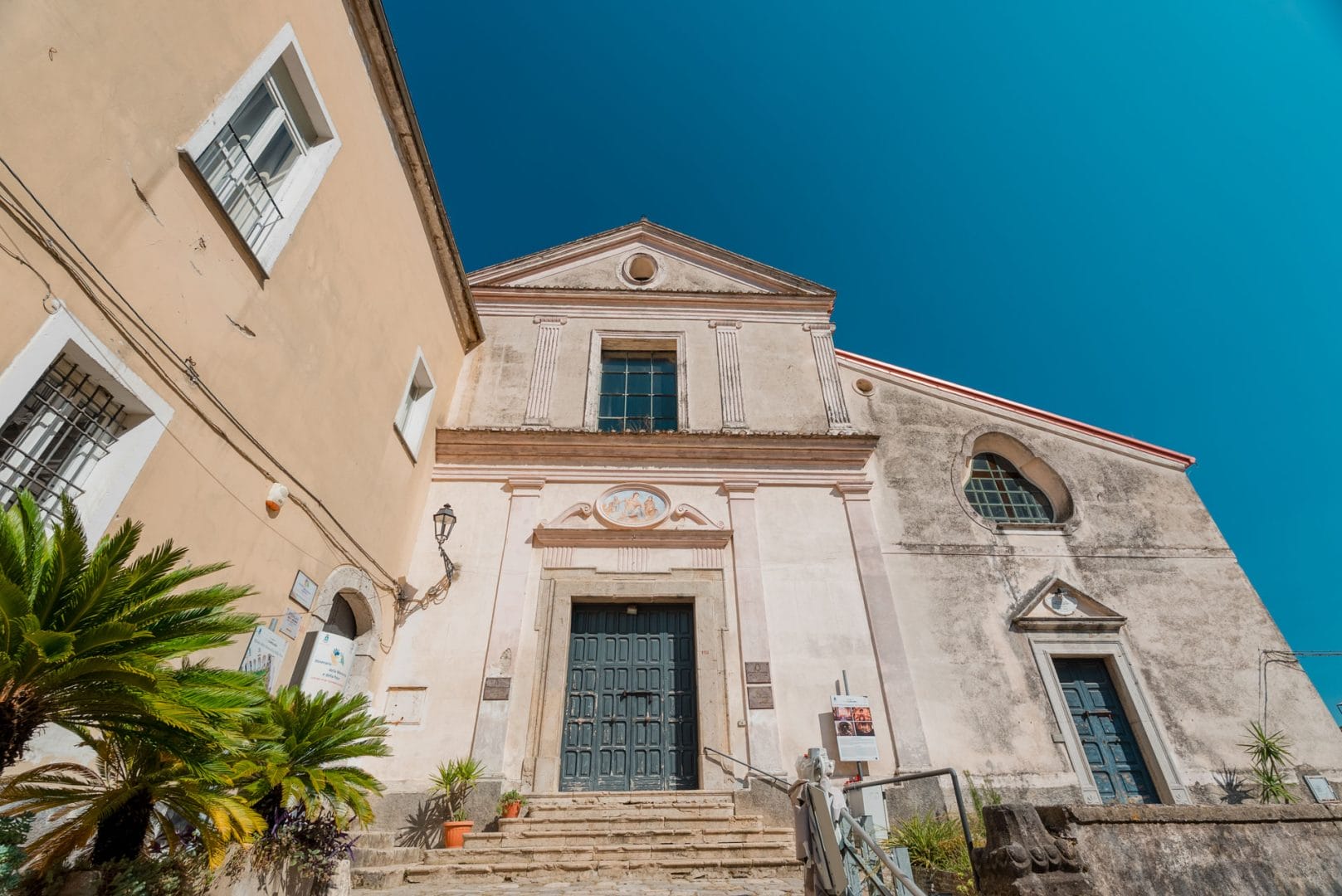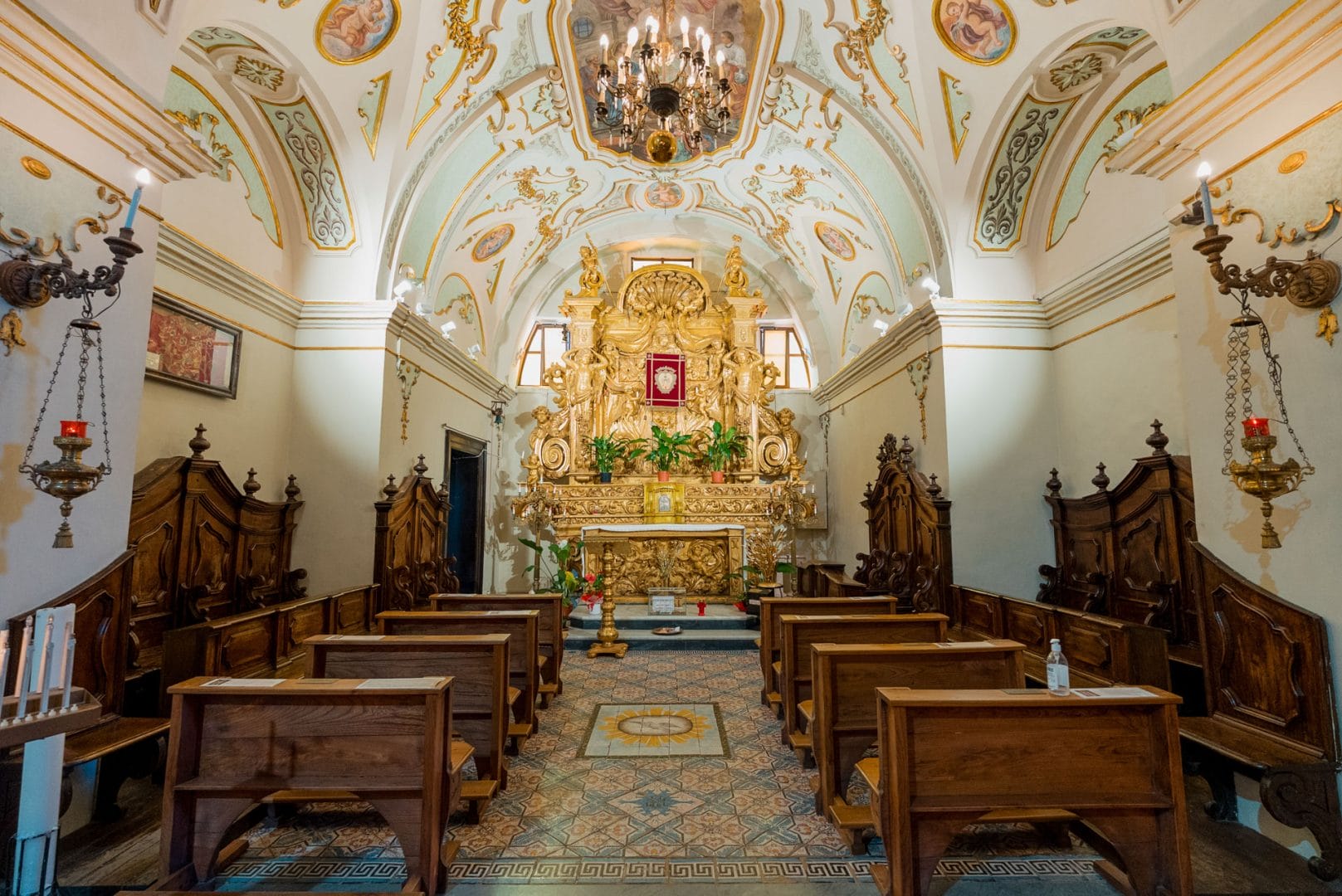

Located in the upper part of the historic centre of Campagna, the Church and Convent of St Bartholomew represent one of the most significant testimonies of the monastic presence in the city.
The original installation dates back to 17th century, when the Discalced Augustinians chose this place to found a complex dedicated to prayer and contemplative life. The area, then peripheral and immersed in silence, soon became a spiritual and cultural reference for the Campagnese community.
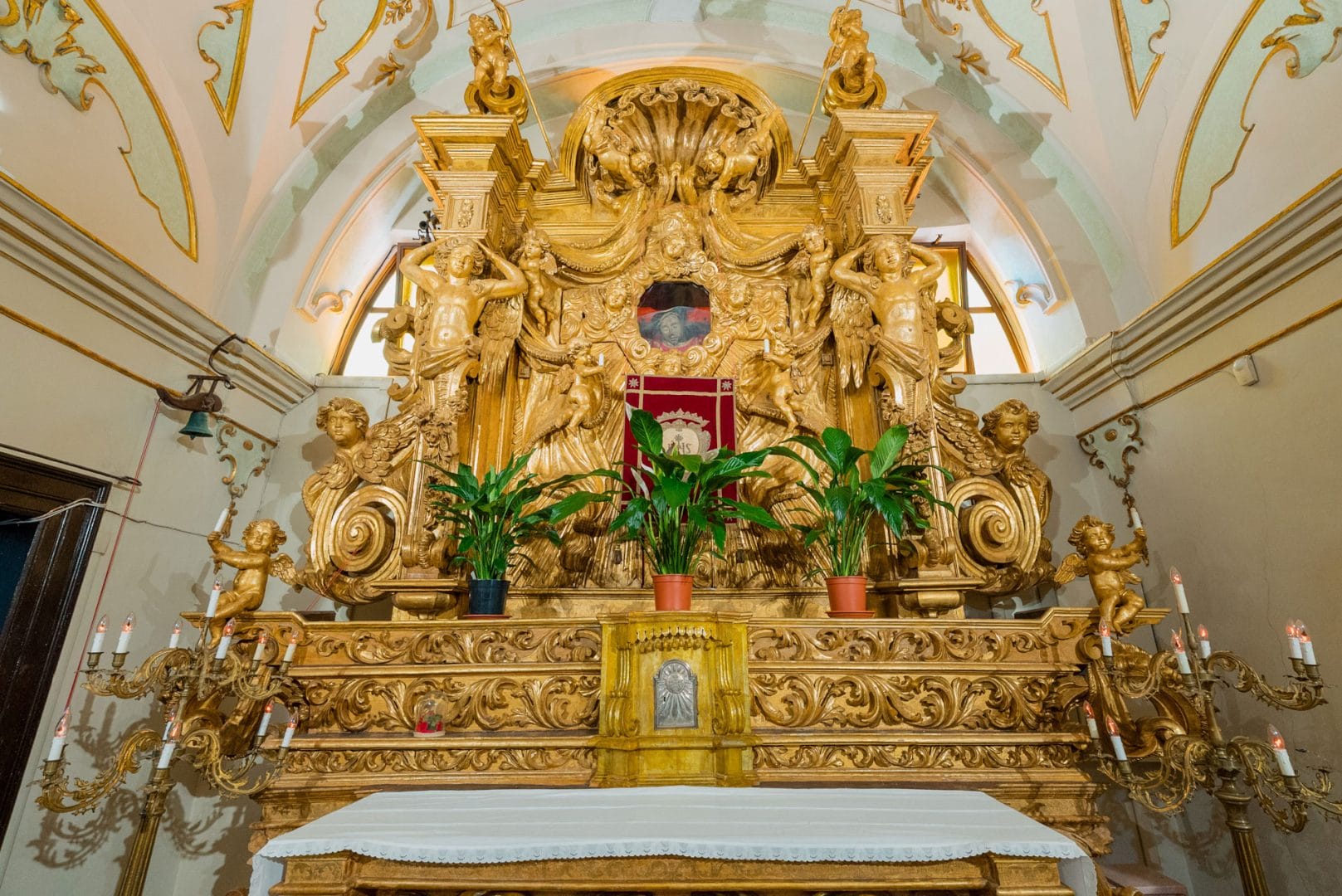
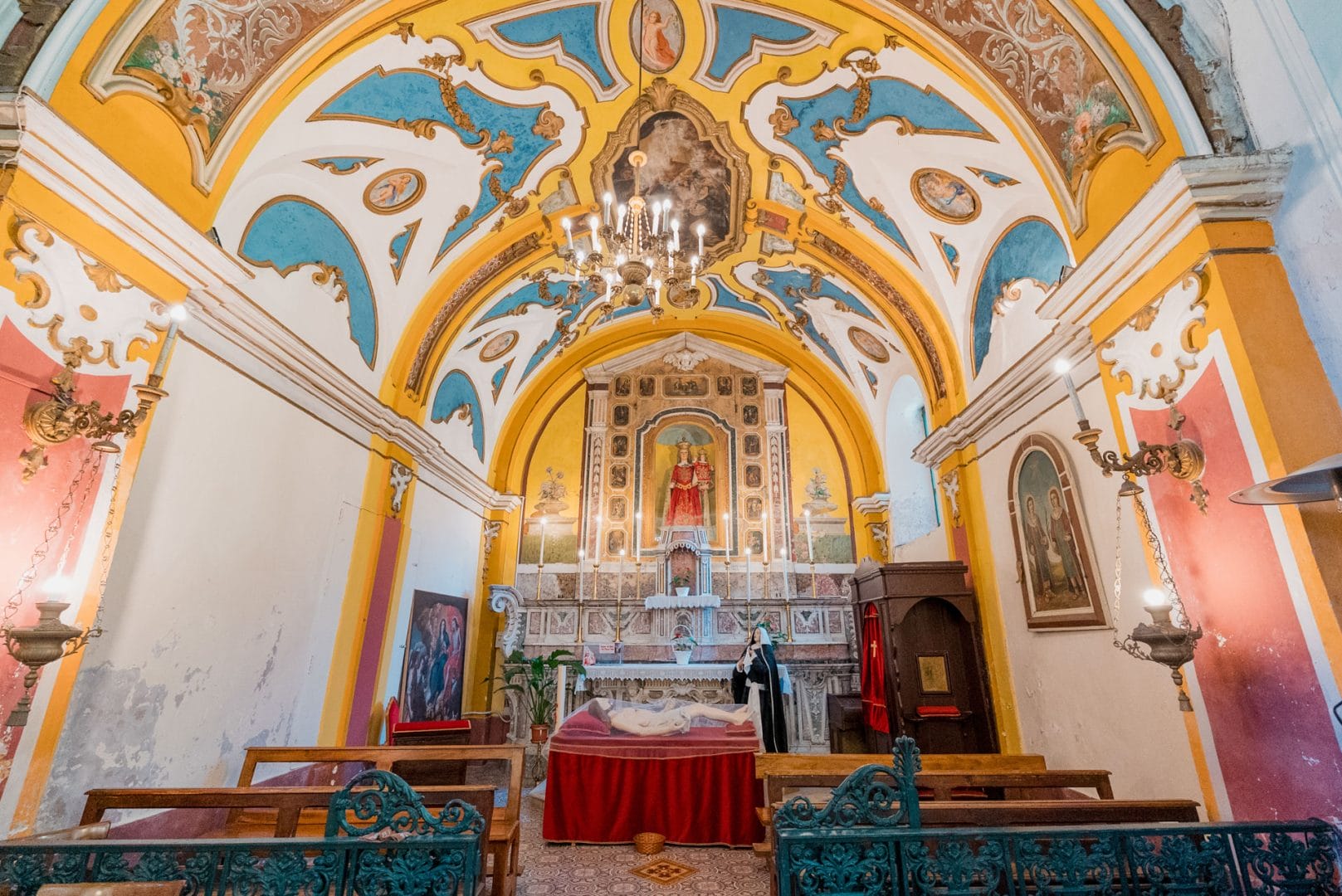
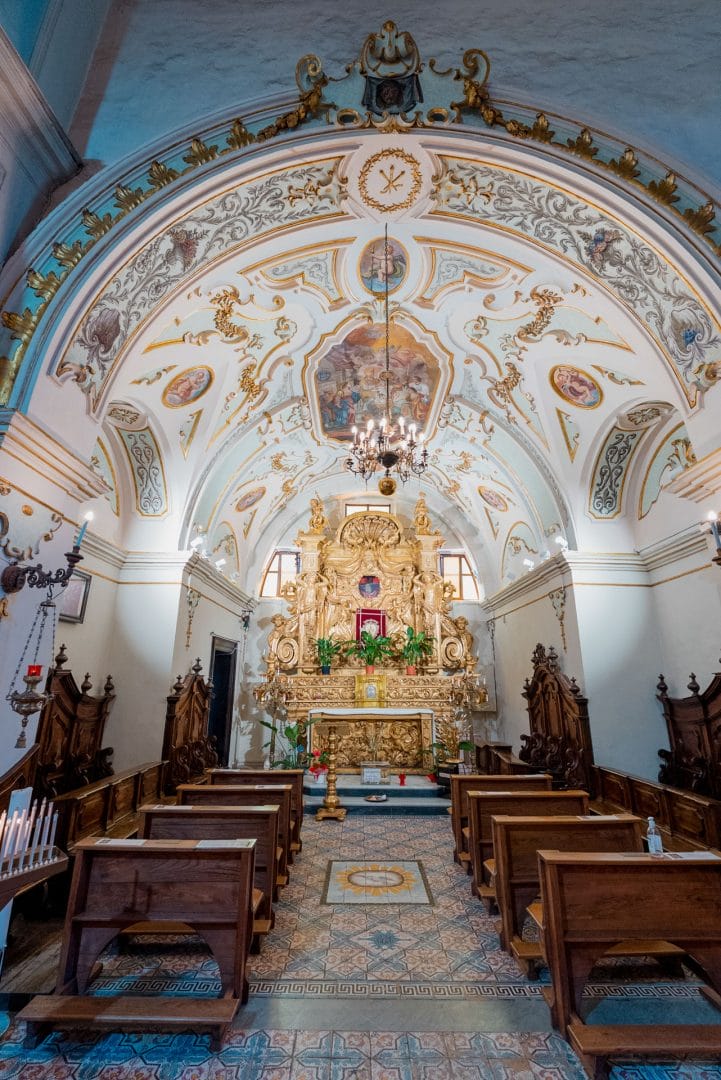
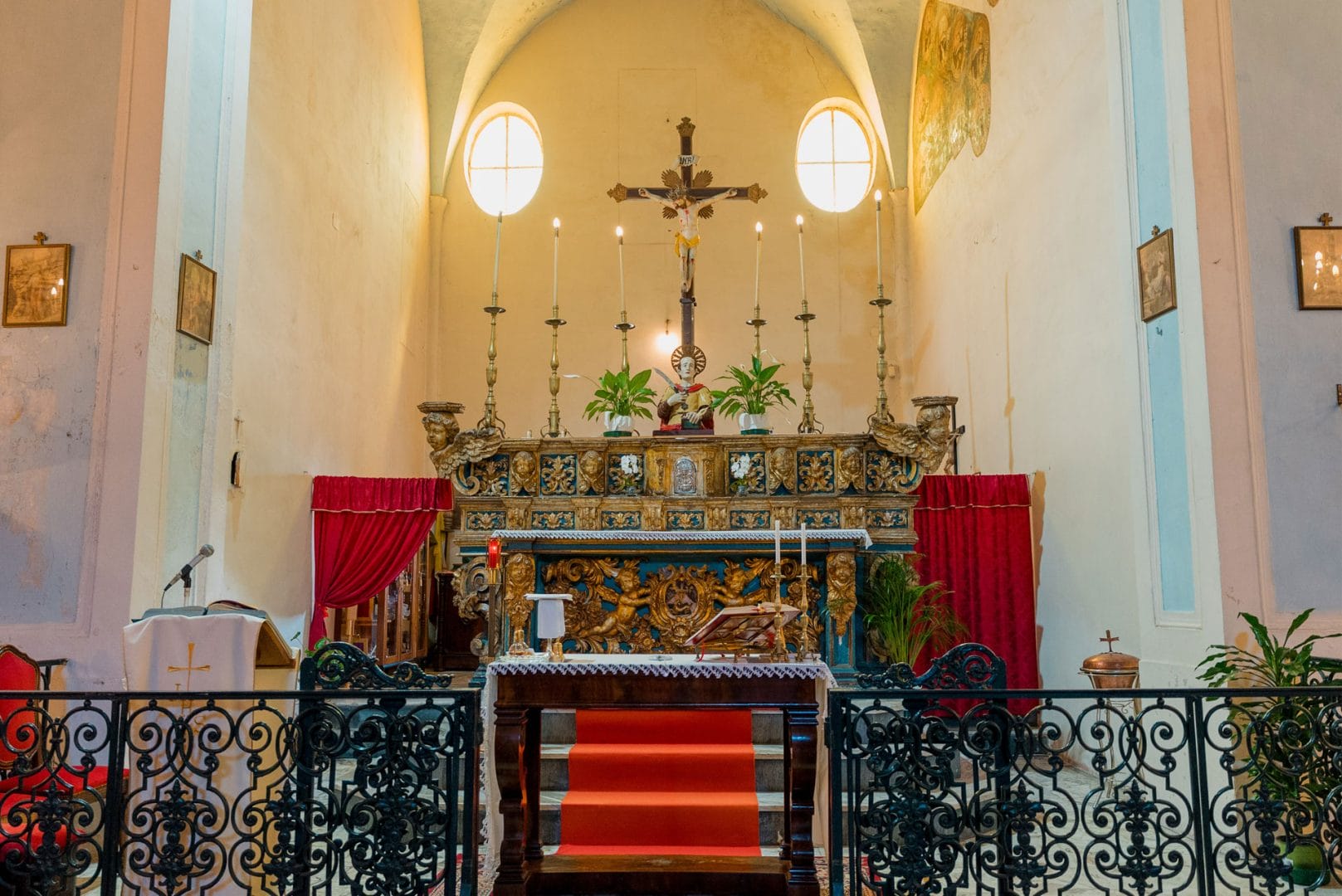
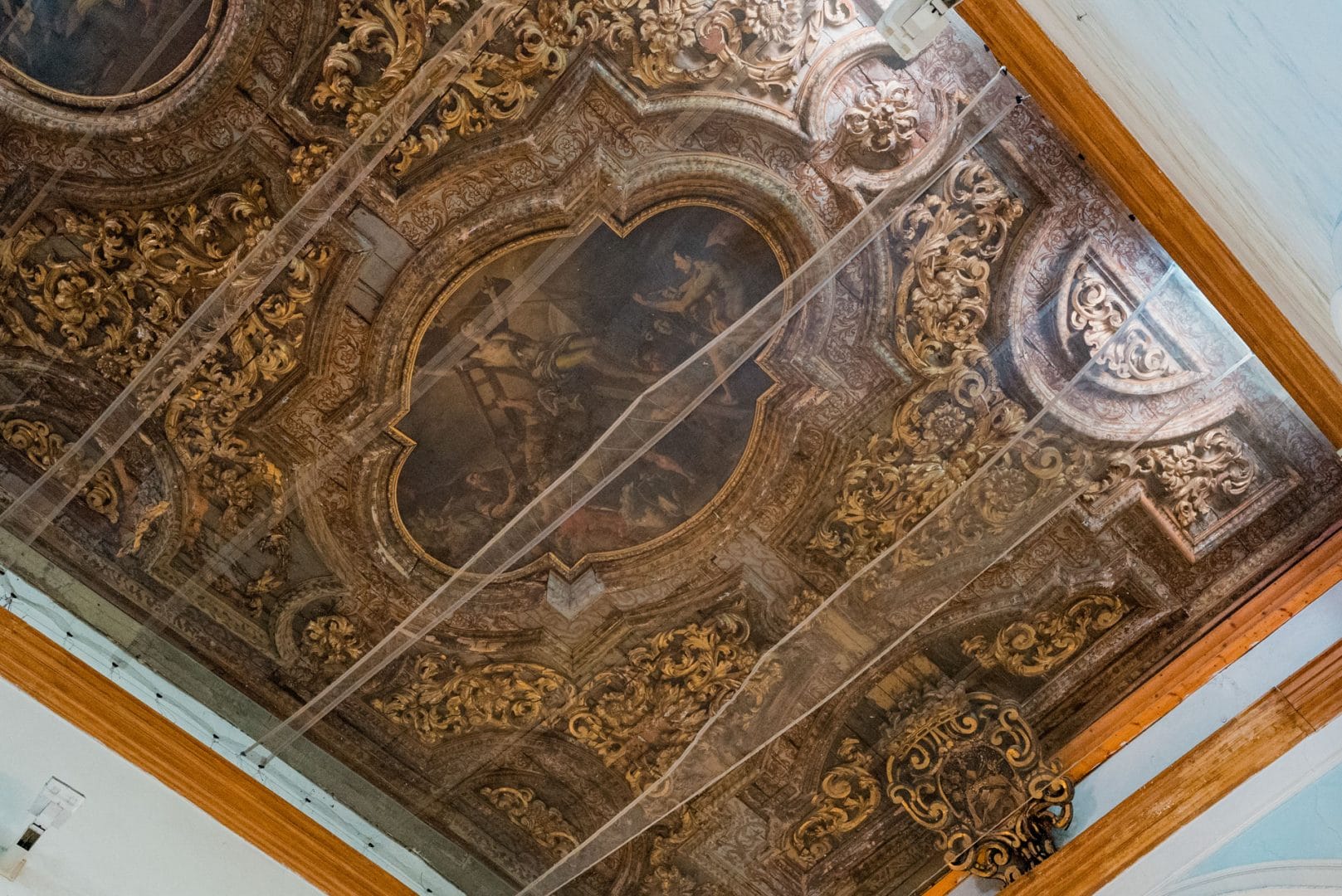
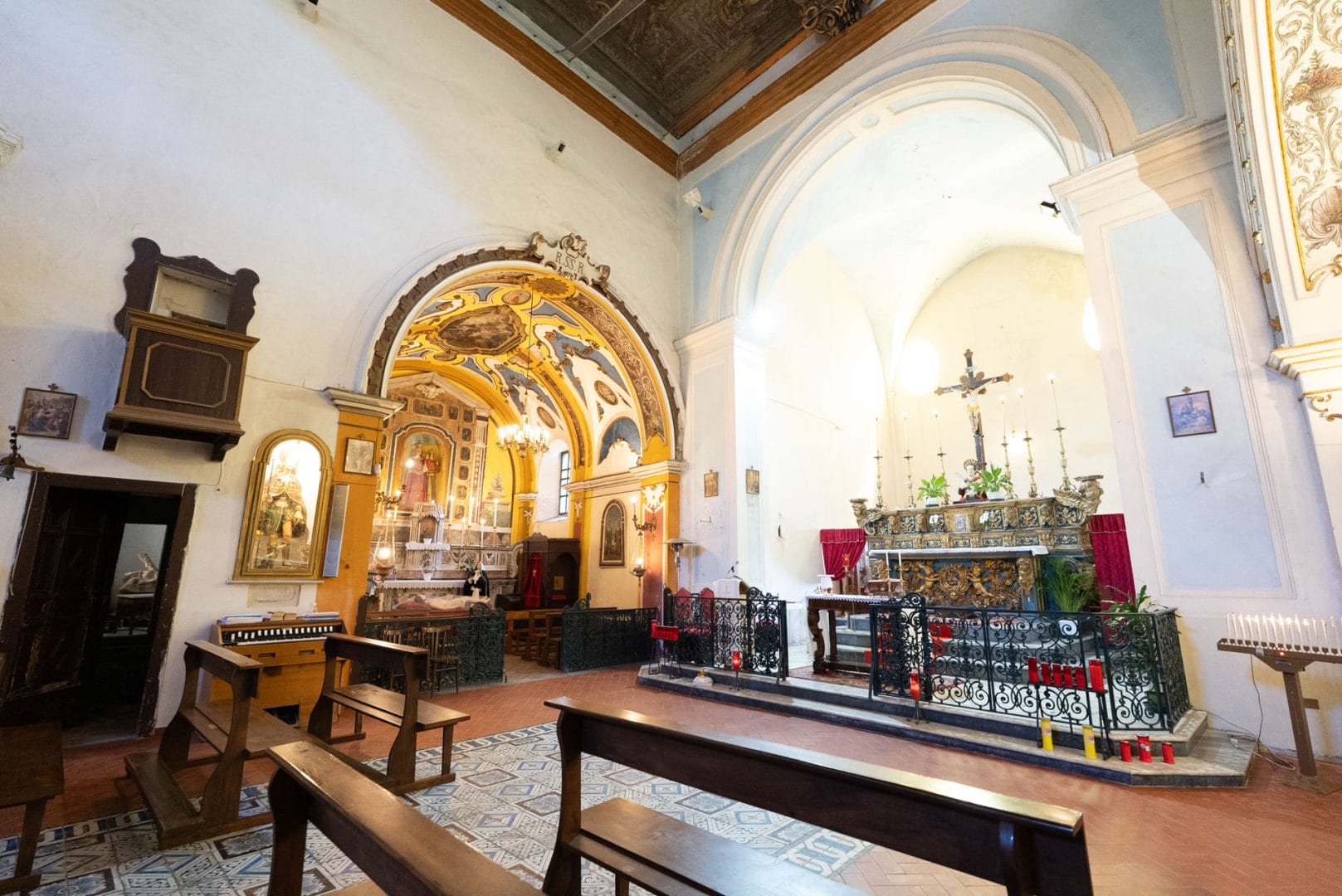
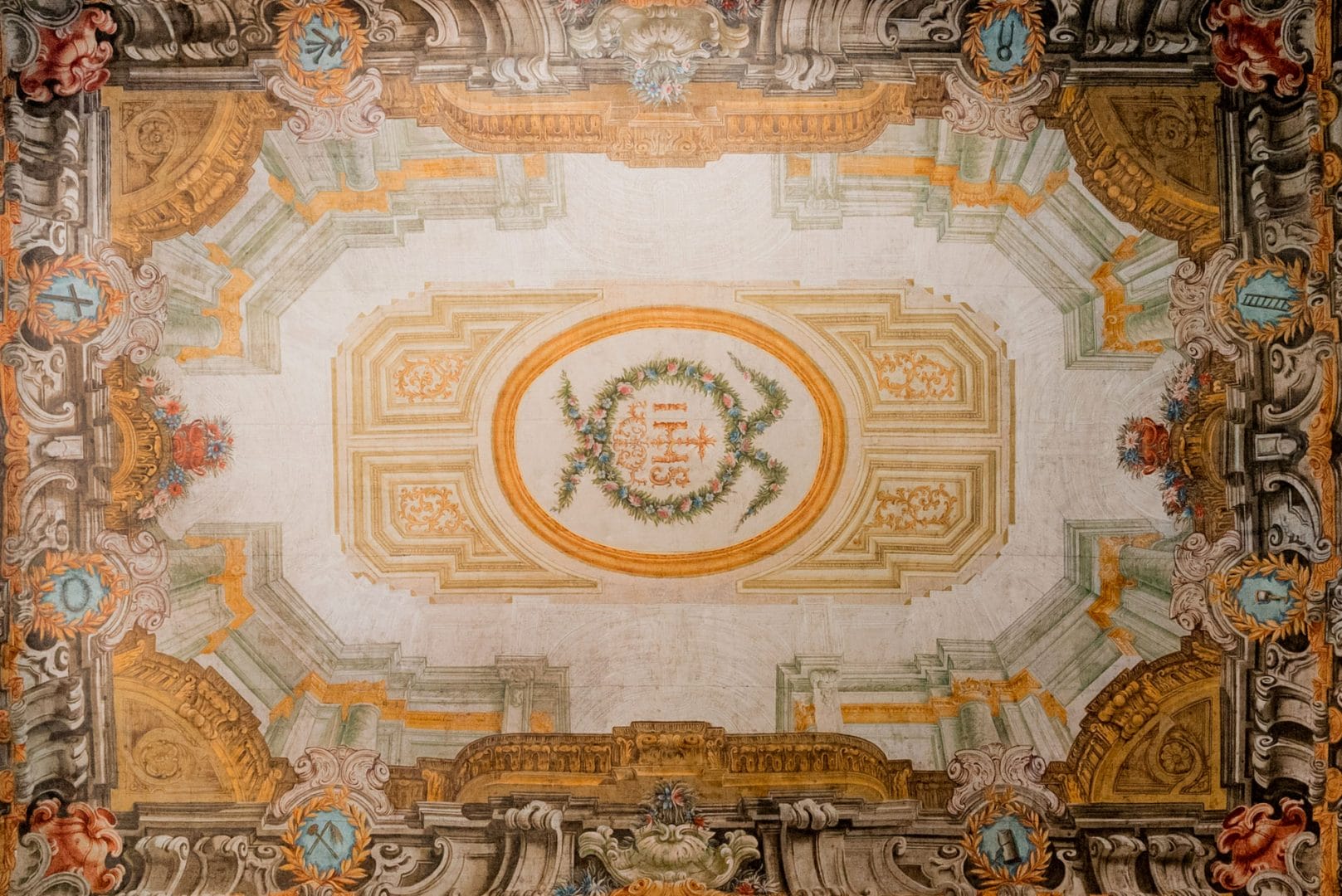
The building, of sober baroque elegance, is distinguished by its simple but harmonious façade and the interior at single nave, embellished with side altars and a painted wooden ceiling, considered among the most beautiful in the city.
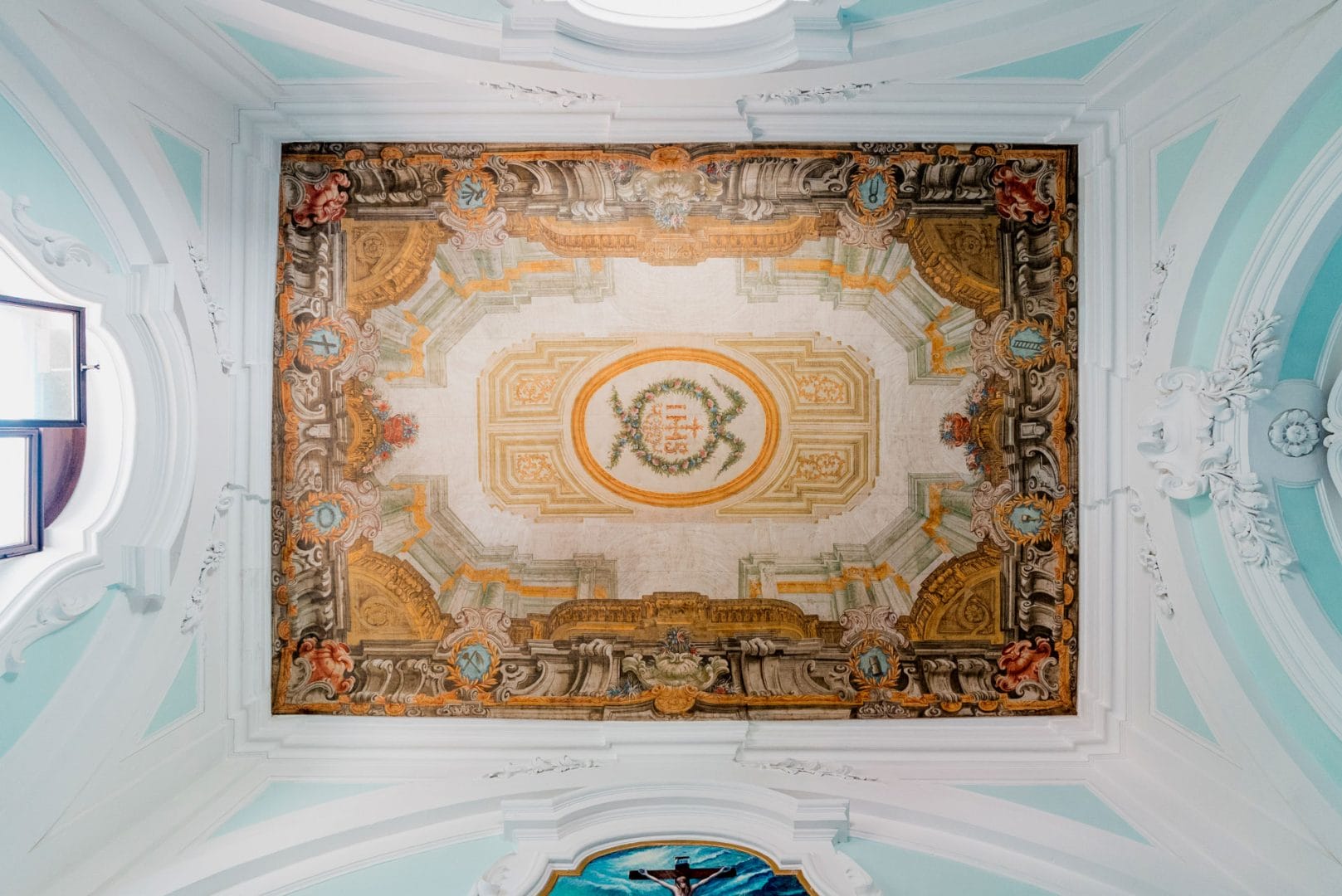
Le stucco decorations, the 17th-century canvases and the tiled floor reveal the artistic taste of the period and testify to the vitality of the religious building sites active in Campagna between the 17th and 18th centuries.
The annexed convent, now partly renovated, still retains the cloister with arcades and the central well, typical elements of convent architecture of the time.
The Augustinian community, present until the suppression of the religious orders, left a lasting imprint on city life, linked to the’education, to the preaching and to the’spiritual assistance.
The complex has undergone several restorations over the centuries, the last of which restored brightness and legibility to the liturgical hall, bringing back the intense chromaticism of the original decorations.
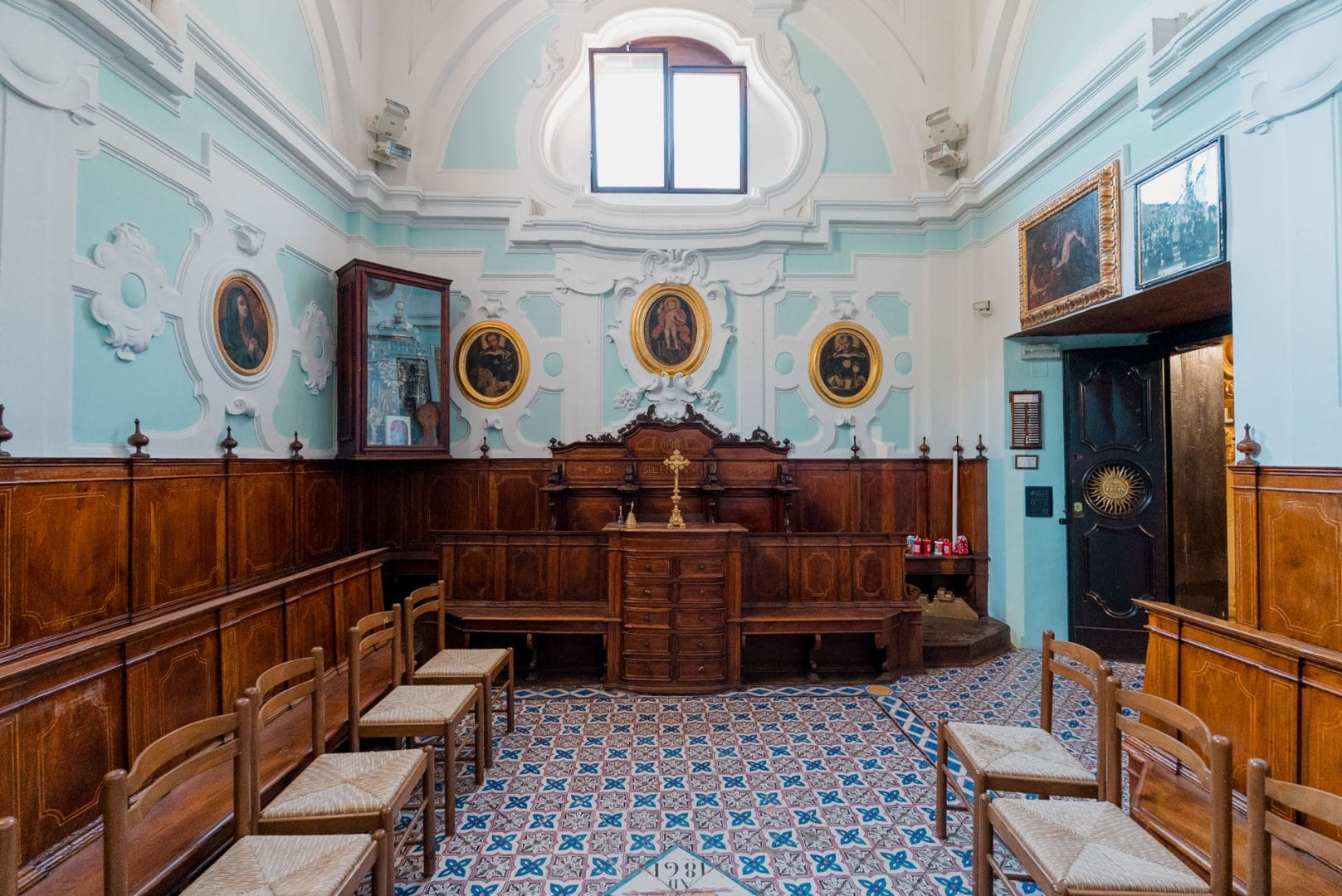
Upon entering the oratory, on the wall to the left, one can admire an oval representing Saint Andrew of Avellino, painted in Naples in 1782, taken as the particular protector of the Confraternity, because in that year many confraternity members died, although they were in excellent health. In the same year, the oval paintings of the’Addolorata e St Joseph, which are placed on the wall opposite the entrance to the oratory.
On the cabinet, a piece of furniture built in 1770, there are two wooden showcases, restored in 2002 free of charge by the I.P.S.I.A. “G. Bruno” of Campagna. In each of the showcases are two 18th-century statues: the Child and Saint John.
On the wall is a painting depicting Christ blessing St John the Baptist. The painter is probably Peccheneda.
On the wall above the wooden choir dating back to 1754, which was restored, free of charge, by the students of the I.P.S.I.A. “G. Bruno” of Campagna in 2006, at the centre of which is the prior's seat, there is an oil painting depicting the Child Jesus.
On the right side of the Child is the painting of San Domenico; on the left the painting of St Thomas. The two oval paintings, painted on walnut or oak boards, date back to the end of the 17th century.
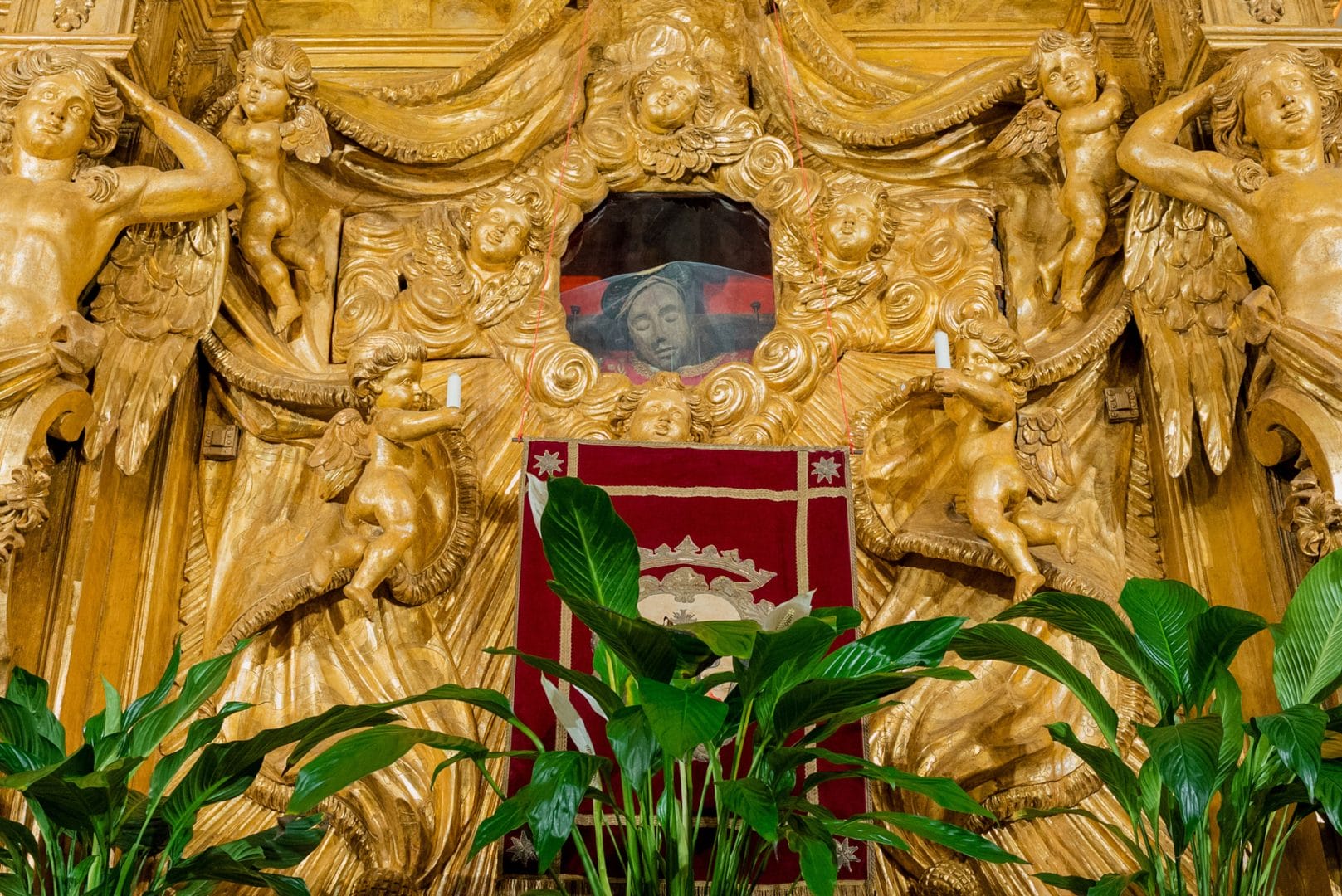
The oratory is rich in valuable works: a 16th-century reliquary containing a fragment of the Holy Thorn, the wood of the Cross, a stone from the Holy Sepulchre, and a strand of the sheet of the Holy Shroud; a monstrance with a small throne, made in Naples in 1769; an 18th-century statue representing the Infant Jesus, nicknamed “Caporanniello” by the people of Campagna because the Brothers display him on New Year's Day on the altar of the Holy Name of God; an 18th-century statue representing Saint John; three statues of angels from the 18th century.
Sources: https://ssnomedidio.it/
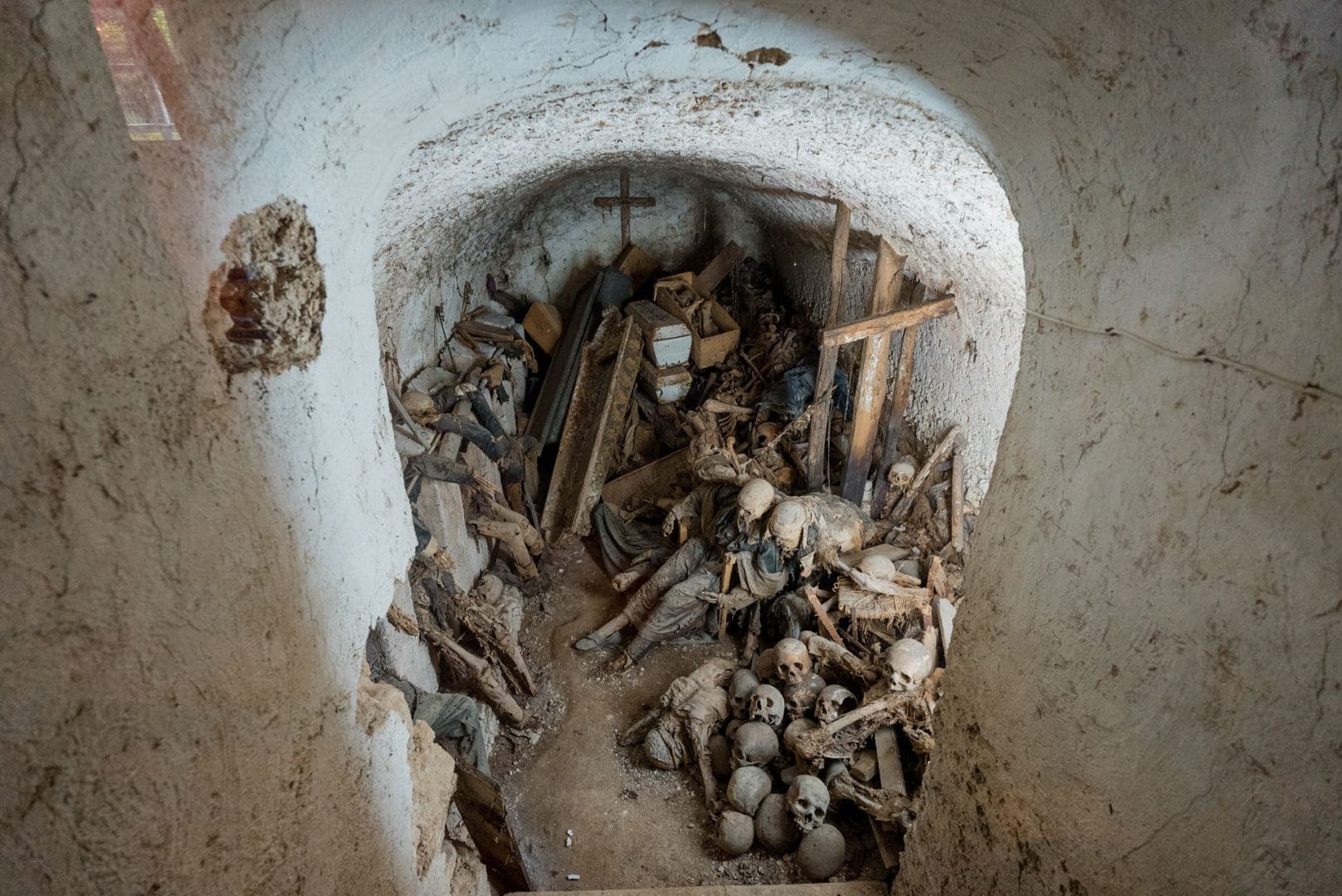
In the cemetery-ossuary of the Confraternity of the Most Holy Name of God, many bodies have been buried over time, including those of the victims of the plague of 1656. Among all the skeletons one recognises precisely that of Monsignor Avila (who died of the plague in the year 1656), the remains of which are well preserved: the barely discoloured sacred vestments, the shoehorns, the buttons, the belt, the white collar, the purple petticoat, the black coat, all items made from material of the time that are still clearly visible and of considerable value.
Next to Monsignor Avila are the mortal remains of the Bishop Marco Lauro, secretary at the Council of Trent.
Sources: https://ssnomedidio.it/
To the west of Castello Gerione stood, according to Rivelli, in 1277, a coenoby of the Dominican Fathers near the church of Santa Maria, formerly of St Paul's, in the Pagliara district, at the far end of the town, towards the north, on the left bank of the Atri river, opposite the steep, green St Eramo.
Before 1228, where the Church of St Bartholomew, there was a small church-cemetery dedicated to St. Mary, oval in shape, which was mainly used as a burial place for noble Campagnese personalities, as recorded by various local historians and the tombs erected to illustrious men, famous in the arts and sciences.
On a pamphlet by can. Carmine Giordano, parish priest of St Bartholomew, it reads:
“Our ancestors formed a large farmhouse with the parish churches of San Matteo, San Tommaso, San Cataldo and San Bartolomeo, and from that time on, it was planned to replace the small monastery and church that existed at the far end of the settlement with a sumptuous building that would be far superior to the ancient monastery and the ancient church.
On this was built, with the authorisation and financial help of the feudal lord of the time, the church of St Bartholomew, located in a convenient area in relation to the other churches, and an obligatory passage for the inhabitants of the farmsteads near the castle, provided with a large and fertile plot of land.
Sources: https://ssnomedidio.it/
Sources: https://ssnomedidio.it/