
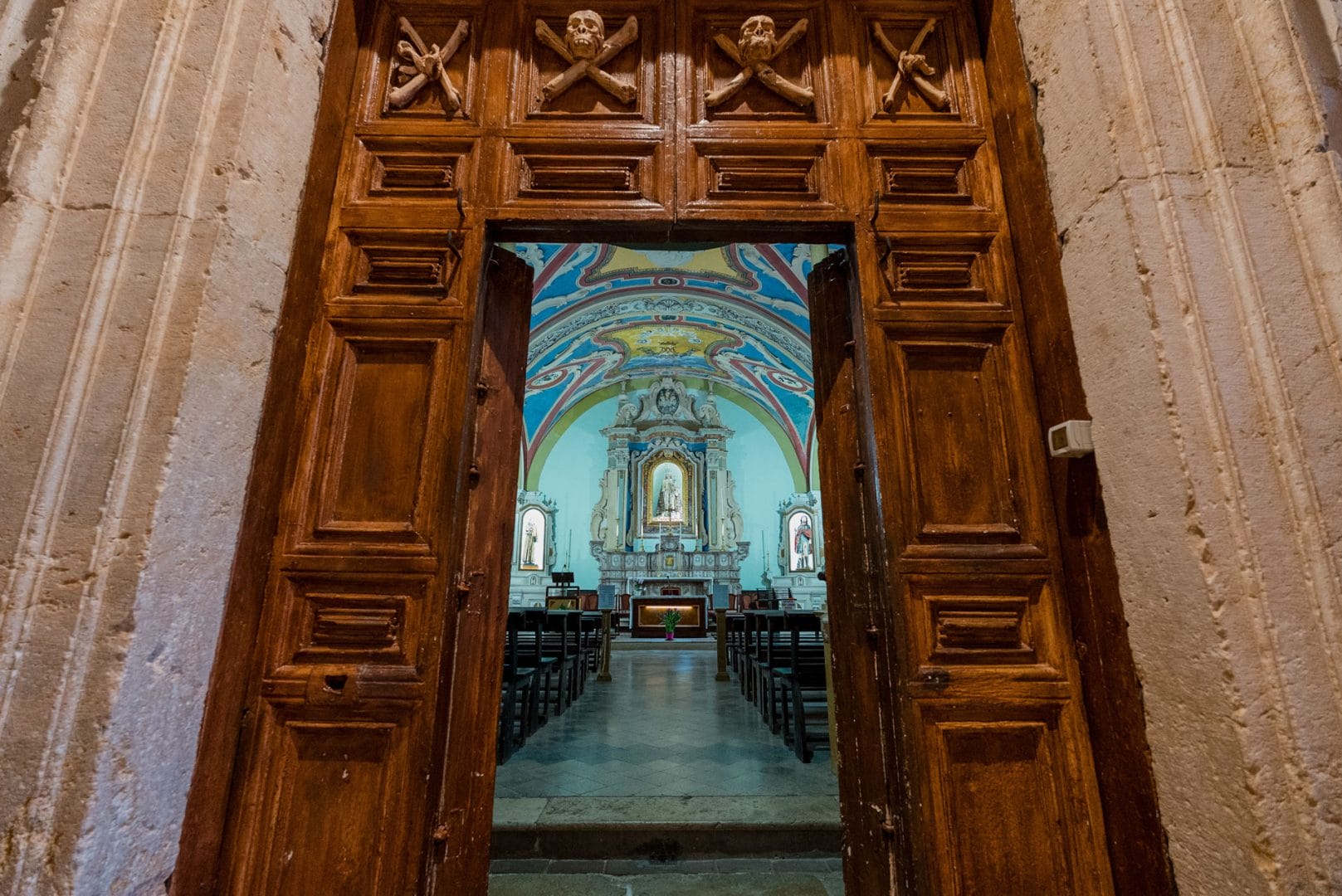
In the maze of alleys leading up to the upper town of Campagna, amidst ancient walls and stones marked by time, stands the Church of the Mount of the Dead and the Blessed Virgin of Mount Carmela place full of meaning, where the’sacred art is intertwined with the popular piety and the memory of death becomes an occasion for consciousness.
The origins of the complex are linked to the transformation of the 1514, of the ancient church of Santa Maria della Giudeca, elevated to a collegiate church by the will of local benefactors and with the support of the ecclesiastical authority.
With the establishment of the diocese of Campagna at 1525, the building took on the role of a cathedral, only to be reorganised in the 1564 when, with the construction of the new cathedral next door, it became the chapel of the Blessed Virgin of Mount Carmel and the Mount of the Dead: in the basement was the city cemetery, transforming the place into a space of worship and memory.
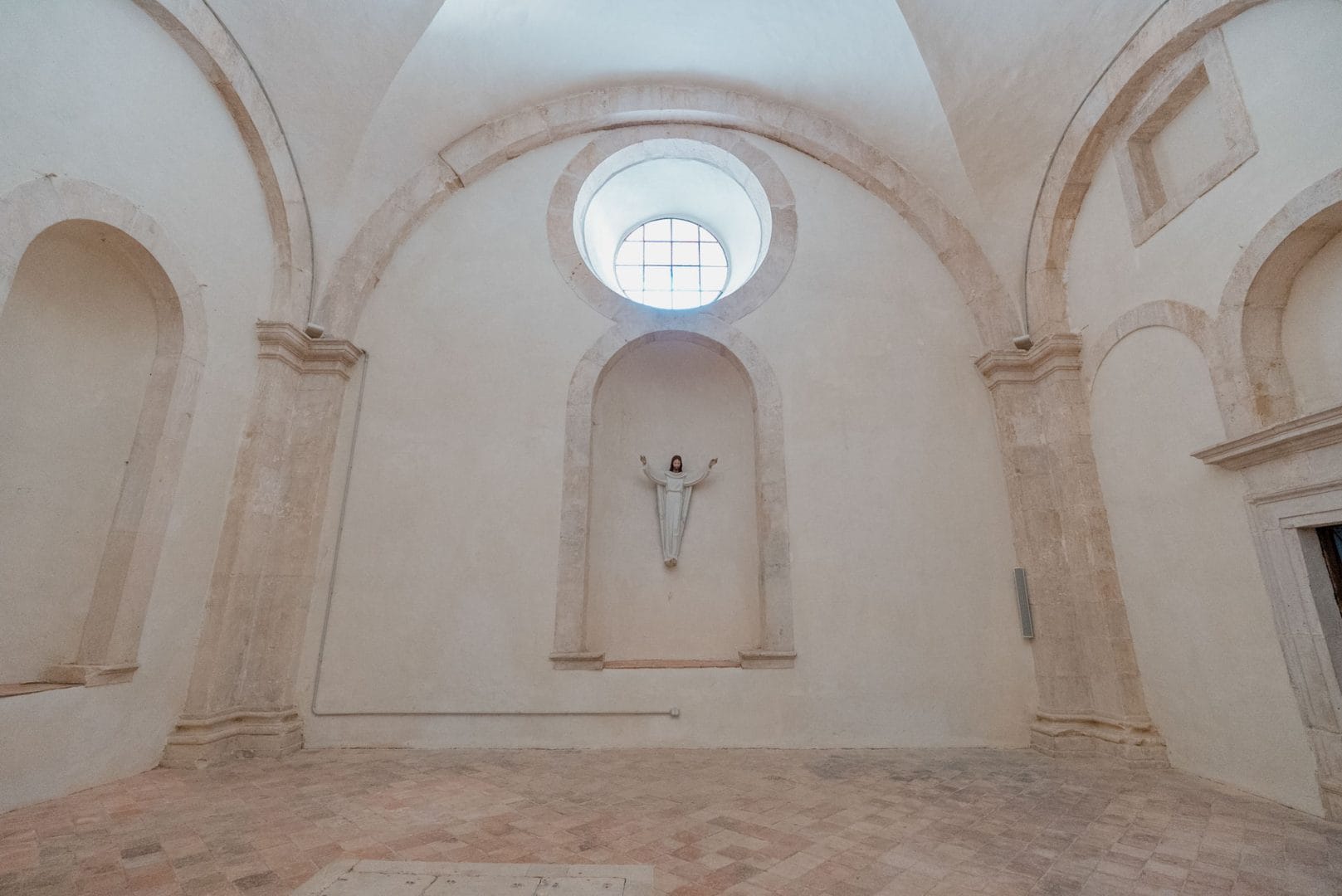
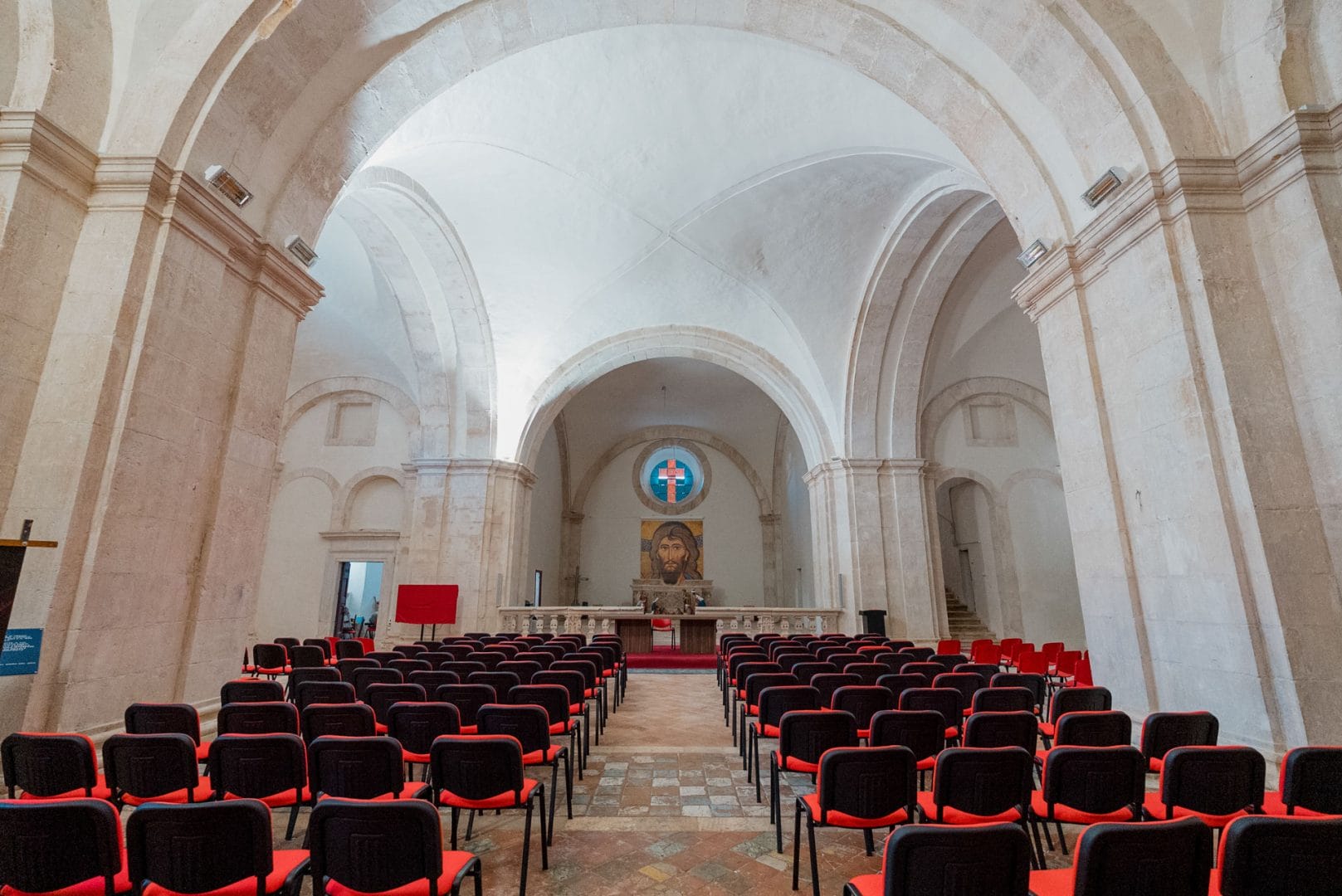
Inside, a single nave leads the eye to the high altar: polychrome marbles, wooden statues, votive offerings and lateral light cuts make up a page of visual theology, centred on the figure of the Virgin of Carmel.
Throughout the centuries, between restorations and maintenance, the oratory has retained its collected measure, still perceptible today in the silence, in the smells of wax and incense and in the traces of generations that have entrusted prayers and gratitudes to it.
The church, more than a monument, is a crossroads of stories - brotherhoods, mourning, processions, acts of charity - in which the city recognises a common identity and a shared hope.
La Brotherhood of the Mount of the Dead and Blessed Virgin of Carmel, with a canonical foundation in the 17th century, was founded as a concrete response to the frailties of the community: assisting the dying, giving burial to the poor, supporting families in mourning. The brethren, recognisable by their dark tunics and hoods, united ritual and service, and transformed piety into organisation and devotion into daily care. Over time, the confraternity broadened its scope: suffrage masses, administration of legacies, pious works, a network of proximity that filled gaps in the social fabric.
Pestilence and famine tested this vocation, but strengthened its meaning, making the oratory a garrison of dignity.
Between the 18th and 19th century, the entry of artisans and bourgeoisie made the association even more representative of the city, while the 19th century reforms changed funeral practices without extinguishing the memory of the service rendered.
Today, the brotherhood remains a key to understanding the citya cohesion device in which the memory of the dead generates bonds between the living and tradition becomes civil commitment.
The wooden portal of the church, with skulls, tibiae and plant volutes, proposes a catechesis carved into the material: death not as a threat, but as measurement of time and an invitation to a conscious life.
Baroque aesthetics entrusts beauty with the task of educating the eye: severe forms, yes, but traversed by signs of rebirth - flowers, folders, chiaroscuro - alluding to hope.
Inside, the side light cuts through the nave like a threshold between shadow and glowThe polychrome marble altar, the statue of the Virgin of Mount Carmel and the votive offerings compose a tale that interweaves doctrine and everyday experience.
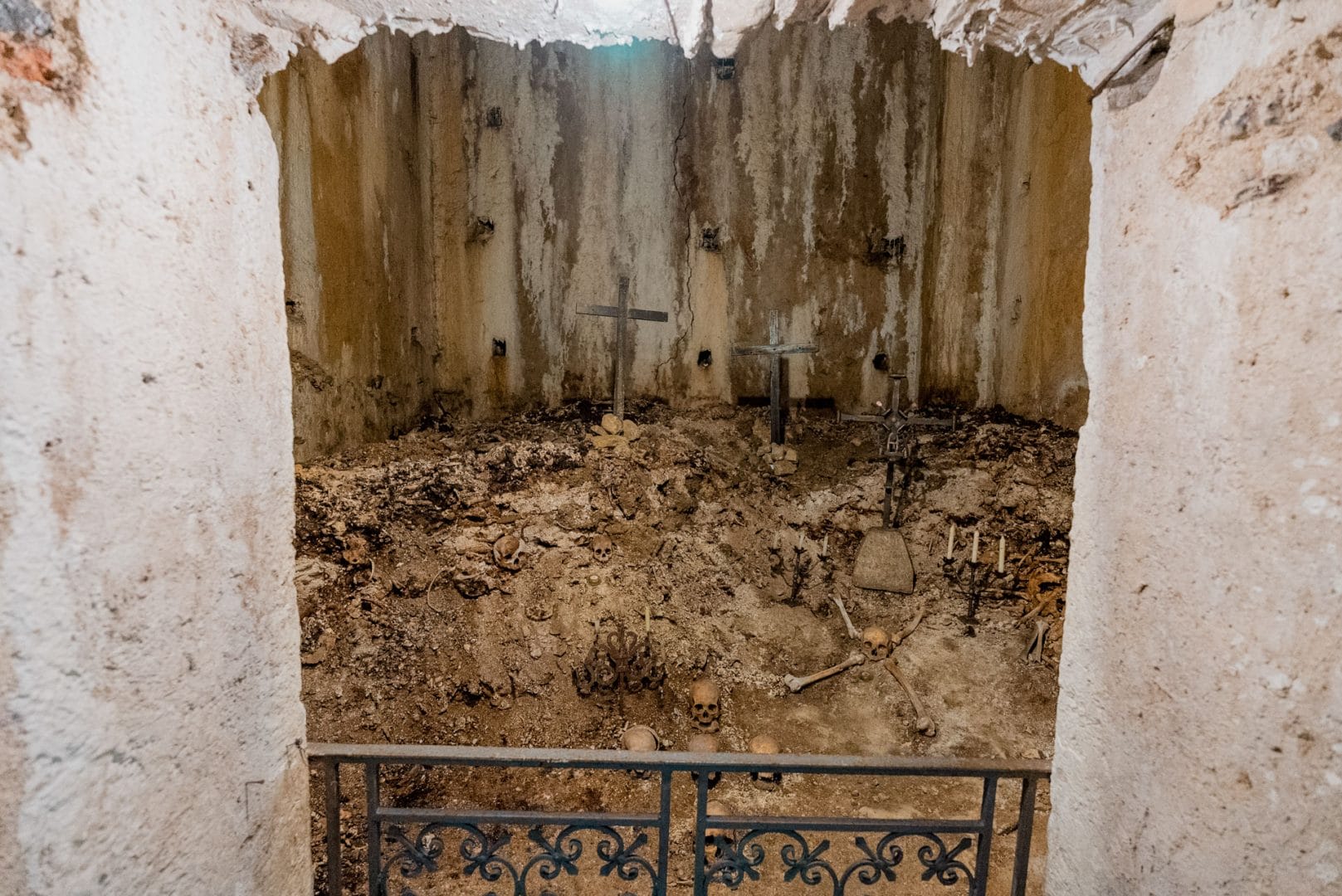
In the basement, the historic cemetery extends this narrative: slabs, catacombs, engraved memories that transform emptiness into relationship.
During the Feasts of Our Lady of Mount Carmel and in the processions of the confraternity, the symbolic language leaves the space of the oratory and crosses the streets: candles, incense, chants, the city recognising itself as a community.
Thus, the lesson of the memento mori is accomplished in the memento vivereRemembering the end in order to choose each day what remains.
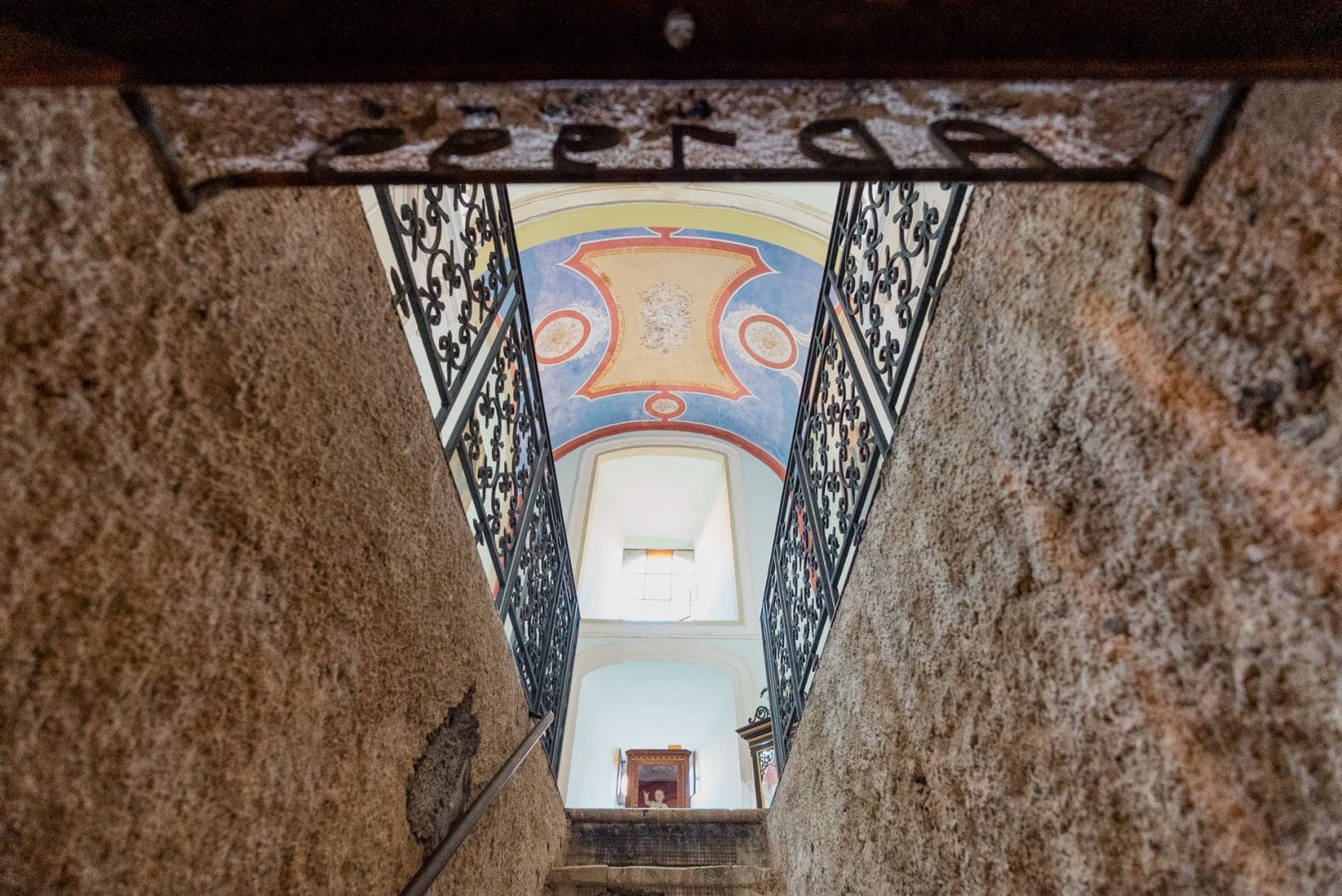
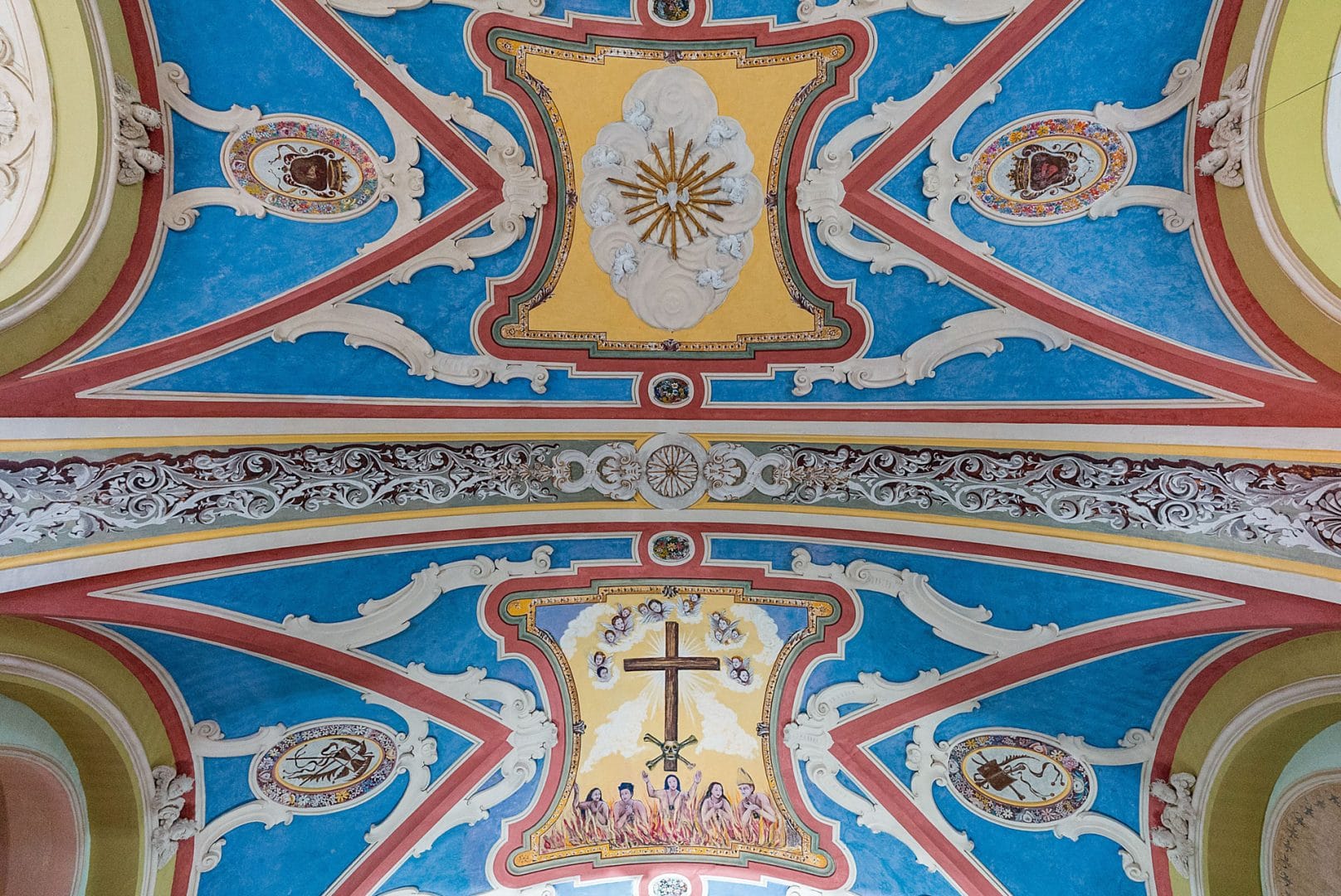
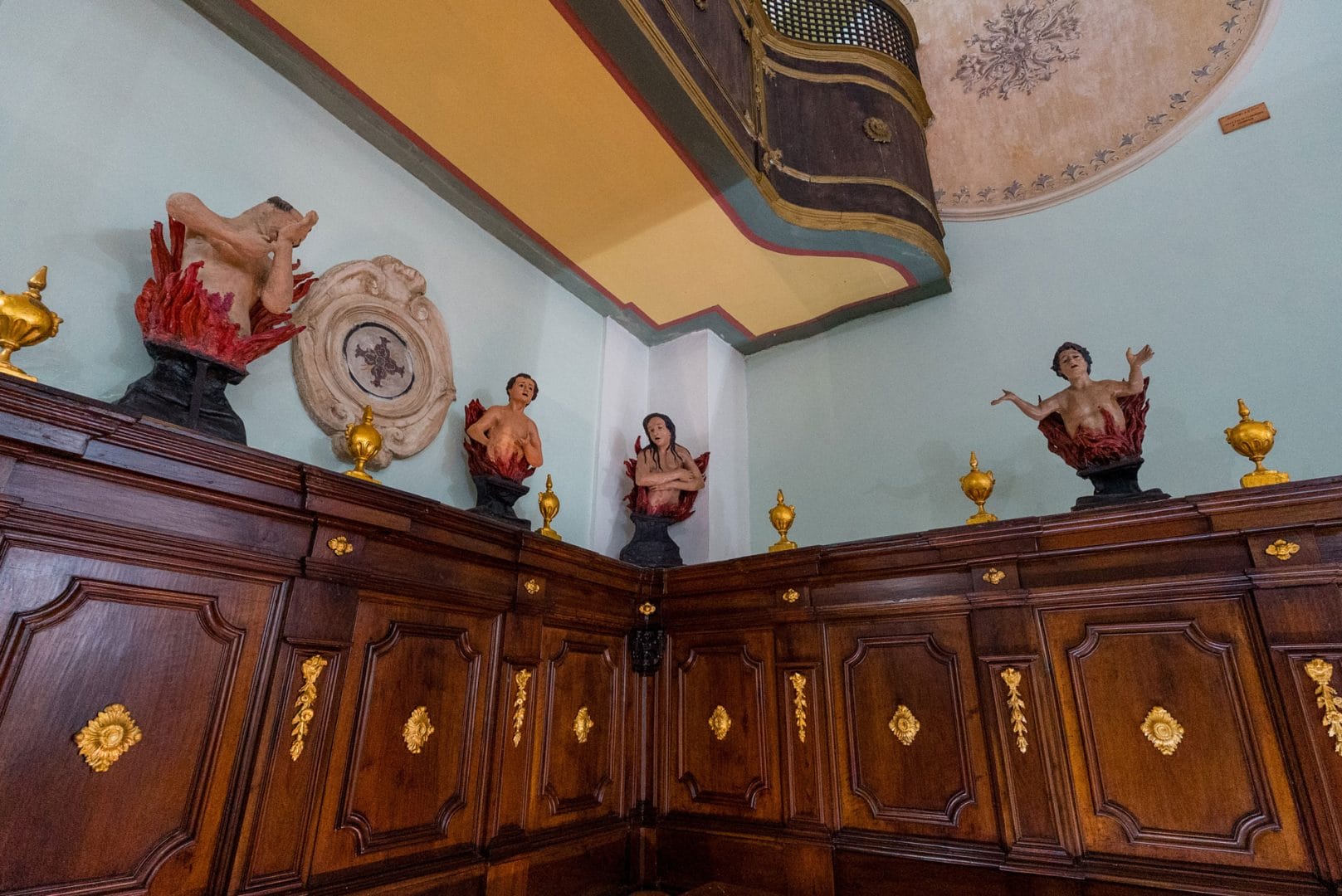
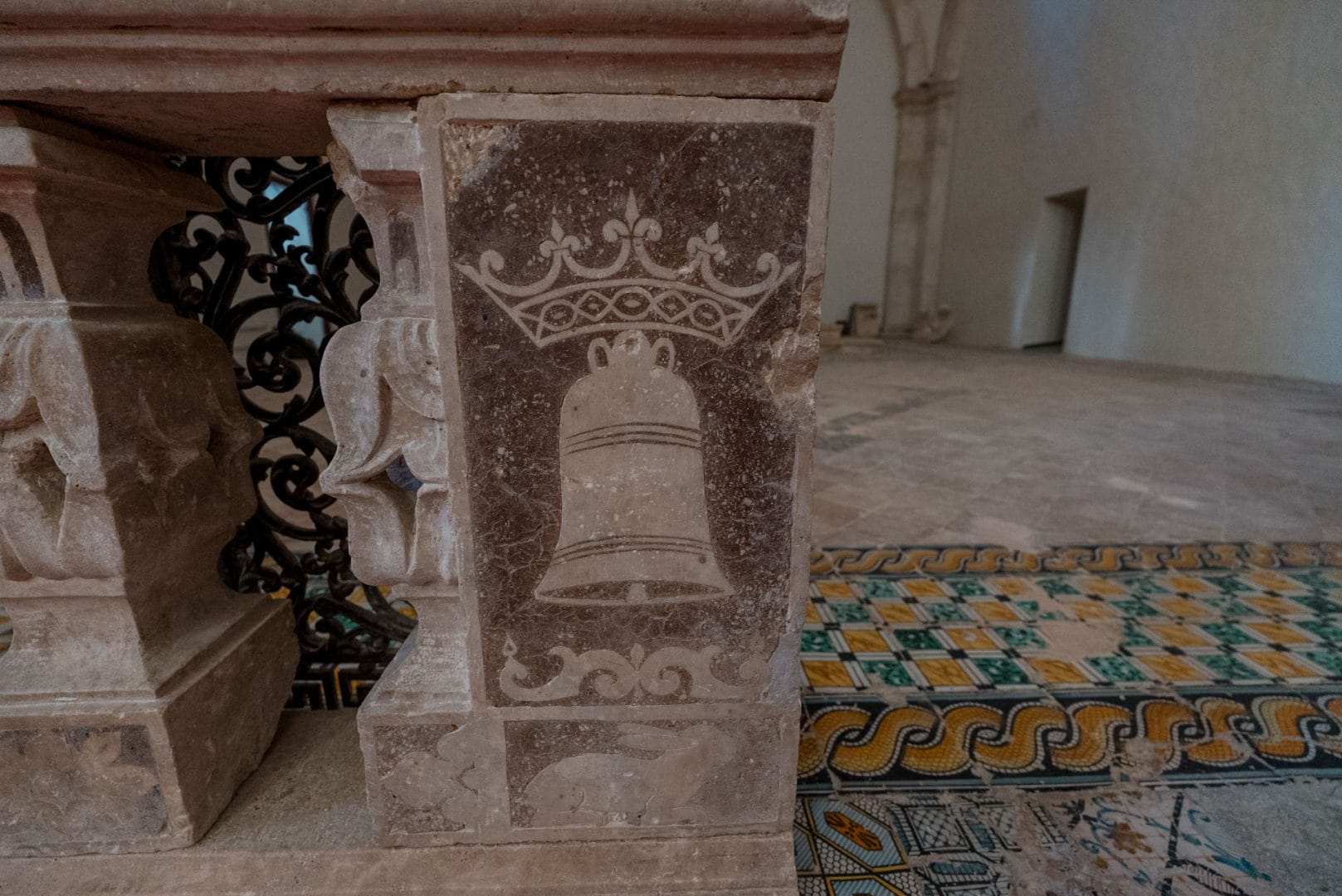
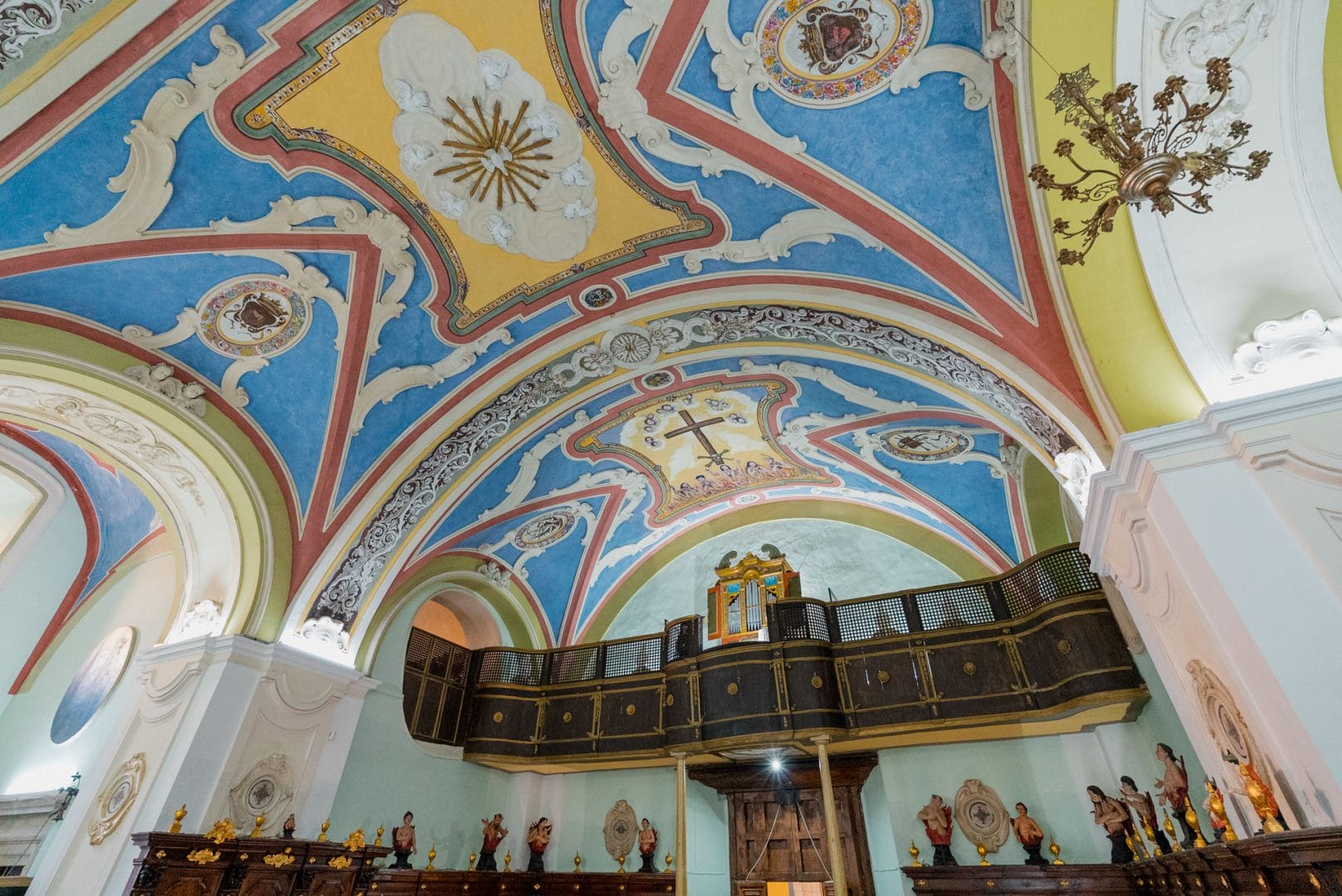
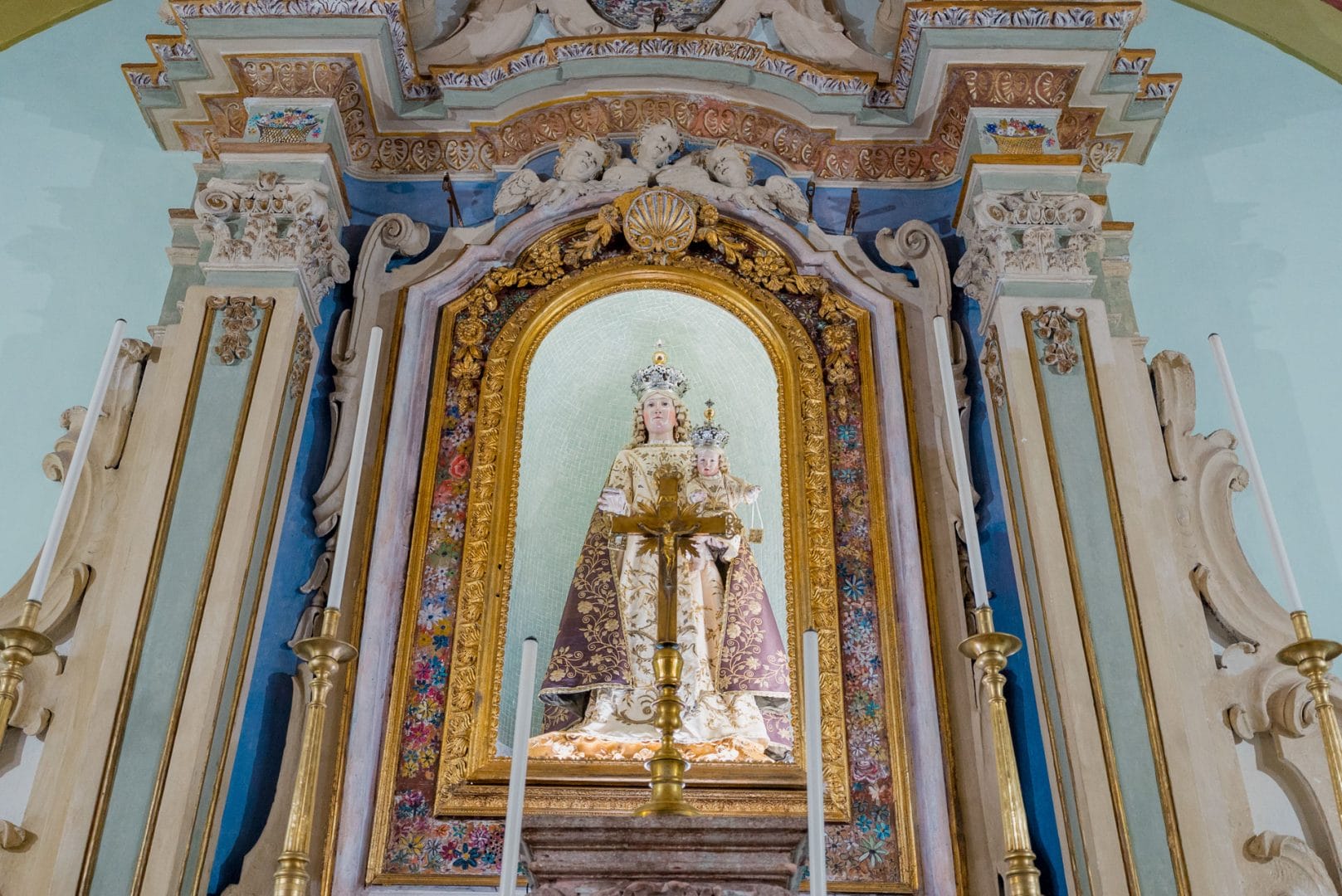
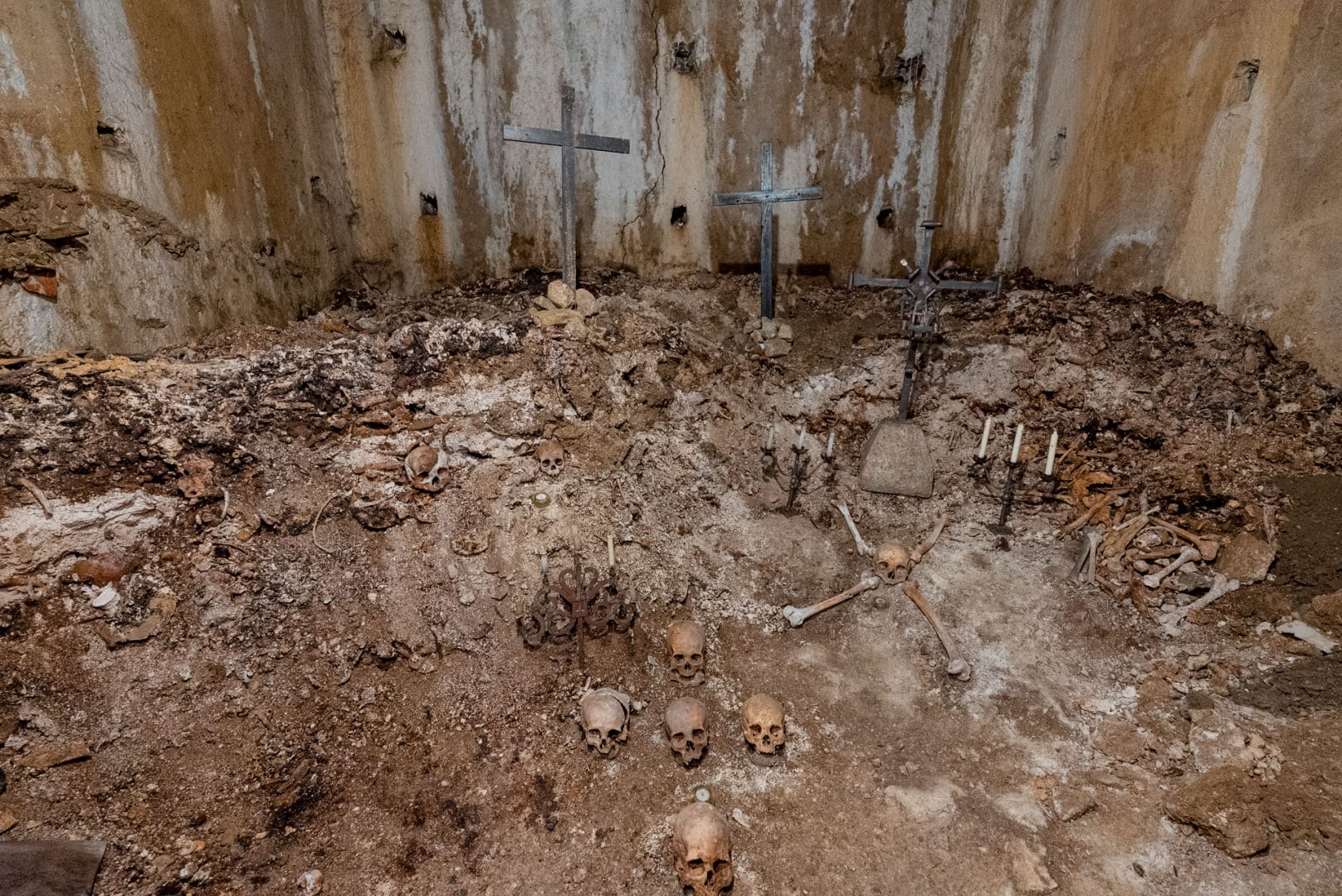
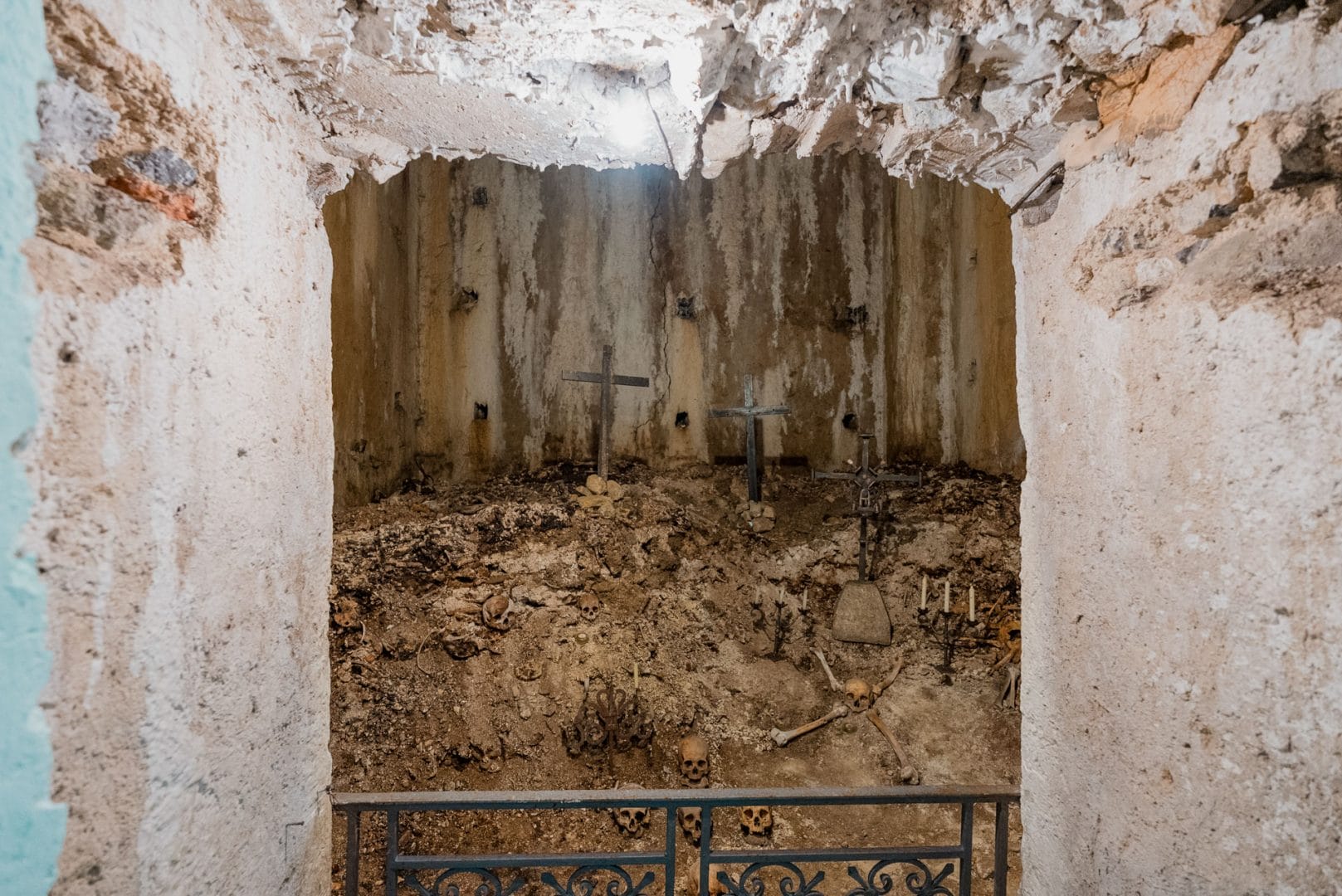
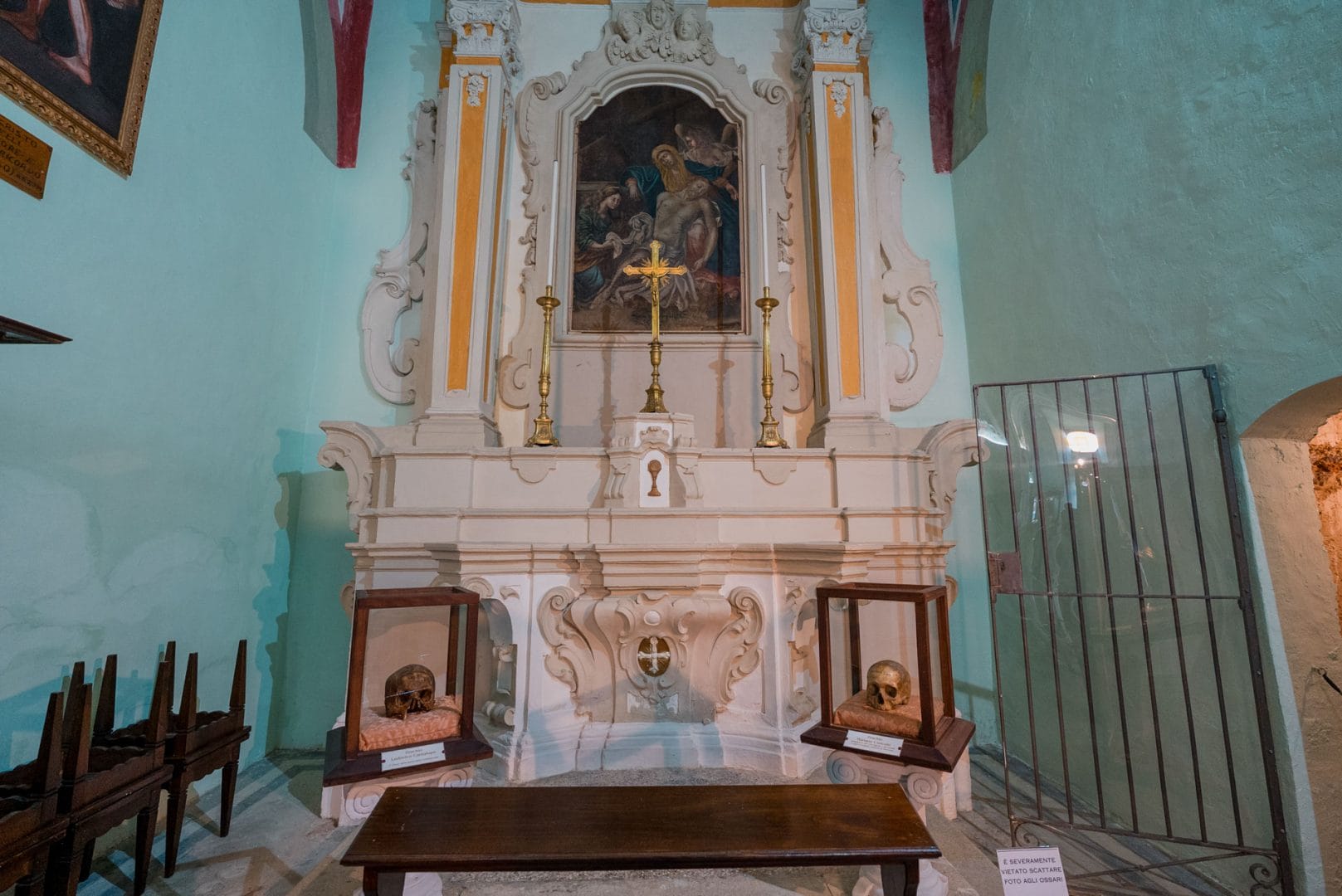
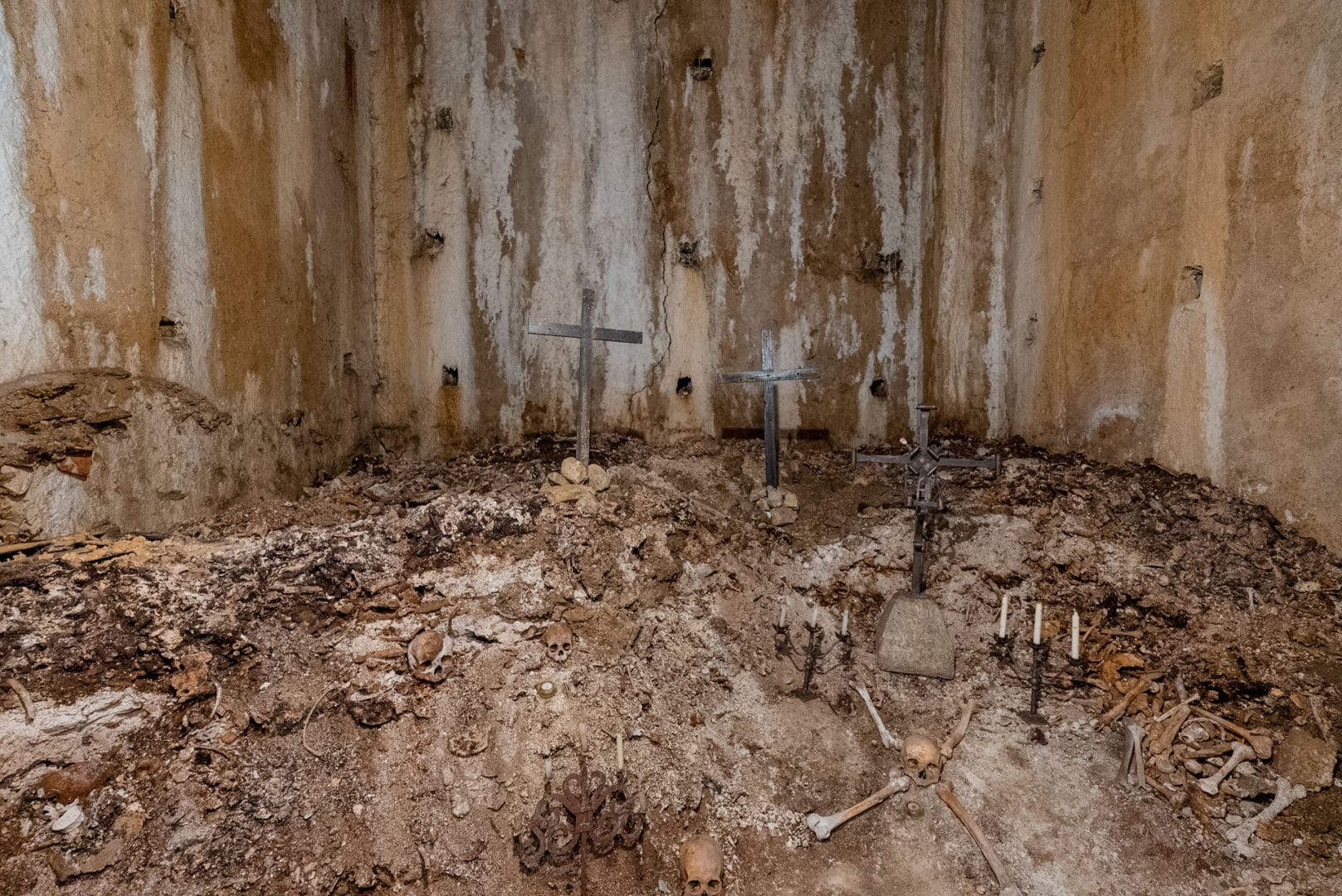
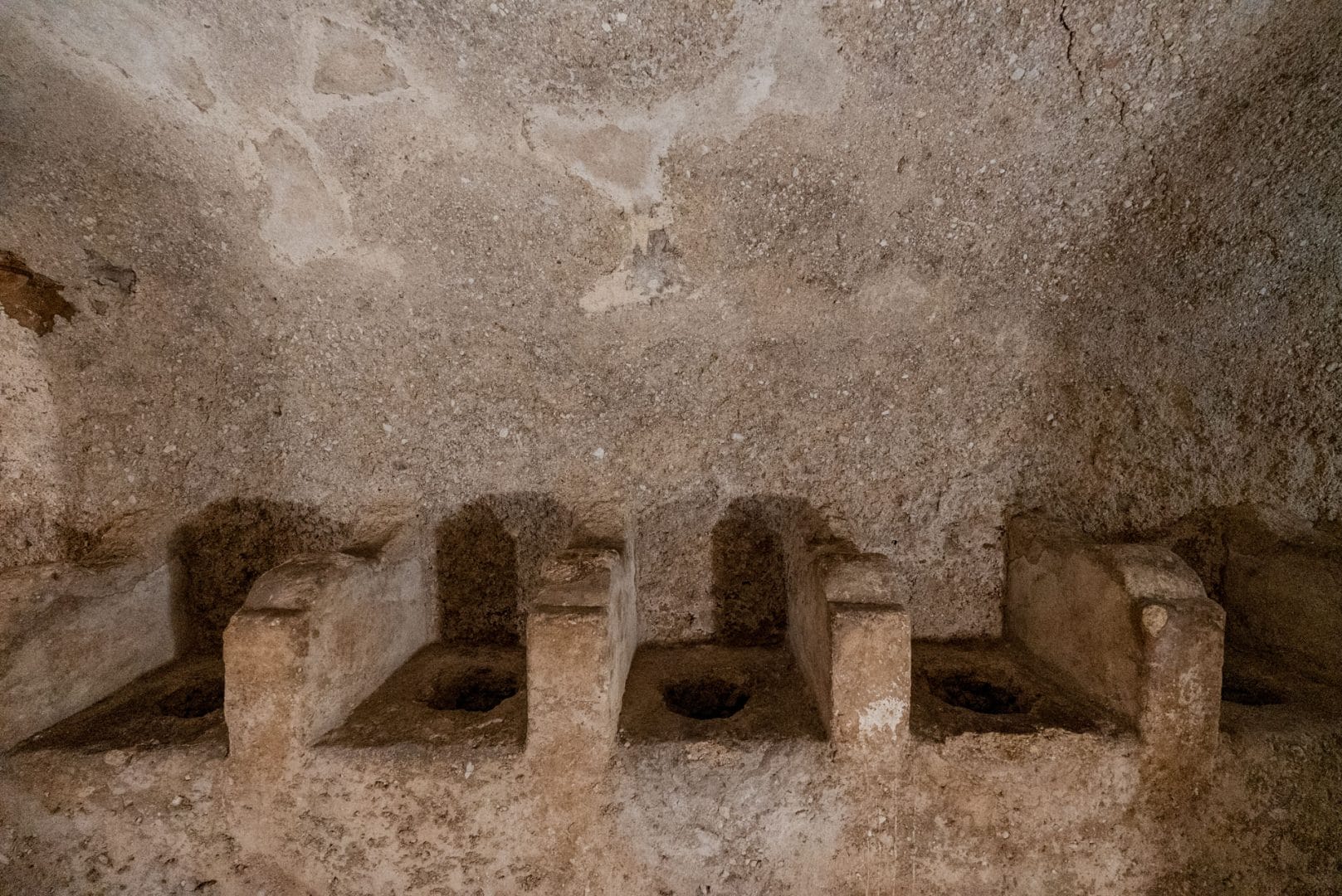
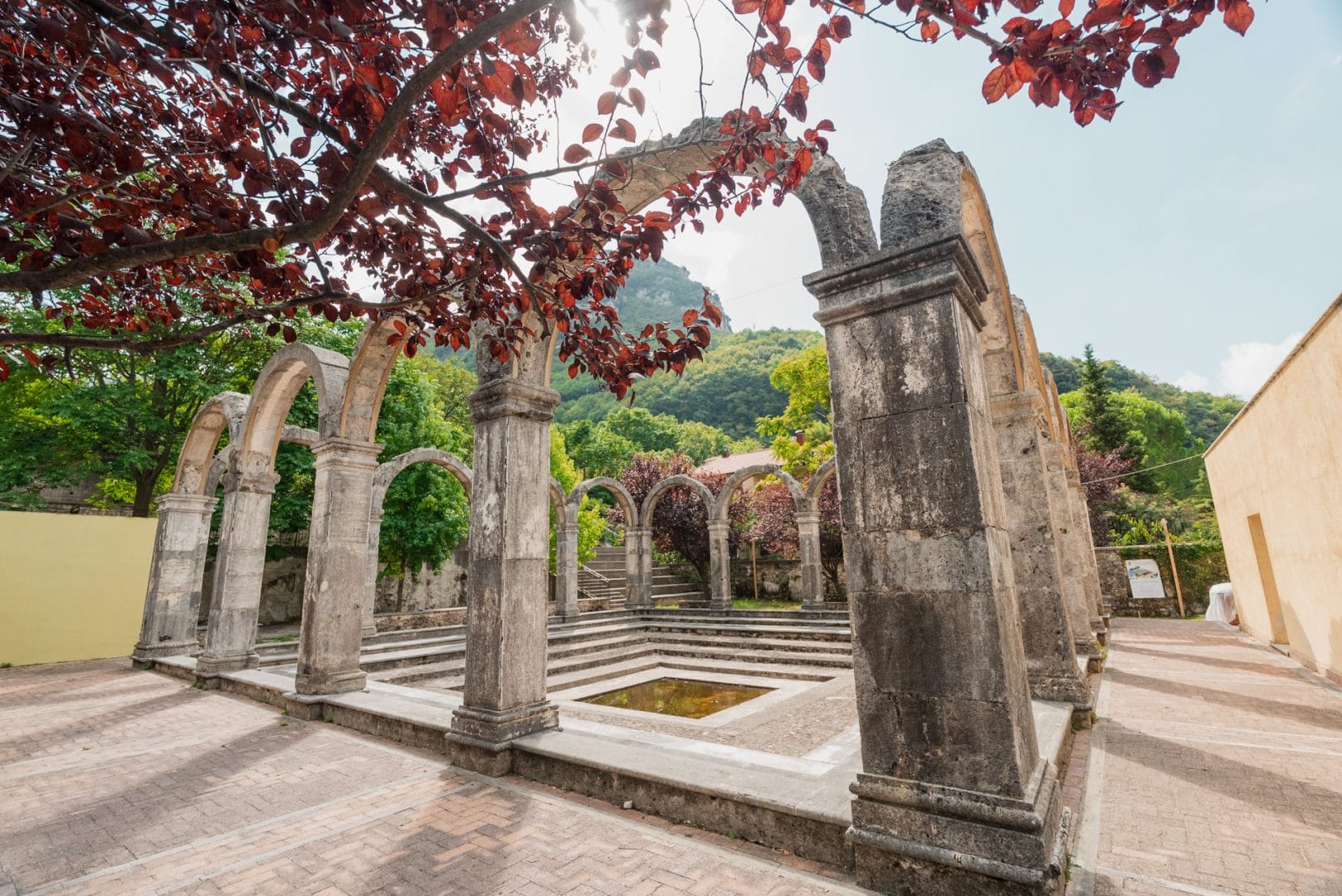
Crossing the Ponte dei Preti leads to the Soccorpo della Pontifical Basilica of St. Mary of Peace whose sides are frescoed with the figures of the Tutelary Saints of the City of Campagna. Left: St. Emidio, the Immaculate Conception, St. Antoninus, St. Apalia. On the right: Santa Maria Domenica, San Bernardino da Siena, the Blessed Virgin of Mount Carmel, San Rocco. Here there are two entrances, to the left that of the Crypt of the Basilica and to the right that of the Church of the Madonna del Carmine - Monte dei Morti, both embellished by two Renaissance stone architraved portals, with cornices decorated with moulded multiform roses alternating with spindle mouldings, supported by pilaster strips, the work of local and Carrara stonemasons. The single-nave church, oratory of the Confraternity, is placed under the protection of Our Lady of Mount Carmel, whose statue covered in precious embroidery in pure gold (18th cent.), located in front of the entrance, is placed in a late Baroque stucco niche with two volutes, interspersed with cherubs, supported by quadrangular columns tapered at the base and decorated with floral motifs; the altar in brown marble, inlaid with polychromes (18th century), comes from the suppressed Capuchin Convent and was moved there in the early 20th century. On the sides of the high altar, two other altars were placed (19th c.), panelled and stuccoed, on which are two shrines: on the right with the statue of St. Bernardine of Siena sculpted by the Neapolitan Nunzio Maresca in 1603, minor patron of the city following his visit in 1440, and on the left with that of St. Roch (17th c.), co-patron after the plague of 1656. The terraced wooden seats - the work of Mariano Cuocolo in the 18th century -, are single-seated separated by armrests, leaning against the walls, with the backs decorated by fluted pilasters, the frames supporting bowls alternating with papier-mâché busts of the Souls in Purgatory. The choir seats are interspersed with the exit, surmounted by the organ supported by circular wooden columns, built in the 18th century and repainted in the following century. The left transept, which serves as the Chapel of the Pieta, has an altar whose stuccoes follow those of the major one, while the skulls of Mariano Cuocolo and Ludovico Cantalupo, the latter a Jesuit and Prior in 1627, can be seen in two display cases. One of the church's ossuaries was unearthed in this area in the early 2000s. In the right transept, in some showcases, it is possible to admire part of the finds unearthed during excavations carried out between 1999 and 2004, furnishings of the confraternity, the statue of the Immaculate Conception, a work by the Campagnese artist Giuseppe Caracciolo, and that of St Michael Archangel. The right transept also gives access to some of the burial chambers of the old town cemetery. The smaller, square-shaped one contains 21 burial chambers and, according to studies carried out by the Confraternity, was reserved for male members of the Sodality. The other two constitute the actual entrance to the town cemetery also surrounded by mortar seats, used to lay the corpses; the seats, as can be seen, have holes at their bases that allowed the organic residues of the deceased to drain into drainage channels before being cleaned and finally placed neatly on piles of bones and skulls; this scenario can be seen in an adjoining room where, through a small window, it is possible to observe the bones placed there for eternal rest. The right transept also gives access to the Sacristy. Here, a large wardrobe (1788), with doors and chests of drawers, is engraved with scroll motifs and the image of the Eternal Father (16th century and of unknown provenance), in which the sacred furnishings for worship, robes and insignia of the brethren are kept; the kneeler (1791), a real jewel, follows the style of the stuccoes and the wardrobe. A spiral staircase provides access to the museum of the Brotherhood in which one can admire ancient vestments, objects and sacred texts. The blue vault of the church constitutes a true “journey” of the soul, from Purgatory to Paradise. Supported by pilasters, with a square column edged in burgundy, at the base of the vaults decorated in the 18th century with white stuccoes framing the Holy Spirit; the ideogram of the Ave Maria crowned and surrounded by floral festoons and cherubs surmounted by the Eye of Providence; the third panel depicts Mount Carmel, consisting of a cross, surrounded by cherubs, with a skull at the base, while from the tip emerge the souls in Purgatory, whose penances not even high prelates escape. In the medallions one can recognise the symbols of the Heart of Jesus facing the Heart of Mary, the Church Militant and the Martyrs of the Church, the Time of Life and Life after Death. The large panels on the walls and in the vaults of the church are decorated monochromatically in white on ochre, indicating that the Light and Grace of God is coming inside. A small door in the apse leads to the archaeological area where the walls of the ancient Collegiate Church of Santa Maria della Giudeca (12th century) were brought to light.
Text taken from Countryside Brotherhoods through the centuries by Raffaele D'Ambrosio
La Confraternity Mount of the Dead, under the patronage of the SS. Our Lady of Mount Carmel was founded in 1626 (1), following a mission to Campagna by the Fathers of the Society of Jesus, by Ludovico Cantalupo, whose skull is preserved as a relic in the confraternity's oratory, together with that of the carver Mariano Cuocolo, author not only of the wooden altar in the Church of the Dead, but also of all the excellent furnishings in the oratory, as well as all the choir stalls, which were masterfully crafted in 1821. It was in this year, in order to better arrange the stools, that the stone stoups were removed immediately after the main entrance and replaced with two cast-iron ones attached to the wooden pillars of the organ, built by Benedetto De Rosa in 1892. This Confraternity began its life under Bishop Barzellino de Barzellini and for his merit aggregated to that of Rome with the favour of numerous indulgences. It only enjoys the privilege of carrying the banner in processions, like that of Rome. (2) Today, in the Church of the Dead, one admires the’altar of Our Lady of Mount Carmel, all in local stone, finely chiselled, a true jewel of art by local sculptors. There used to be a wooden altar, and under the priory of Vincenzo Busillo it was replaced with the current one, removed from the Church of the former Convent of San Martino or of the Capuchins, where it was the high altar << But what shall I say of the Piety of the Citizens towards the Dead; since they founded a Congregation in the Bishop's palace, in which the devout congregation, on Mondays, exercises itself in moving acts of suffrage towards the Souls in Purgatory. Therefore, in the space of about 87 years, it has received a great deal of income, which is made available for Holy Masses and other alms. (3) The bull of its erection bears the date of 7 August 1627 by the Chapter Vicar and General Don Costantino Naymoli, vicar of Bishop Alessandro Scappi. Felice, one at Pariti, one at Pezzarotonda, one at Varano, three vast arable lands, two of which at Varano of 154 tomoli and the other at Rofigliano of 13 tomoli, two chestnut groves, one estate at Palmentara and one at Colacchio. La Confraternity of the Mount of the Dead was aggregated and admitted to enjoy the privileges, indulgences and graces of the Archconfraternity of the Dead of the City of Rome on 7 December 1614. In a very few years it became so numerous, up to two hundred brethren, and so rich that it aroused the envy of all the others. Much importance was given to the cult of the dead, who were buried under the churches; legacies were considerable and almost all, before dying, obliged the confraternity to celebrate masses in suffrage of their souls. Women could also be members of the confraternity, as they were suitable for worshipping the dead and inculcating respect for the dead in men's souls. When it was founded, it was endowed with much capital, not only from the University, but also from many benefactors. It was granted permission by the Chapter to hold its worship services in the cathedral's relief. In 1763, the Chapter, on false and non-existent grounds, opposed the approval of the new statute and appealed to the Royal Chamber of Santa Chiara, which, after a careful and thorough examination of the documents presented by both parties, rejected the Chapter's appeal and recognised the Confraternity's legitimate independence from the Chapter.
Text taken from Countryside Brotherhoods through the centuries by Raffaele D'Ambrosio
NOTES (1) According to De Nigris it was founded in 1604; the bull of erection bears the date of 7 August 1627 while the notary Ambrosio Busillo states that it was legally erected on 21 October 1627. (2) Notary deeds of notary Michelangelo Rosa dated 15 and 30 August 1627. (3) Niccolò De Nigris, Campagna Antica e Nuova, Naples, Francesco Benzi, 1691, p. 129.