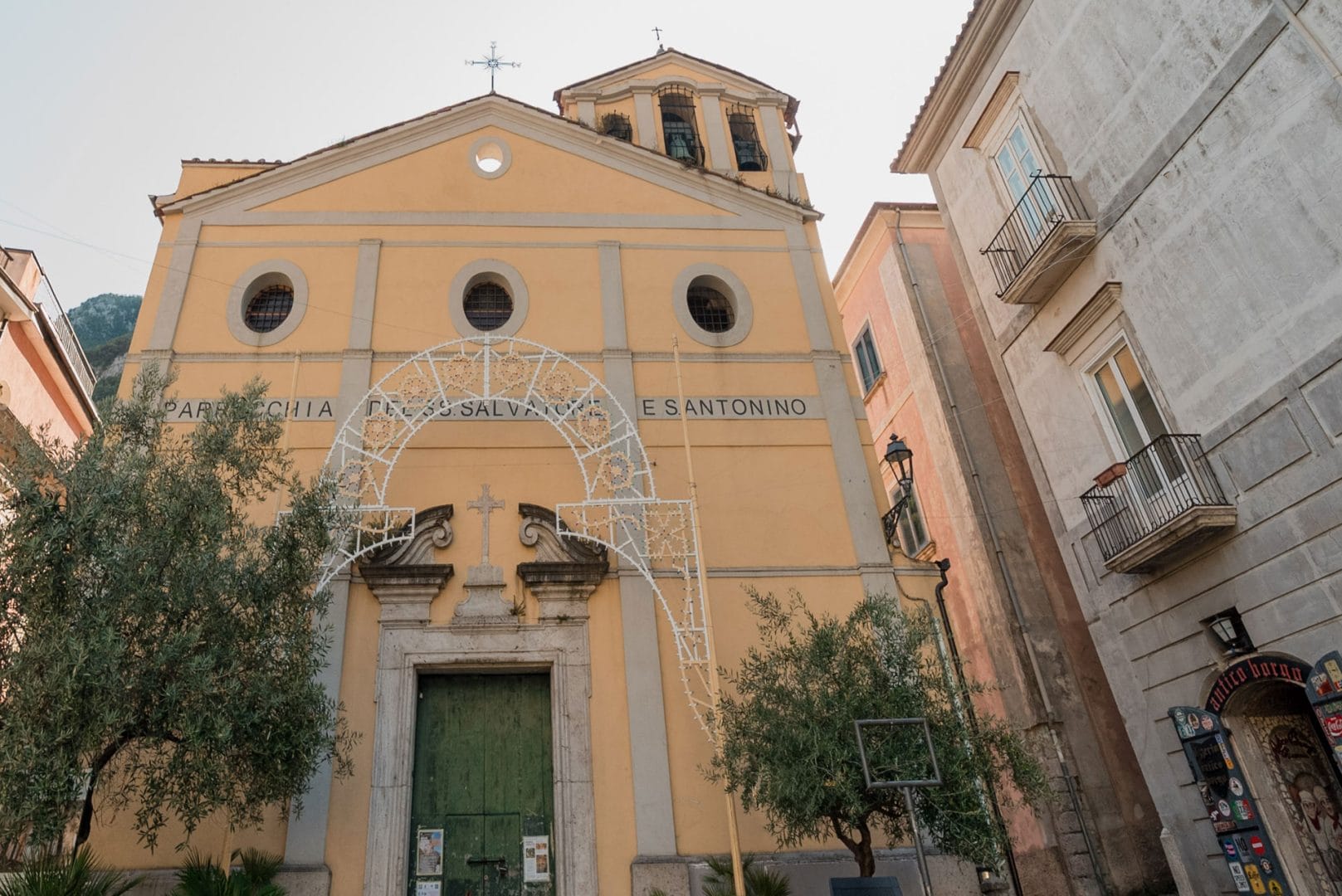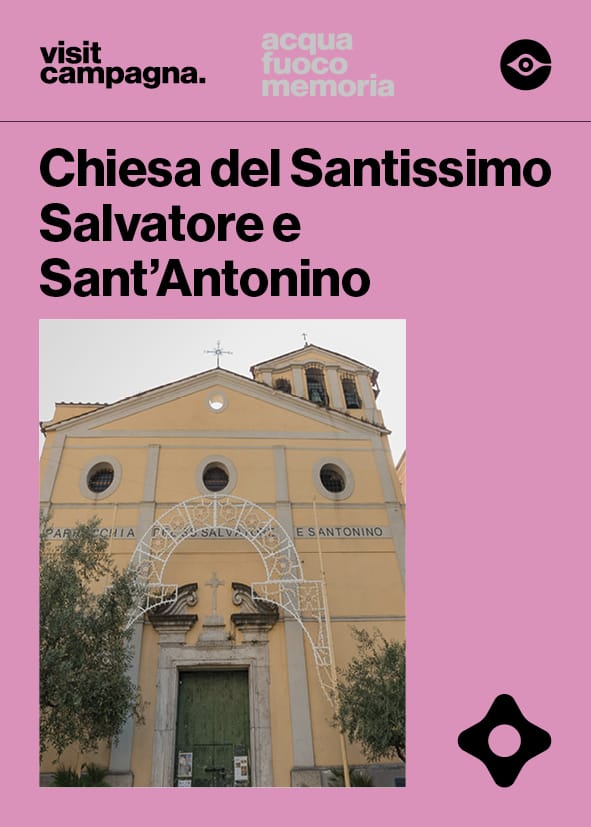

La Church of the Holy Saviour and St. Antoninus stands in the neighbourhood Zappino of the historic centre of Campagna, in Largo Giulio Cesare Capaccio.
Documented as early as 1168 as the “Church of the Holy Saviour”, it also assumed in later times the dedication to the Patron Saint of the city, Saint Antoninus Abbot, when in the 1258 received the thaumaturgic column attributed to him.
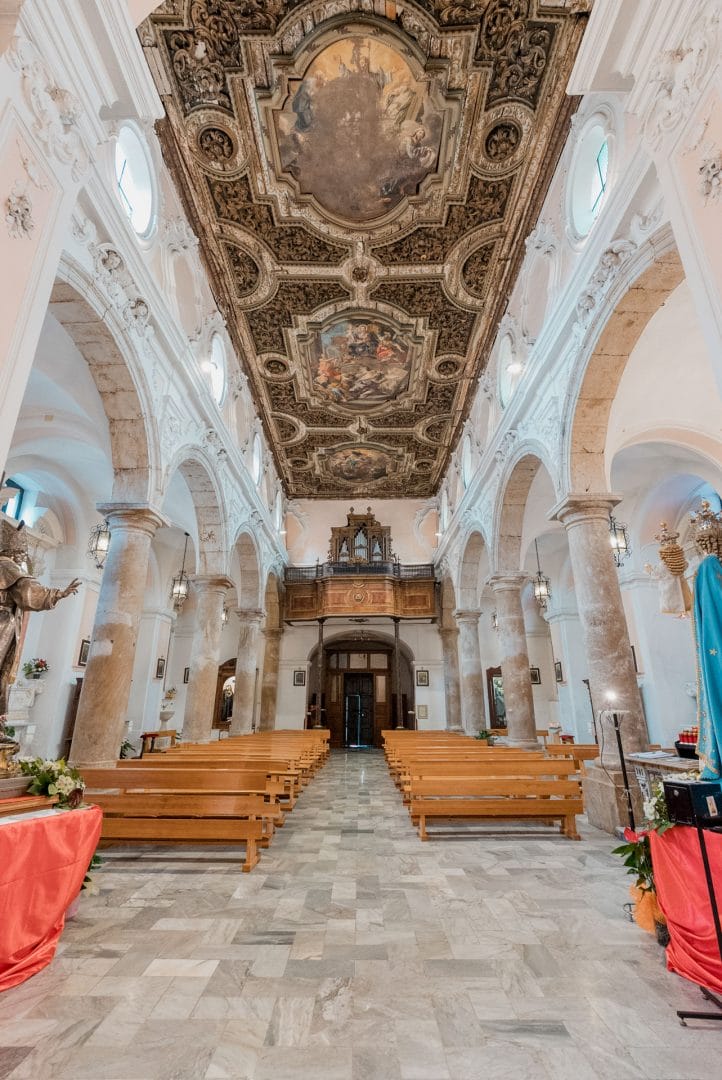
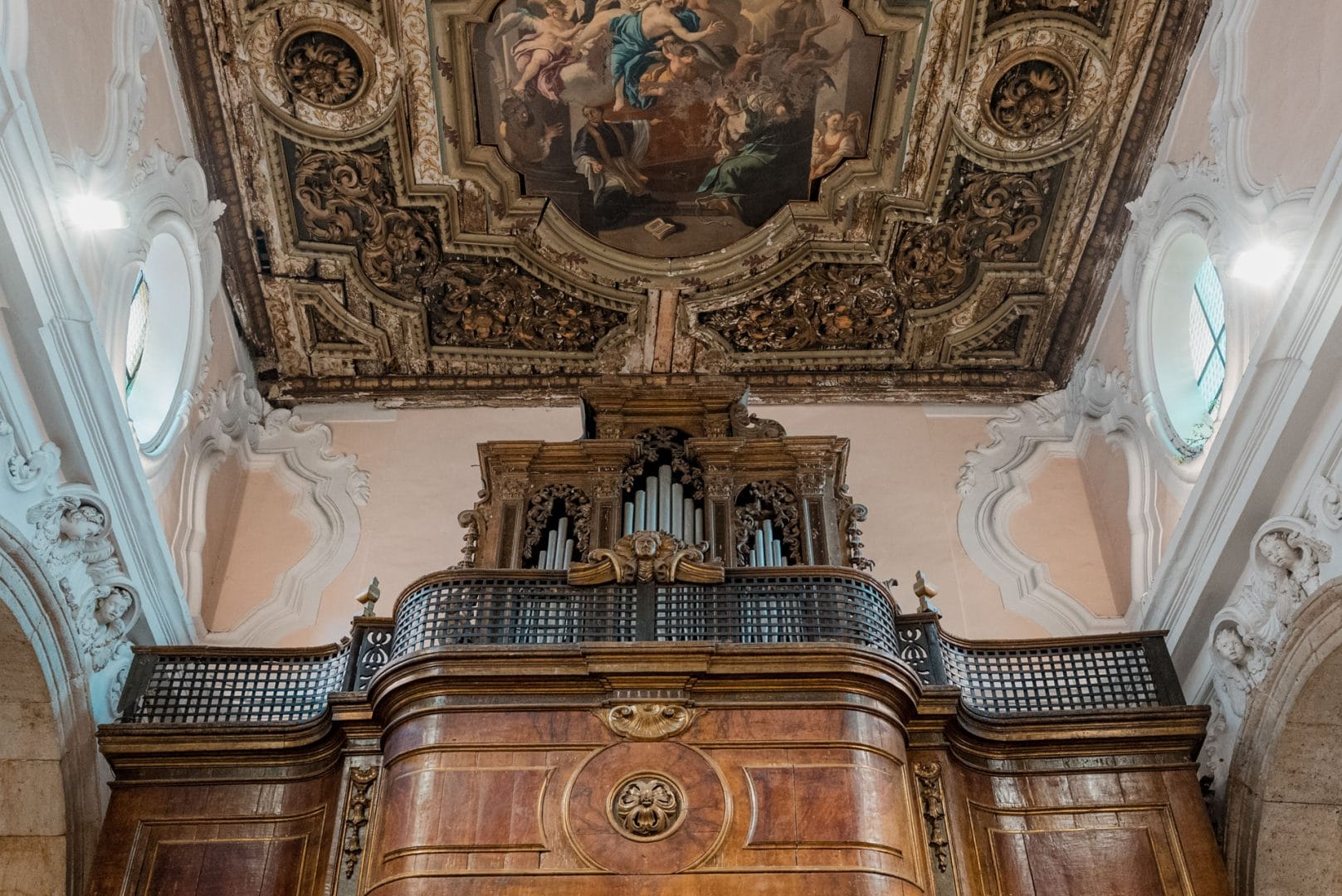
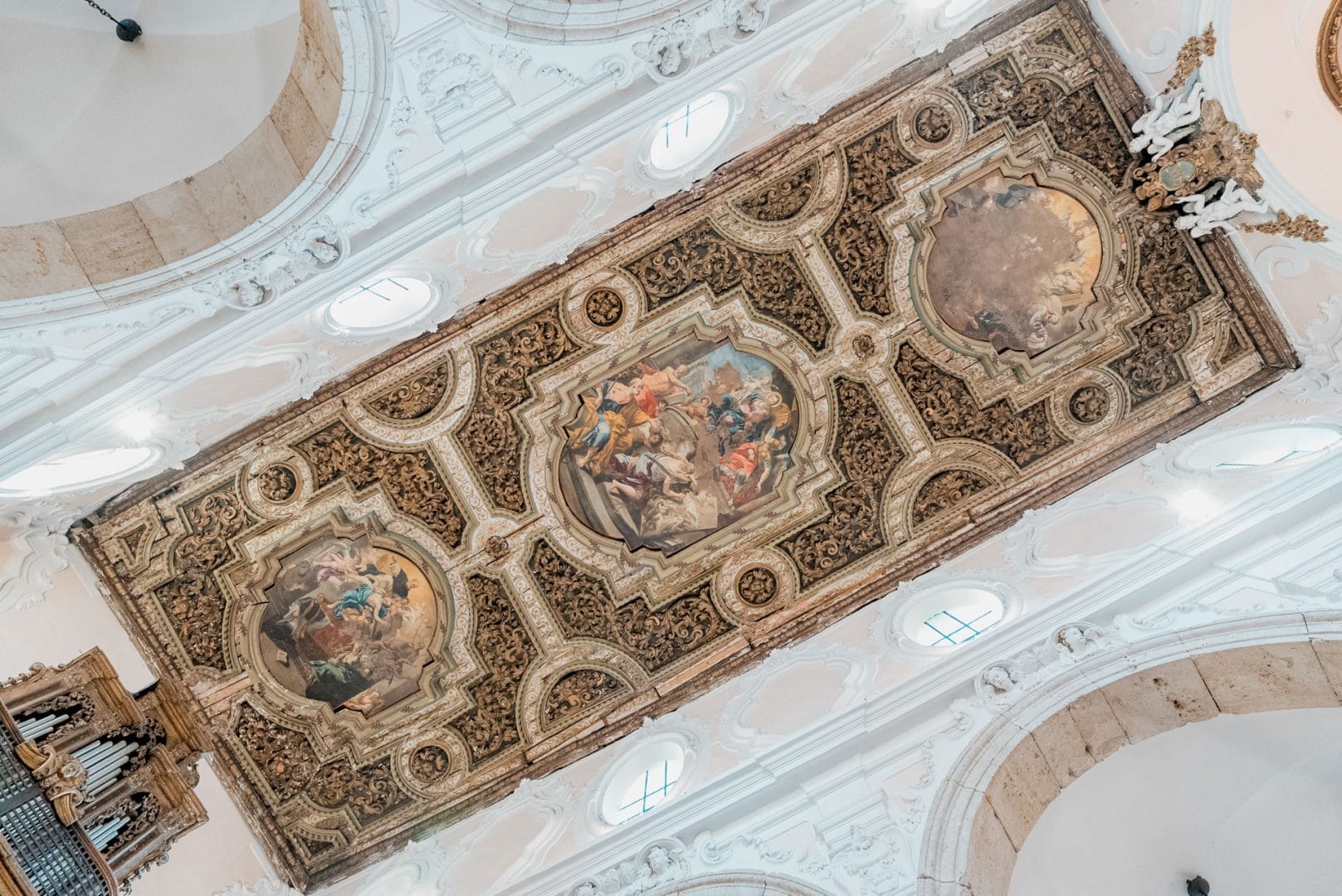
The structure, consisting of three naves divided by columns with Doric capitals and covered by vaults in the side aisles and by a wooden ceiling in the nave, bears witness to numerous architectural interventions: among them a renovation of the 16th century which led to the inversion of the façade and the demolition of the bell tower in favour of the neighbouring ducal palace.
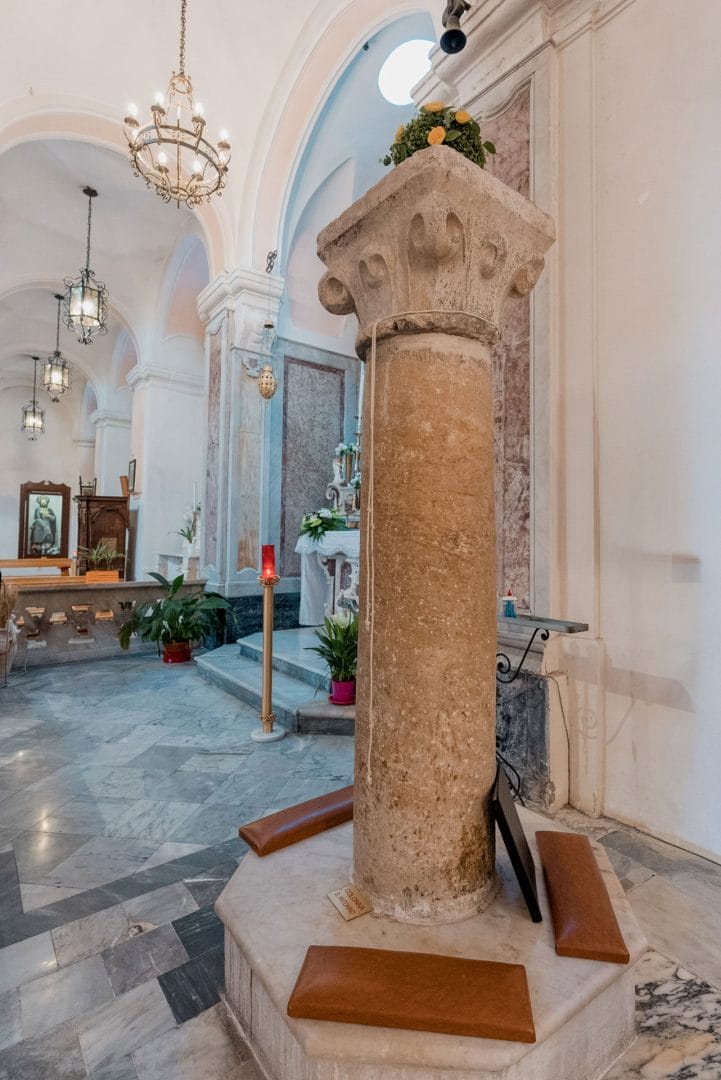
Over the centuries, the church became a landmark for thaumaturgical rites, particularly the exorcisms practised on so-called “obsessed”, symbolically linked to the column of St Antoninus.
Despite transformations and alterations, the church retains the fascination with historical stratification and its function as a place of identity for the community of Campagna.
The layout is typical of constructions Romanesque-Gothic bellsa rectangular hall with three naves separated by stone columns (five in each row) with Doric capitals and a mixed roof system (central wooden ceiling and lateral ribbed vaults).
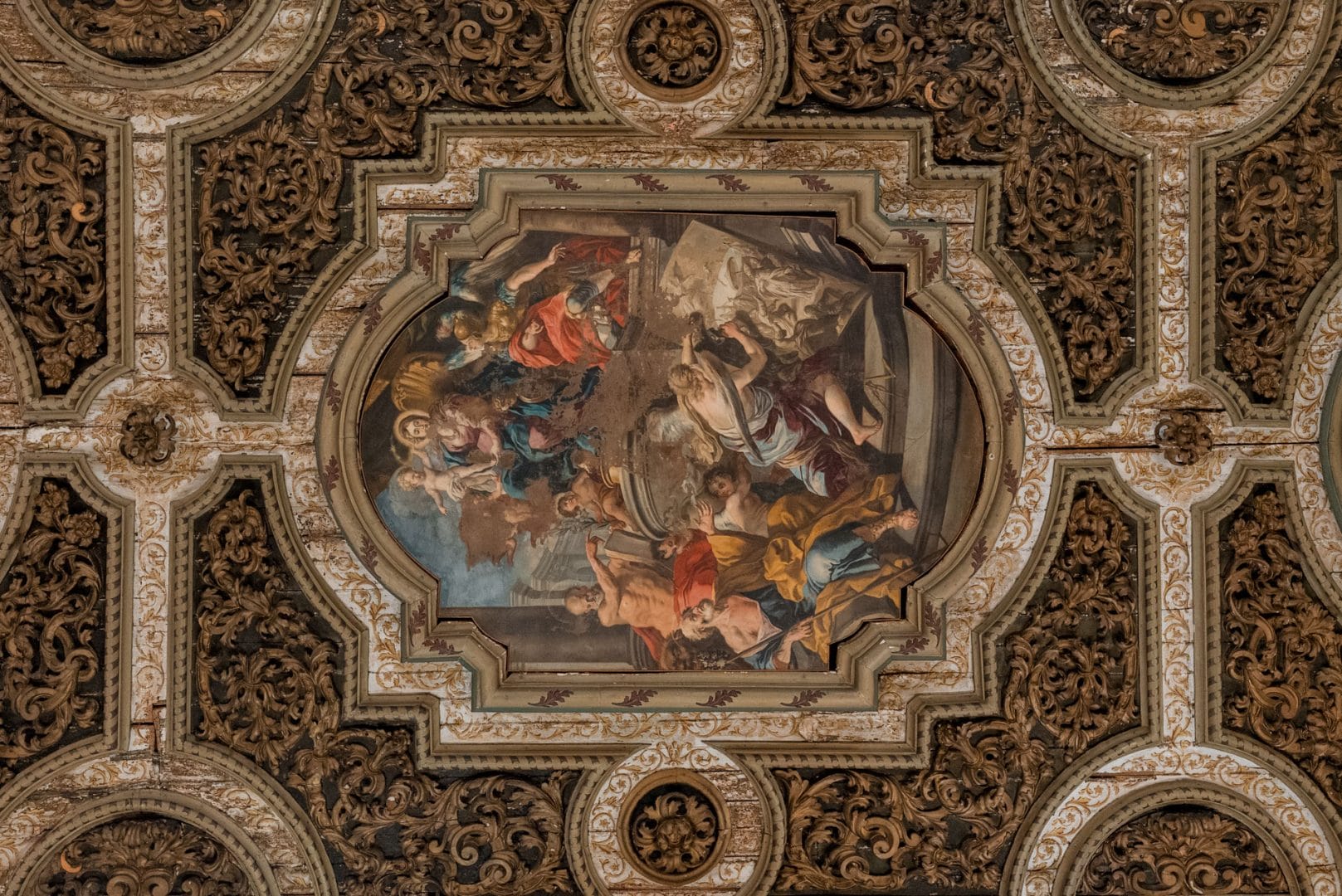
Inside are paintings depicting the Transfiguration of Christ, l’Immaculate Conception and the Glory of St Antoninus, attributed to local painters.
La thaumaturgic column of St Antoninus - an artefact to which in the Middle Ages the obsessed were tied during liberation rites - is still present in the left aisle.
The church also houses altars dedicated to St Francis of Paola, to the Our Lady of the Snows, and exposes ex voto and statues of locally venerated saints such as San Rocco, Saint Lucia e St Joseph.
In 1258 the church obtained the thaumaturgical column donated by the Abbey of Santa Maria la Nova, event that sanctioned the addition of the dedication to St Antoninus.
In the course of the 16th century, at the behest of the Duke Pironti and in conjunction with the construction of the adjacent ducal palace, it was inverted original facade and the bell tower was demolished, profoundly changing the urban conformation of the Zappino district.
The laying of the’high altar, i restorations after the 1980 earthquake and the reopening for worship on 19 December 1999 testify to the recent care taken to preserve the building.
Today the church, although less monumental than the great cathedrals, maintains a strong identity valuean integral part of the urban fabric of Campagna, bears witness to a deep connection between popular faith, architecture and historical landscape.