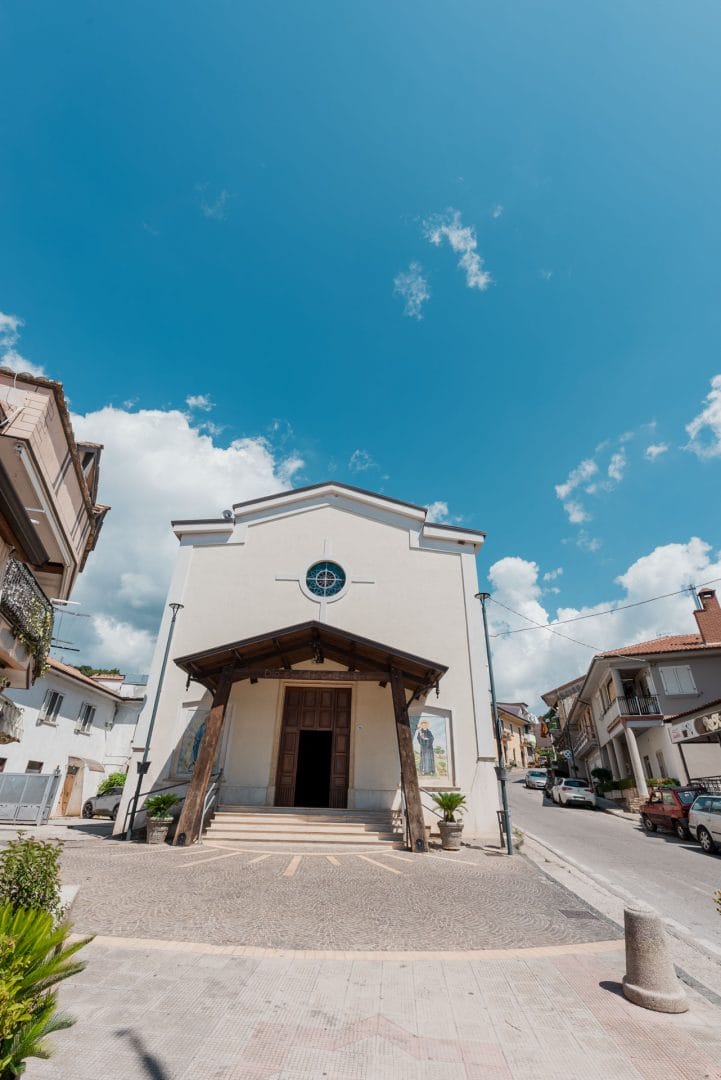

La Church of St Nicholas of Tolentino is located in the hamlet of Puglietta, on the slopes of the Picentini Mountains, immersed in a landscape of olive groves that characterises this area of the municipality of Campagna. It is a relatively recent church compared to the other sacred buildings in the district: in fact, it was born as a response to the spiritual needs of a growing community, which after World War II felt the need for a larger and more permanent place of worship in the centre of the town.
Near the present building there used to be a chapel of ancient private patronage; It was the then Bishop Giuseppe Maria Palatucci, starting in the 1940s, who promoted the construction of a new church that could serve the inhabitants of Puglietta in a more organic manner. The parish of St Nicholas of Tolentino was canonically erected on’11 February 1958 and the new church is inaugurated in 1963 by Archbishop Jolando Nuzzi, officially joining the network of parishes of the Salerno-Campagna-Acerno diocese.
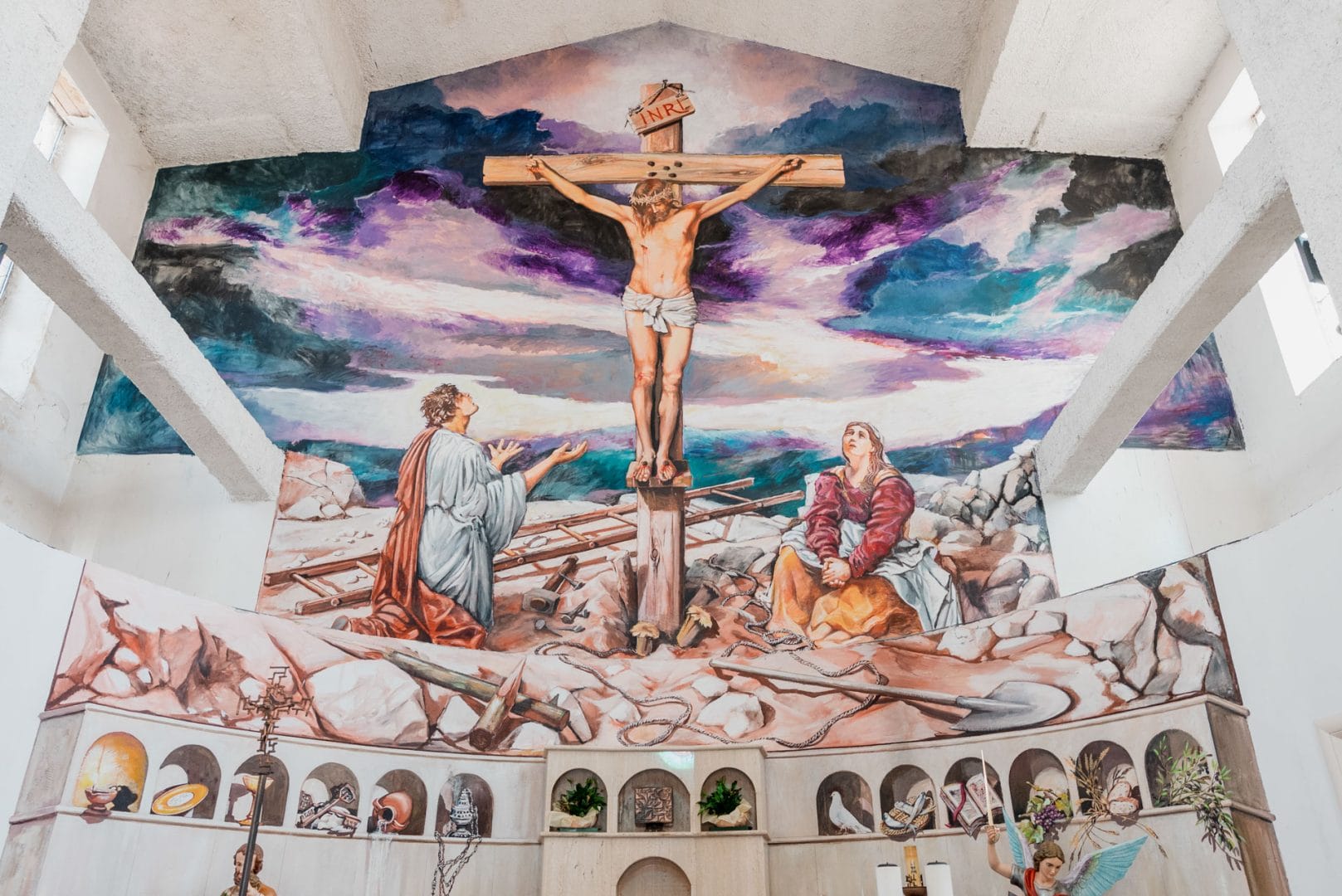
Like many buildings in the area, the building suffered serious damage in the 1980 earthquake. The parish complex was later renovated, with interventions that restored full functionality to the church and, above all, preserved the interior paintings, the work of the Campagnese painters Nino Aiello and Vito Acone, which adorn the walls with an intense figurative rendering deeply rooted in local devotion.
Today, St Nicholas of Tolentino is the religious heart of Puglietta: it is here that the main liturgical feasts are celebrated, where the community gathers in times of joy and trial, and where pastoral paths shared with the other parishes of Campagna and the Campagna-Colliano deanery are built. The church, despite the simplicity of its architectural forms, represents a fundamental piece in the mosaic of places of worship spread throughout the hamlets and countryside surrounding the provincial capital.
La history of the church of St Nicholas of Tolentino has its roots in a much older reality: in the surroundings of the present building there was in fact a chapel linked to a private patronage, a religious reference point for a population distributed in scattered houses and small rural nuclei. With the passage of time, however, this layout no longer met the needs of an expanding hamlet along the main road.
During the 1940s, as Italy went through the difficulties of the war, long-term pastoral choices matured in the Campagna area. Bishop Monsignor Palatucci identifies in Puglietta one of the centres where a more structured Church presence is needed, capable of guaranteeing the regular celebration of the sacraments and continuous spiritual accompaniment to the population.
The erection of the parish in the 1958 marks the symbolic transition from a private patronage chapel to a church that is, to all intents and purposes, of the community: a church that no longer depends on the will of a single family, but is recognised as a point of reference for all the inhabitants of the hamlet. With the inauguration of the new building in 1963, the parish presence also takes on a clearer and more visible architectural form in the urban fabric.
On this path, St Nicholas of Tolentino becomes the place where the memory of the past - preserved in the memory of the first chapel - and the needs of contemporary life intertwine: catechesis, oratorial activities, social gatherings and initiatives make the church a cultural as well as religious garrison, contributing to consolidate Puglietta's identity as a distinct community but intimately linked to the city of Campagna.
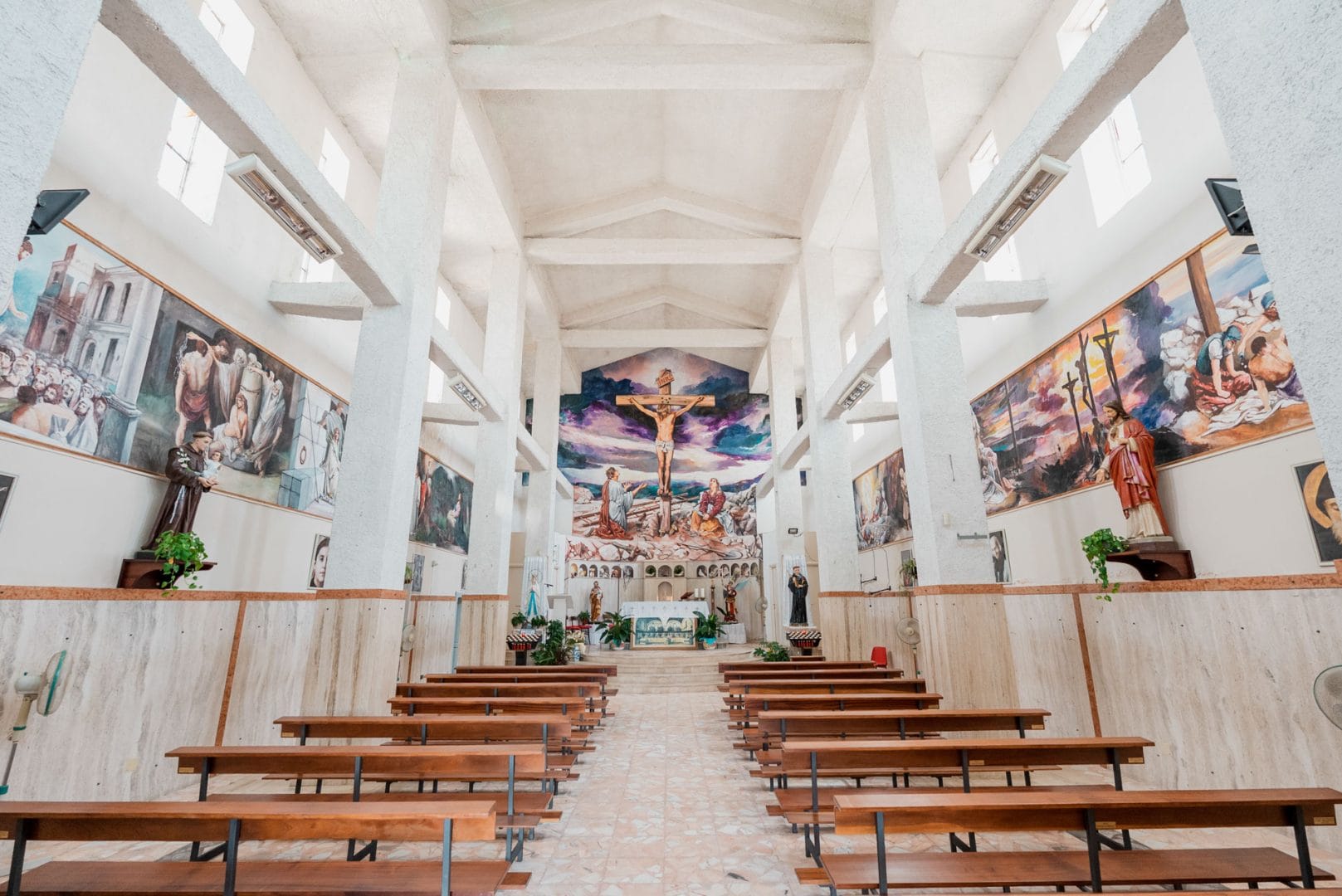
One of the most significant elements of the Church of St Nicholas of Tolentino is the’pictorial apparatus interior created by two artists from Campagna, Nino Aiello e Vito Acone. Their works, placed on the walls and in the most visible areas of the liturgical hall, constitute an example rare dialogue between contemporary figurative language and the iconographic tradition of the Church, offering the faithful a visual account of faith rooted in the land.
The 1980 earthquake hit the building hard, causing structural damage that necessitated major consolidation and restoration work. In this context, the conservation of the paintings takes on a special value: it is not only a matter of saving a recent artistic heritage, but of preserving the memory of a creative season who had helped to give a new face to the church and community.
The interventions following the earthquake have made it possible to return a safe and functional building to the parish, in which Aiello and Acone's works continue to play their role as “catechesis through images”. For the people of Apulia, returning to celebrate in a church that has been rebuilt but is still marked by the colours and shapes desired by the two artists means rediscovering a sense of continuity between before and after, between the wound of the earthquake and the will to recover.
Today, anyone entering the Church of St Nicholas of Tolentino discovers a simple environment, but made unique by the presence of these paintings, which accompany the gaze towards the altar and invite us to read the recent history of the community in the light of the Gospel and the figure of Saint Nicholas, a pilgrim saint and intercessor for those who live and work in this part of the Trigento valley.