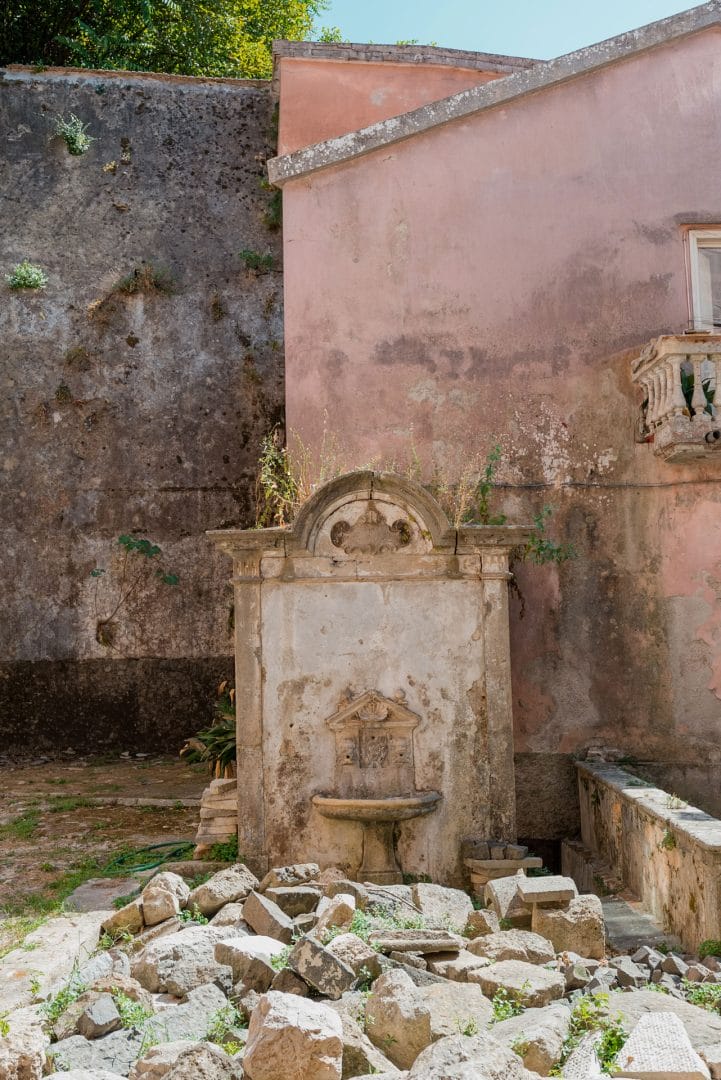

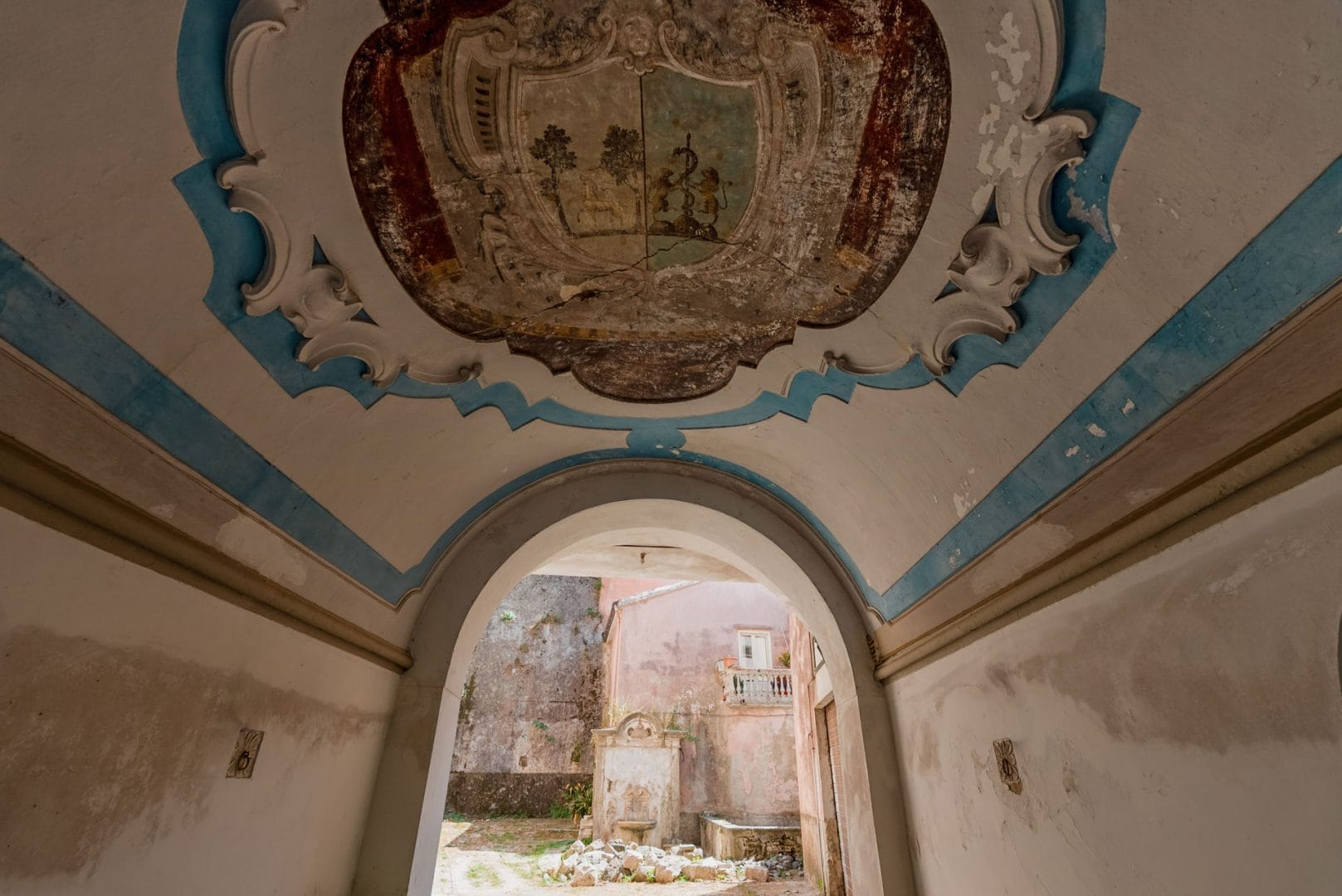
Cervone Palace is one of the most representative historical residences in the old town of Campagna. Located between Largo Cantalupo and Largo della Memoria, the building is named after the noble Cervone family, a family of ancient Campagnese origin that played a prominent role in the political and social life of the city for centuries. The building dates back to 18th century and is distinguished by the’elegance of the stone entrance portal, surmounted by an arch that once housed the family coat of arms, still partly visible today. Through the portal one enters the inner cloister, the heart of the palace, enriched with stone paving stones and a central fountain, a decorative and functional element that also served as a fishpond. The cloister represents one of the finest examples of Campagnese residential architecture of the period, with its harmonious proportions and skilful use of local materials. Le halls of the palace, once adorned with stucco and fine furnishings, hosted prominent figures of the local nobility and clergy over the centuries. Today the building, although having undergone transformations over time, retains its historical identity and continues to bear witness to the prestige of a family and a city deeply rooted in its cultural tradition.
La Cervone family represented one of the most influential dynasties of the 18th century countryside for centuries. Owning vast lands and involved in the main administrative and religious activities of the city, the dynasty contributed to the cultural development and promotion of public works, supporting the building churches and charitable institutions. The palace became a meeting place for prominent personalities, scholars and prelates, taking on a function beyond that of a simple private residence. During the 19th century, some members of the family distinguished themselves for their political and civic commitment, participating in public life and local renewal movements. The city chronicles also testify to the Cervone's participation in brotherhoods and religious initiatives, a sign of their deep-rooted devotion and connection to the community. Today, although much material evidence has been lost, the family name lives on in the collective memory of the people of Campagna, as a symbol of a past of nobility and civic dedication.
From an architectural point of view, Cervone Palace offers a fine example of mansion campagnese. The plant is structured around a quadrangular cloister, paved with limestone paving stones, at the centre of which is an 18th-century fountain. The courtyard, surrounded by round arches and stone pillars, served as a representation space and as a place of daily life for the resident families. The side staircases led to the noble floors, where there were rooms for reception functions, private rooms and staff quarters. The sober decorations, typical of southern civil architecture, and the use of local materials such as stone and terracotta, give the complex a harmonious and authentic character. Partially restored after the 1980 earthquake, the building retains its original configuration and remains an important testimony to Campagna's architectural heritage. The cloister, with its fountain and its silence, still represents a place of memory and contemplation, where the stone seems to guard the echo of past centuries.