
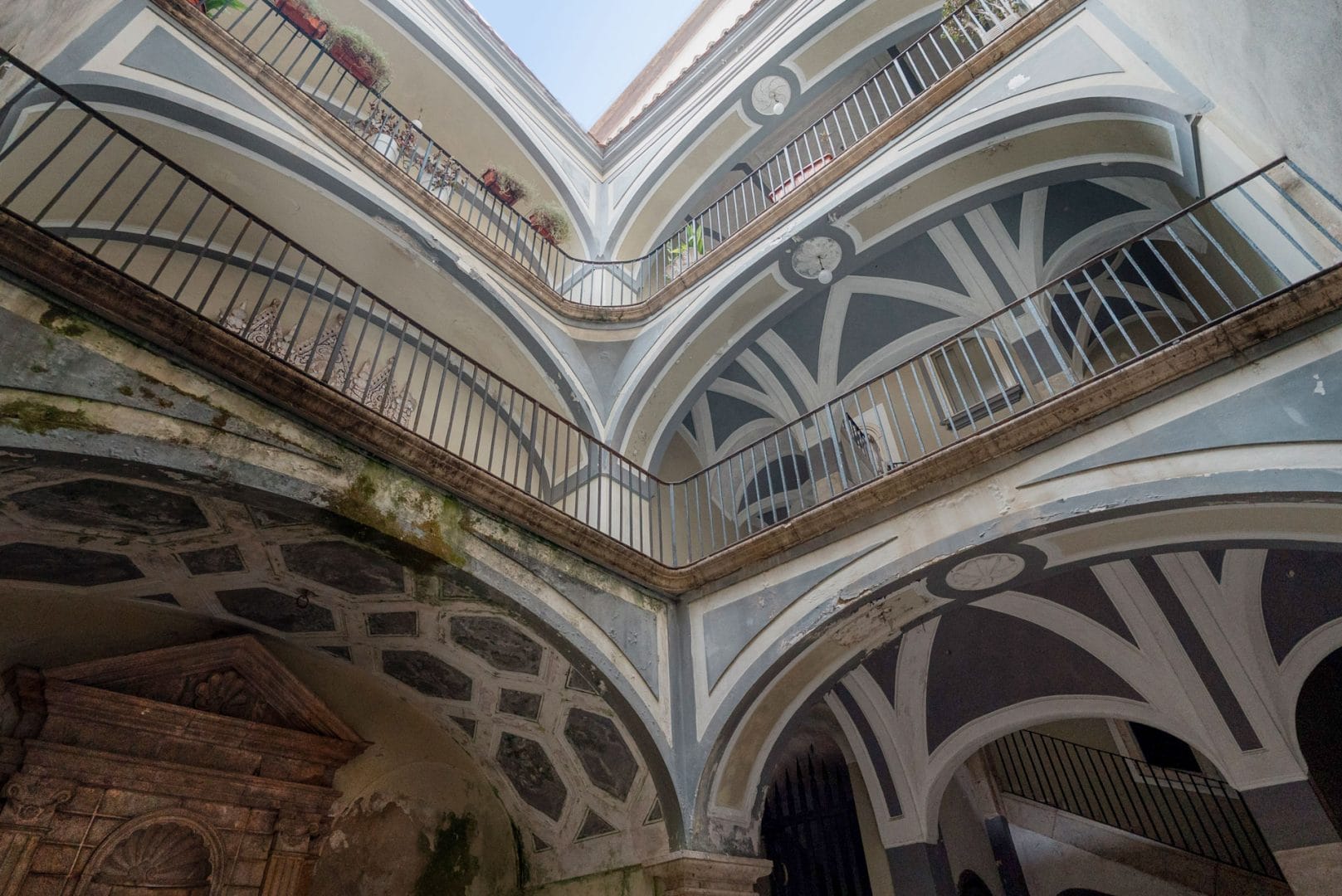
A few steps away from the papal co-cathedral basilica of Santa Maria della Pace, you will find Palazzo Pastore-Alinante, considered one of Campagna's most elegant stately homes. Its façade, in pure baroque style, It is dominated by a monumental portal leading into a three-storey building, the result of a history that began in the 16th century and has come down to us almost intact.
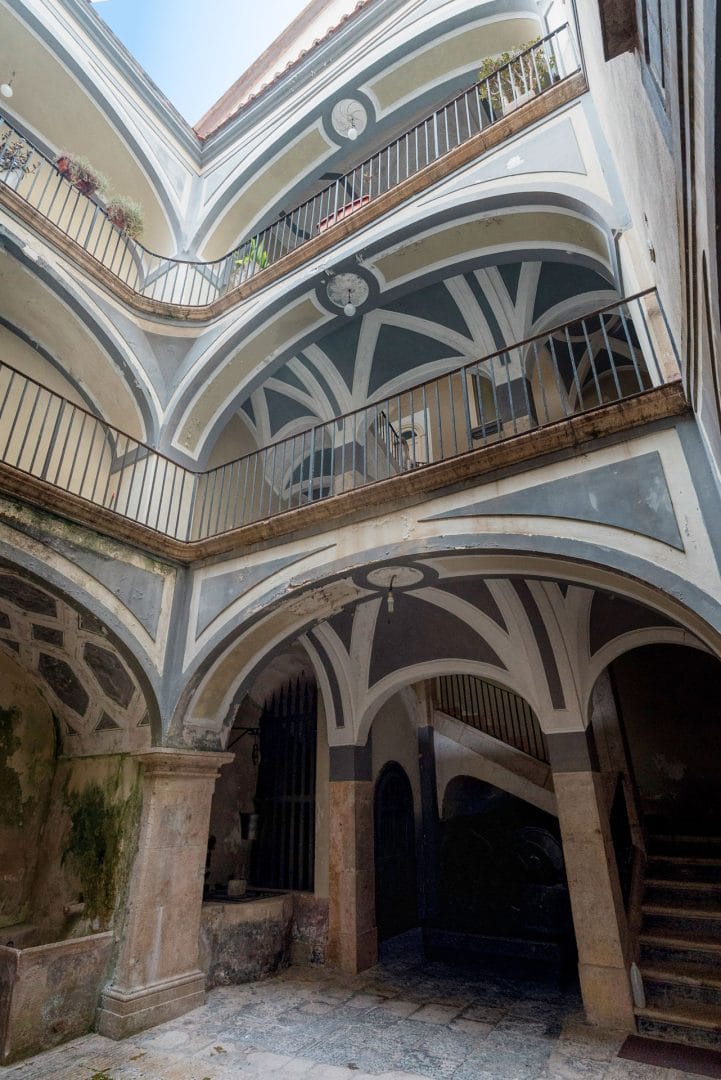
Historical sources recall how, after the 1980 earthquake, the building was carefully restored, It preserves its original layout and distinctive architectural features: the Baroque-Neoclassical style of the exterior, the interiors organised around a cloister and a pattern of spaces that still tell of the rank of its former owners.
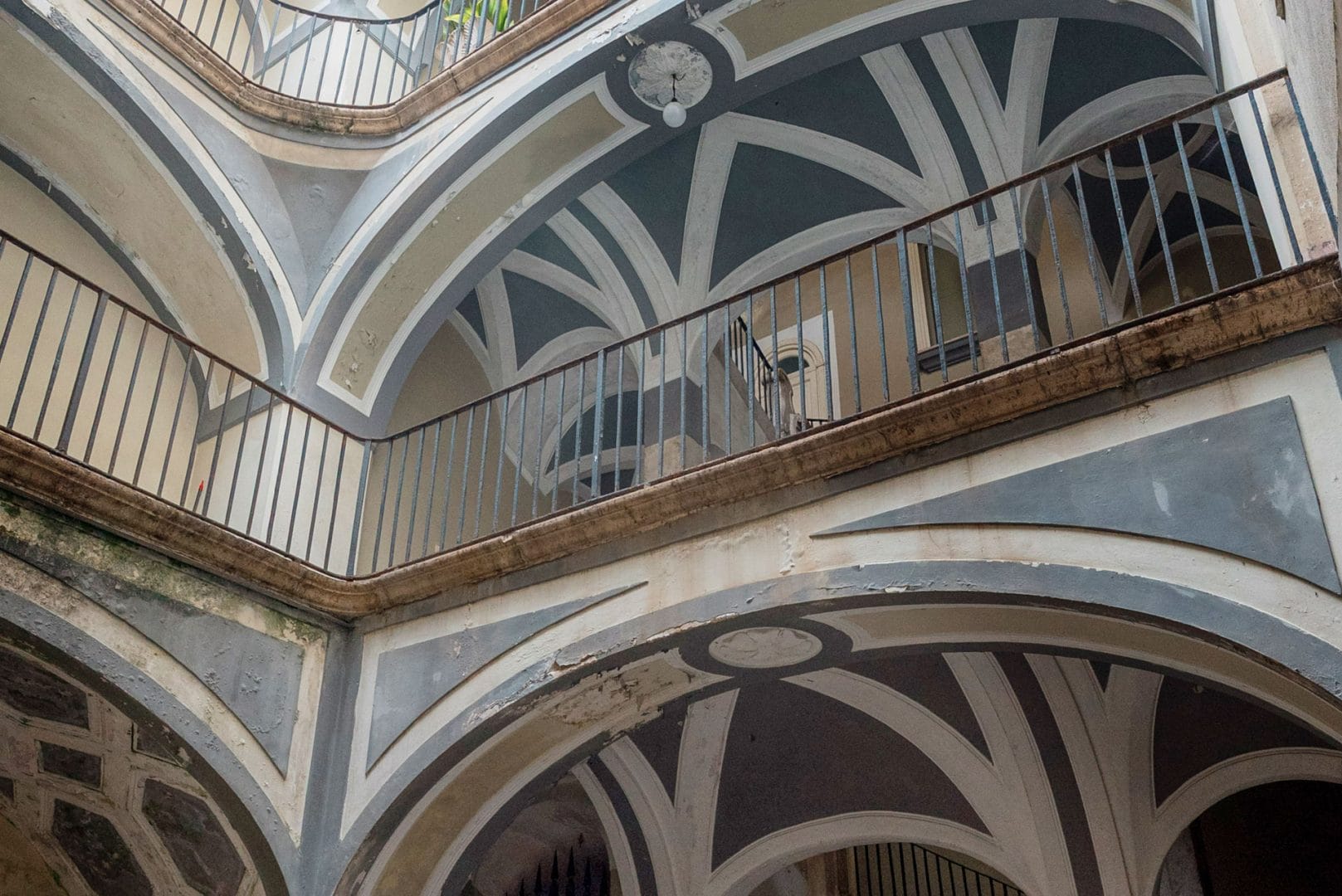
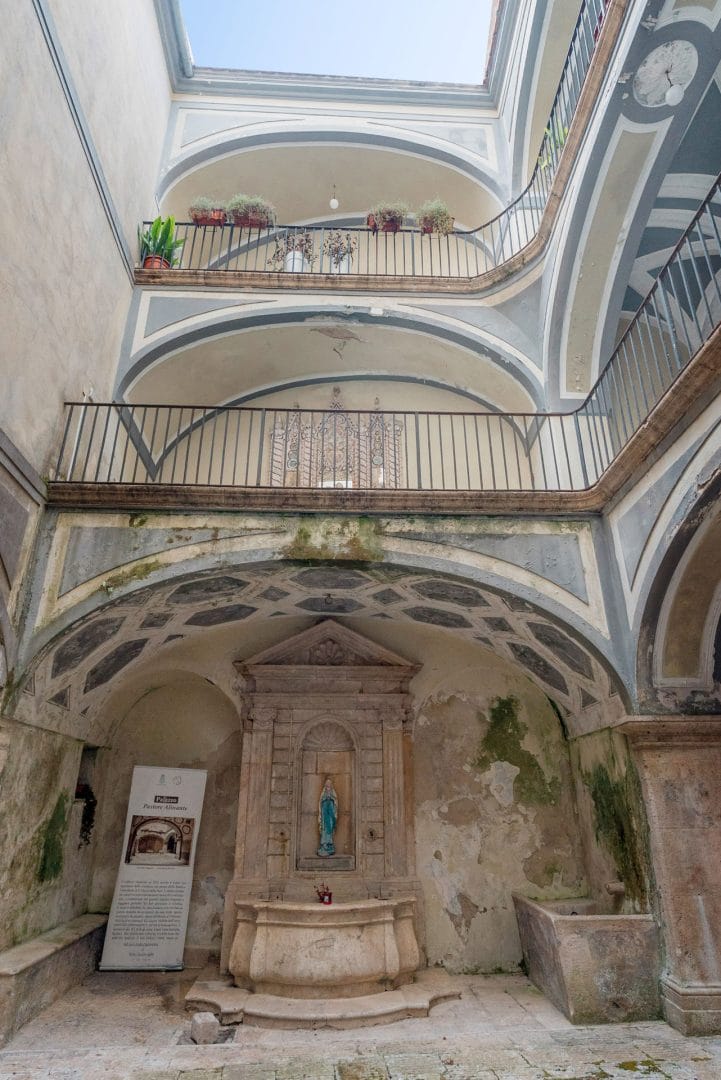
Inside, in addition to the cloister, there are elements of great interest: a cistern which testifies to the water autonomy of the complex, a scale supported by pillars connecting the various floors and a fountain mural, attributed to neo-Gothic currents and embellished with a covering of shells and stone decorations. These details transform the palace into a small casket of art applied to residential architecture.
Included in the tourist routes dedicated to the city's stately palaces and anthropological itineraries, Palazzo Pastore-Alinante offers visitors a privileged glimpse of a historic centre where the relationship between noble families, architecture and the urban fabric still remains one of the distinctive features of Campagna's identity.
The official record of the stately palaces of the City of Campagna recalls how Palazzo Pastore-Alinante belonged to the Pastore and Alinante families, who were present and involved during the revolution of 1799. The double surname that today identifies the building thus recalls not only a succession of ownerships, but also an interweaving of family and political events that spanned one of the most delicate moments in the history of the Kingdom of Naples.
The motions of the 1799, culminating in the short-lived experience of the Neapolitan Republic and the subsequent Bourbon restoration, also involved inland centres such as Campagna, where a part of the local elite looked with interest at Enlightenment ideas and the changes taking place, while other components remained tied to more traditional forms of power and social organisation. The presence of families Shepherd e Alinante in this scenario suggests an active role in the political debate and tensions in the area.
Although there are currently no monographic studies specifically dedicated to the two families in the Campagnese area, local sources indicate that their arrival in the city was probably connected to that period. Palazzo Pastore-Alinante It thus becomes one of the places where architectural and historical memory overlap: the Baroque façade, the monumental portal and the interiors tell not only the taste of an era, but also the will to establish roots and represent families that moved against the backdrop of great political transformations.
Today, this link between building and civil history is also enhanced through programmes of guided tours and thematic routes, which invite us to read Palazzo Pastore-Alinante not as a mere architectural container, but as a living testimony to the social and cultural stratification of the late 18th century countryside.
The identity of Palazzo Pastore-Alinante is strongly linked to its most characteristic architectural elements. The facade on Via Giudeca, in pure Baroque style, is organised around a scenographic portal that acts as a hinge between the street and the interior space: moulded cornices, the rhythm of the openings and the proportions of the entrance combine to construct the image of a noble residence perfectly integrated into the fabric of the historic centre.
Once through the portal, a vault of remarkable workmanship introduces the cloister, the distributive and symbolic heart of the building. Here, the stone, the plastered surfaces and the play of openings create a cosy space, designed to illuminate the internal pathways and, at the same time, to offer a more intimate place of representation than the façade on the street.
Particularly impressive is the fountainsA small fountain accompanies the first passage vault, while a second, on the upper floors, is a real wall fountain, covered with mosaics, stones and shells. This decorative solution, reminiscent of a neo-Gothic and scenographic taste, transforms water into the protagonist of the architectural pathway, adding a rich ornamental apparatus to the sound and movement.
The presence of a internal tank and a scale supported by pillars completes the image of a complex architectural organism in which functionality and representation are intertwined. The inclusion of Palazzo Pastore-Alinante in the anthropological and artistic itineraries promoted by local associations and the municipality confirms the role of this building as a privileged stage in understanding the relationship between the urban landscape, noble families and material culture in the history of Campagna.