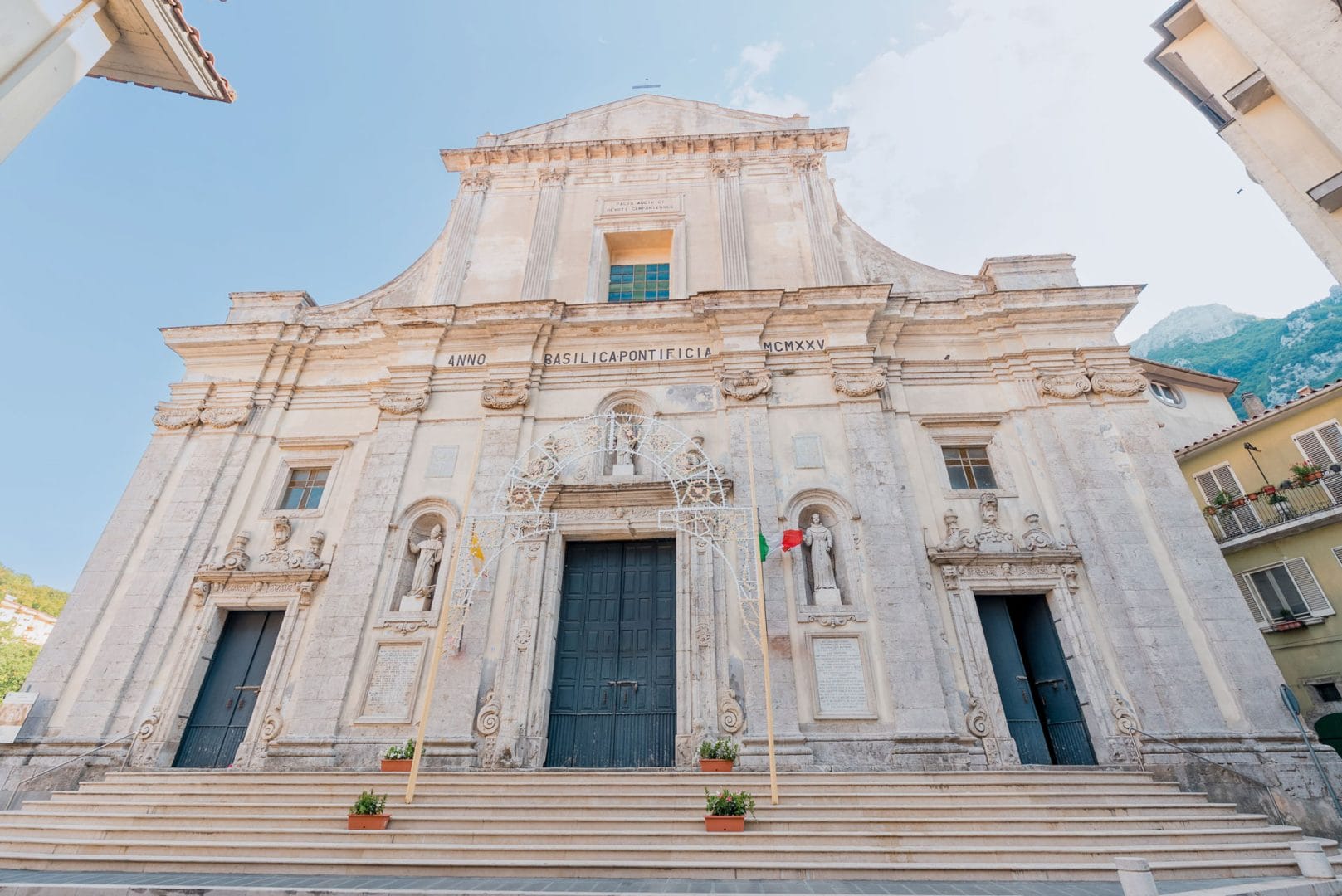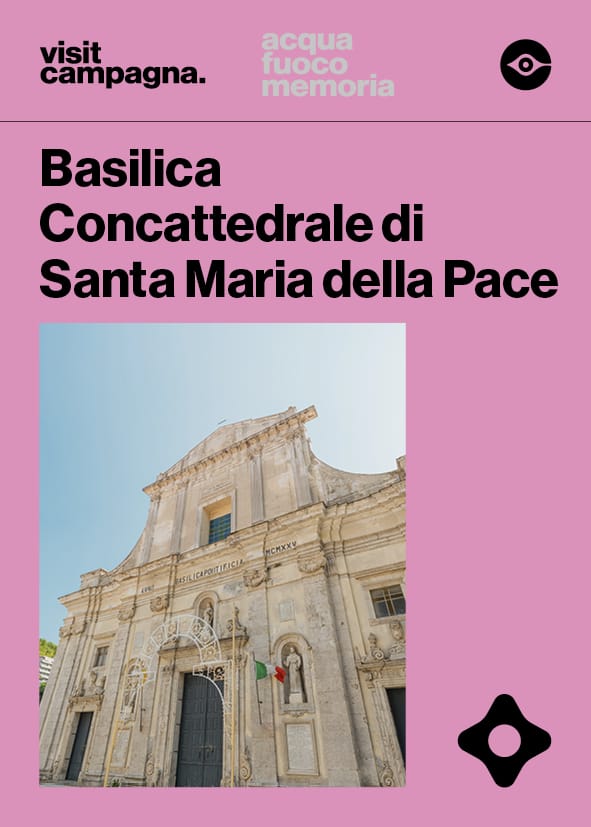

In the heart of the upper part of Campagna, overlooking the large main square, stands the Co-cathedral Basilica of St. Mary of Peace, the city's main building of worship and symbol of its urban profile.
Its history spans centuries of transformations: from the first medieval foundations dedicated to San Salvatore to the construction of the current structure in the 17th century, enlarged and renovated in the 18th century in the Neapolitan Baroque style.
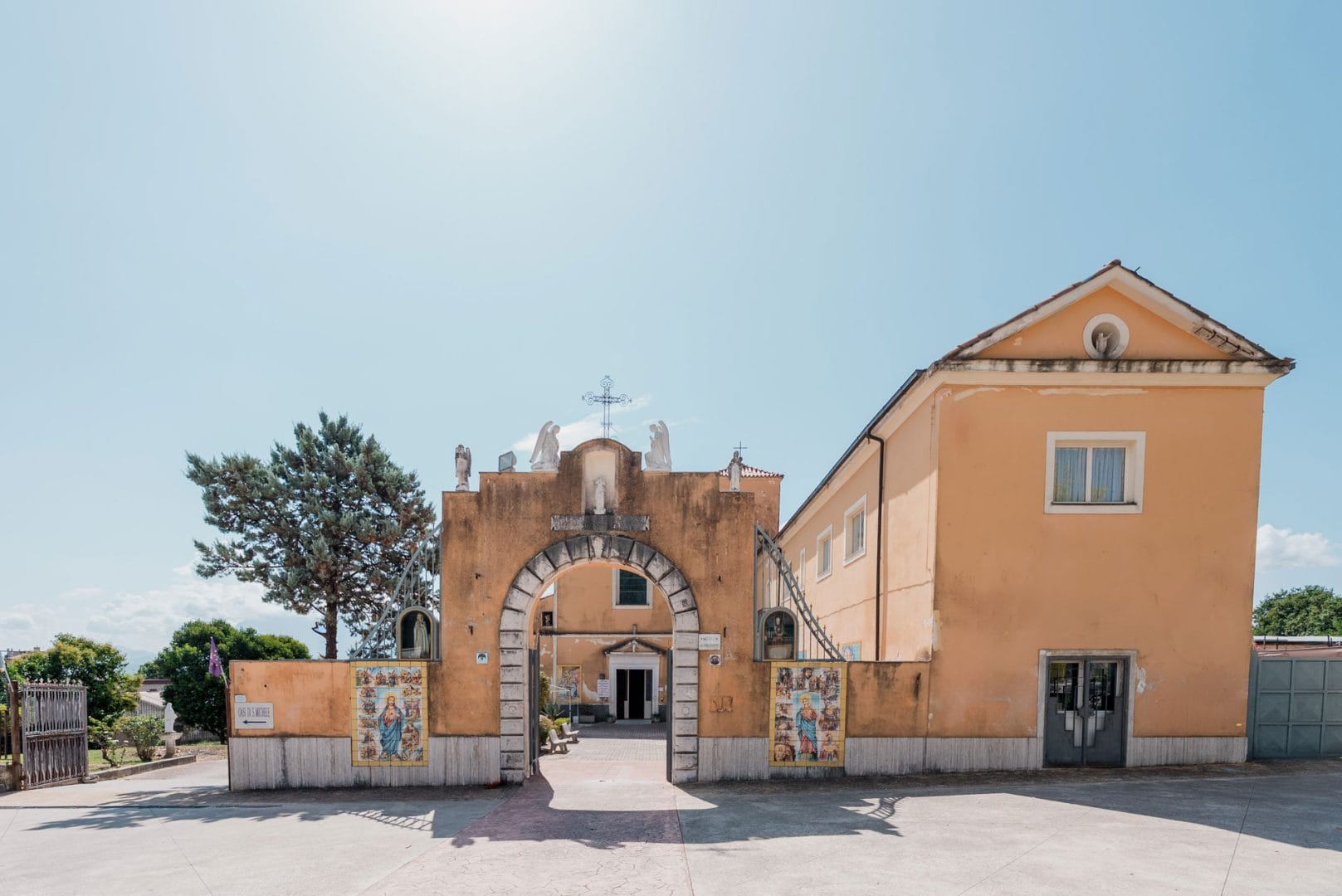
La monumental stone façade, with its balance of columns, niches and gables, expresses the desire to make visible the religious and civil rebirth of Campagna after the centuries of wars and earthquakes.
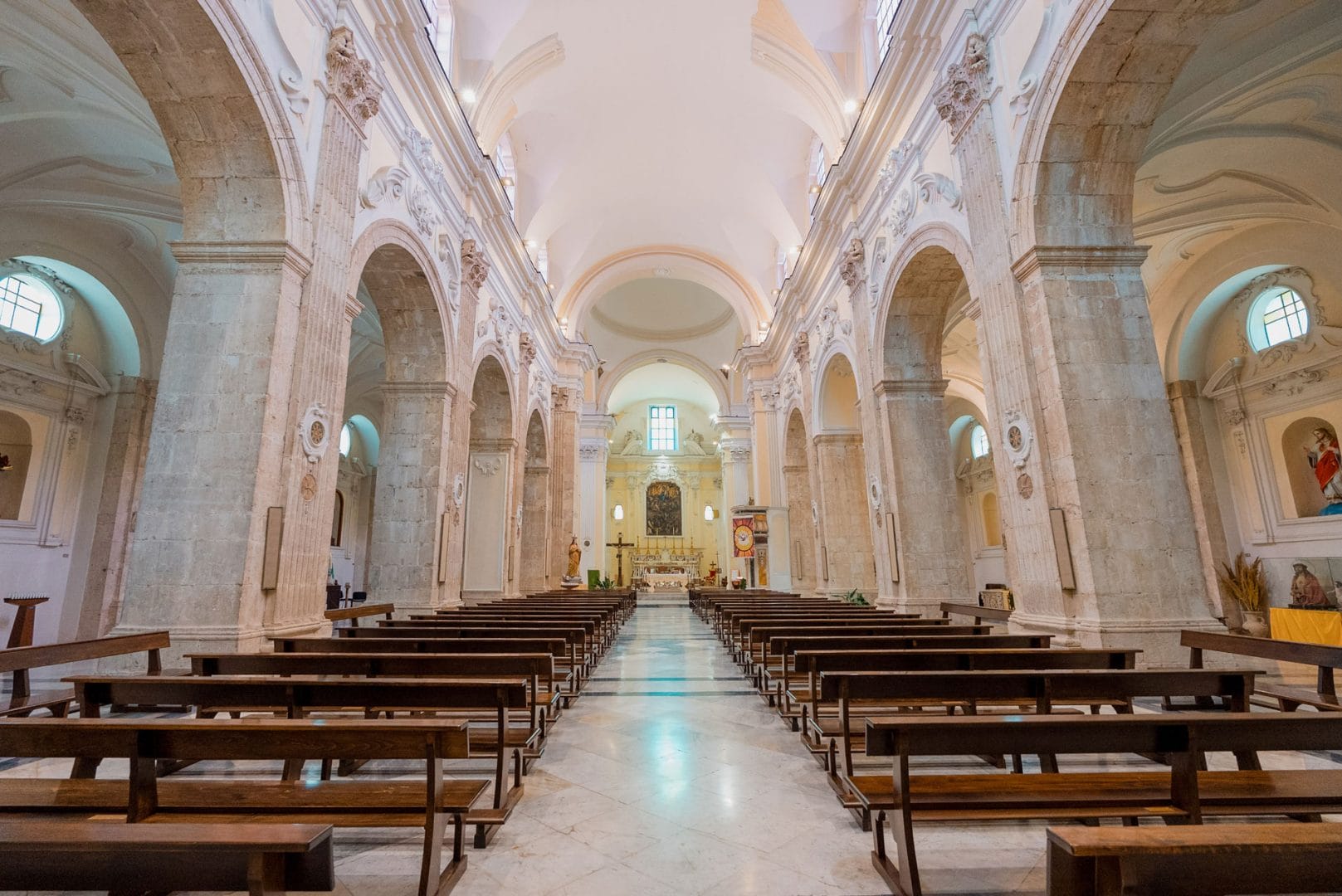
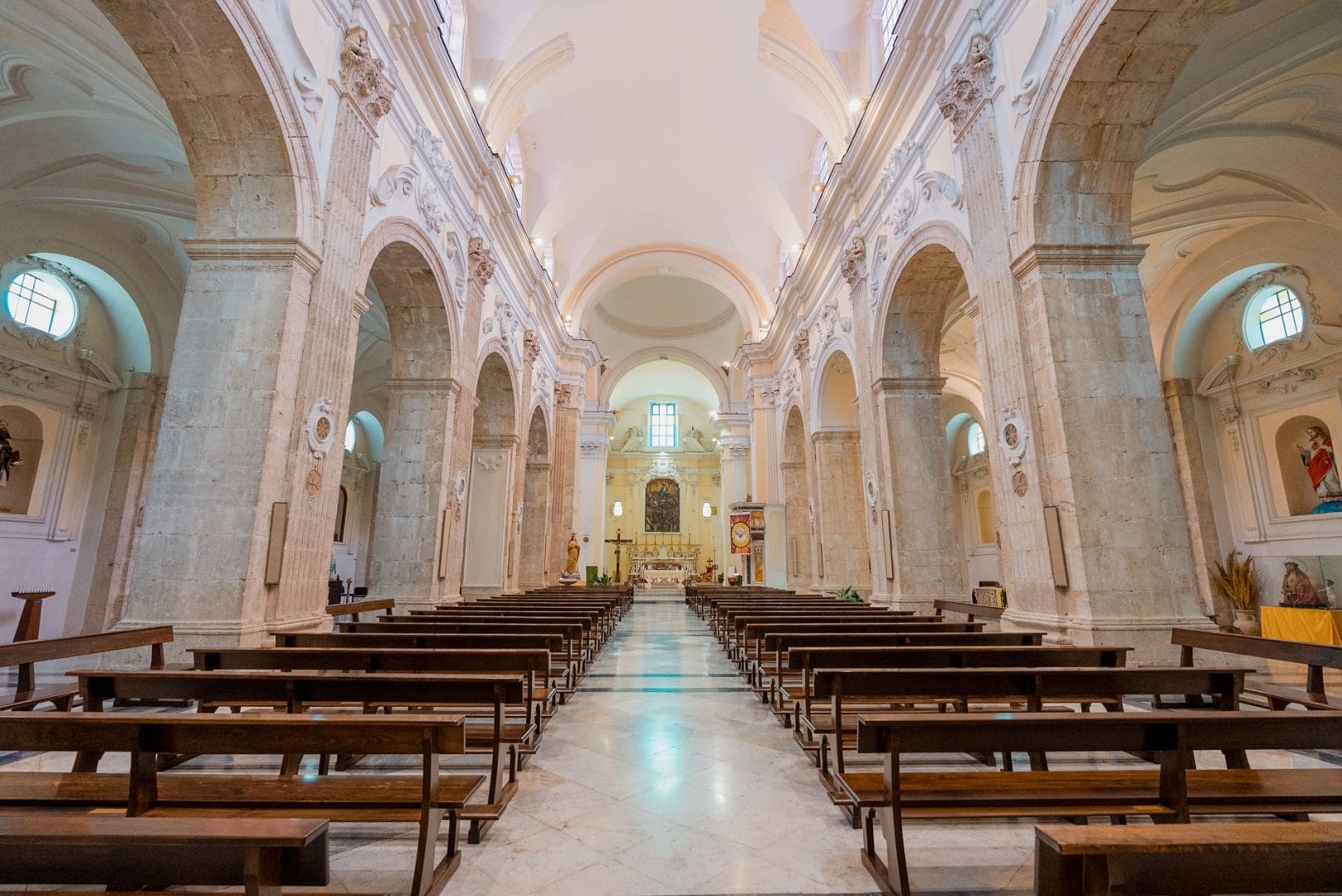
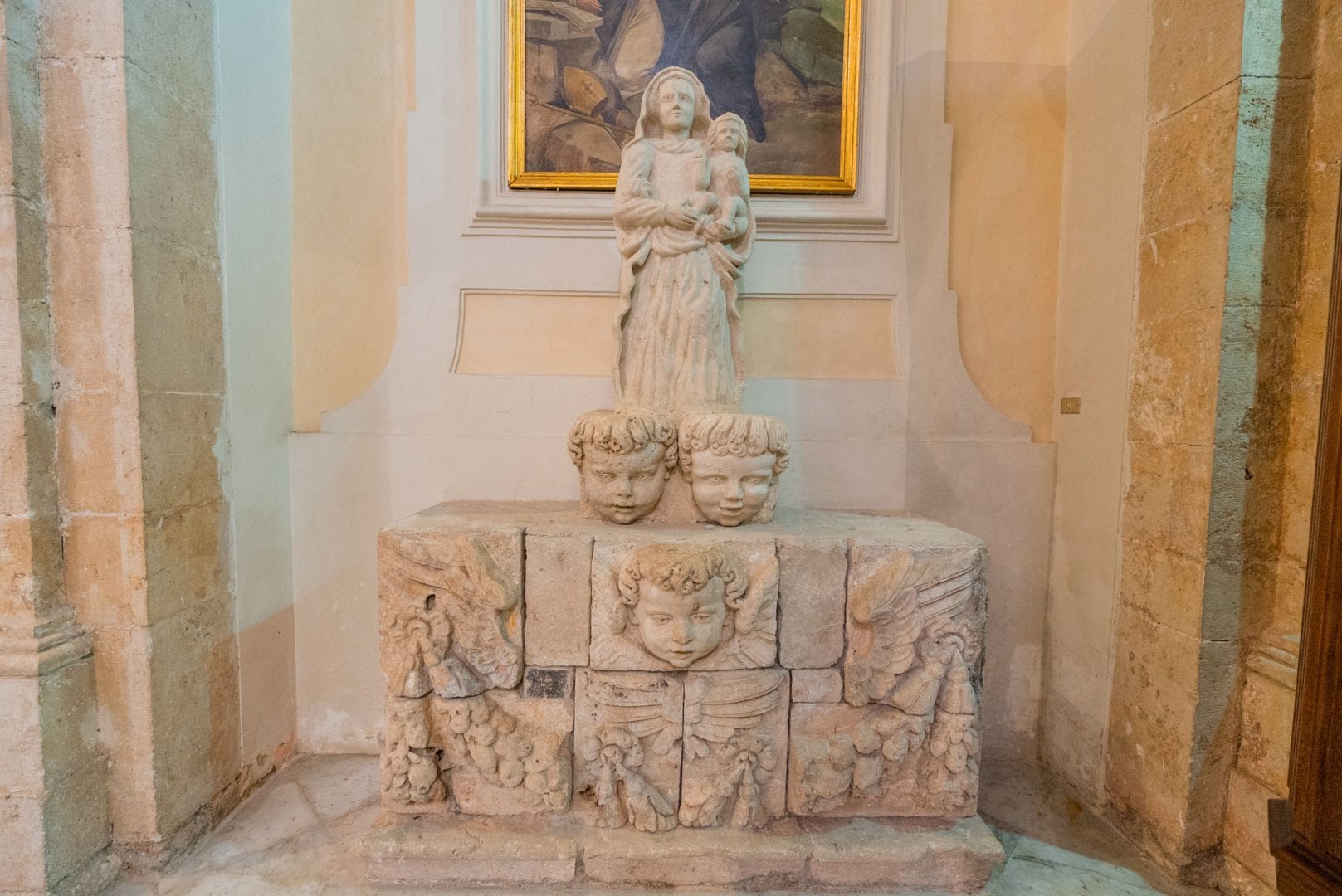
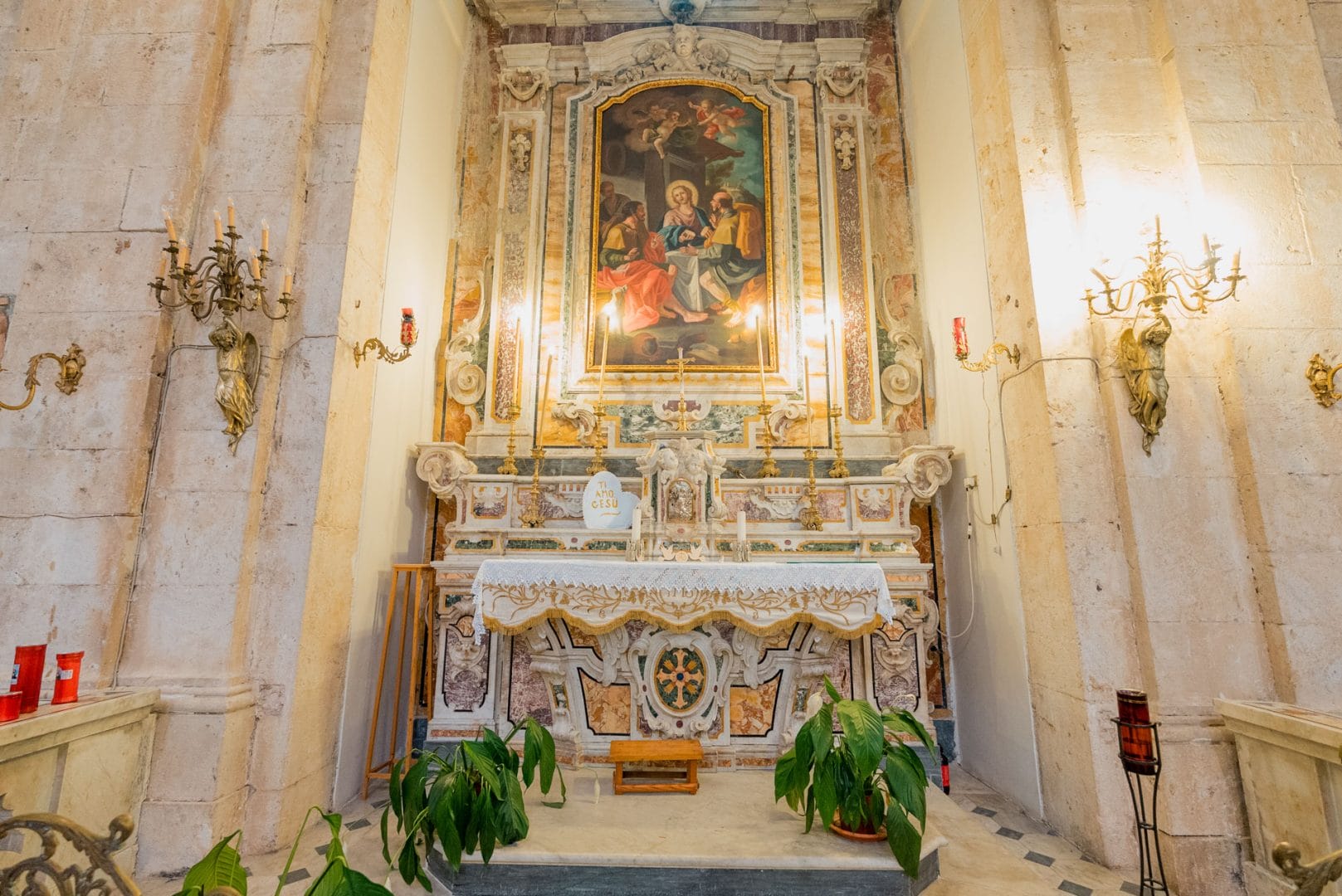
The interior, at latin cross, It houses a remarkable artistic heritage: inlaid marble, side altars decorated by local craftsmen, a majestic wooden organ and a dome that spreads golden light over the naves.
The title of Papal Basilica was conferred on it in 1925 by Pope Pius XI, in recognition of the spiritual role the temple had assumed for the entire diocese.
A theatrical perspective opens up from the nave, culminating in the chancel, where the altarpiece depicting the Our Lady of Peace, patroness of the city and symbol of reconciliation.
The church is not only a place of worship, but also a archive of collective memoryIts side chapels contain inscriptions, coats of arms and burials that tell the story of the bishops, confraternities and families that contributed to the life of the community.
Every year, on the occasion of the patron saint's day, the basilica becomes centre of religious and civil celebrations, combining spirituality and local identity.
The construction of the present cathedral began in the 17th century on the initiative of Bishop Bernardine of the Cross, who wanted to give Campagna a building worthy of its new status as an episcopal see.
The work, which continued for decades, involved master stonemasons and architects from Naples and Cava de’ Tirreni, which introduced the solemn forms and scenic modules of the mature Baroque into the Sele Valley.
During the 18th century, the church was further enriched: side chapels, stucco decorations and marble altars were built, while the façade took on its current appearance, marked by Corinthian columns and statues of saints placed in elegant niches. Every detail is designed to communicate the solidity of faith and the dignity of the city.
During the 19th century, the co-cathedral became the scene of fundamental moments in the public life of Campagna, from civil celebrations to solemn processions, and maintained its function as a spiritual centre even after the union of the diocese with that of Salerno.
I 20th century and early 2000s restorations have restored the church's original harmony of proportions and the elegance of the stone materials, confirming its value as a identity symbol of the city.
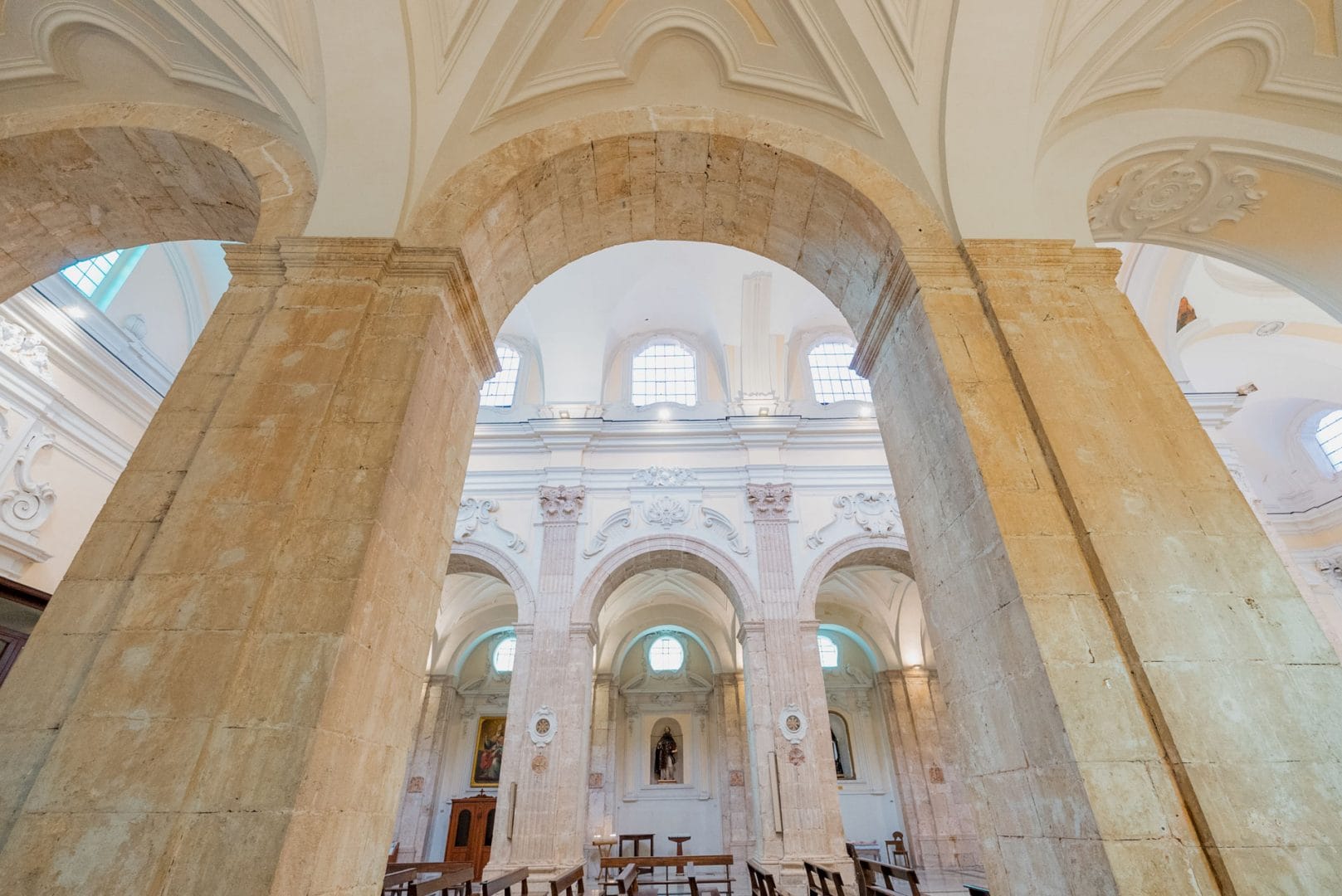
The interior of the basilica is distinguished by its Latin cross plan and the perfect fusion of architecture and sacred art.
The naves are punctuated by mighty pillars and arcades that lead the eye towards the dome, the focal point of a lighting system designed to enhance the centrality of the presbytery.
The white and gold stucco decorations create a harmonious rhythm, while the’high altar, made of polychrome marble, is a fine example of the balance between geometric rigour and spiritual impetus.
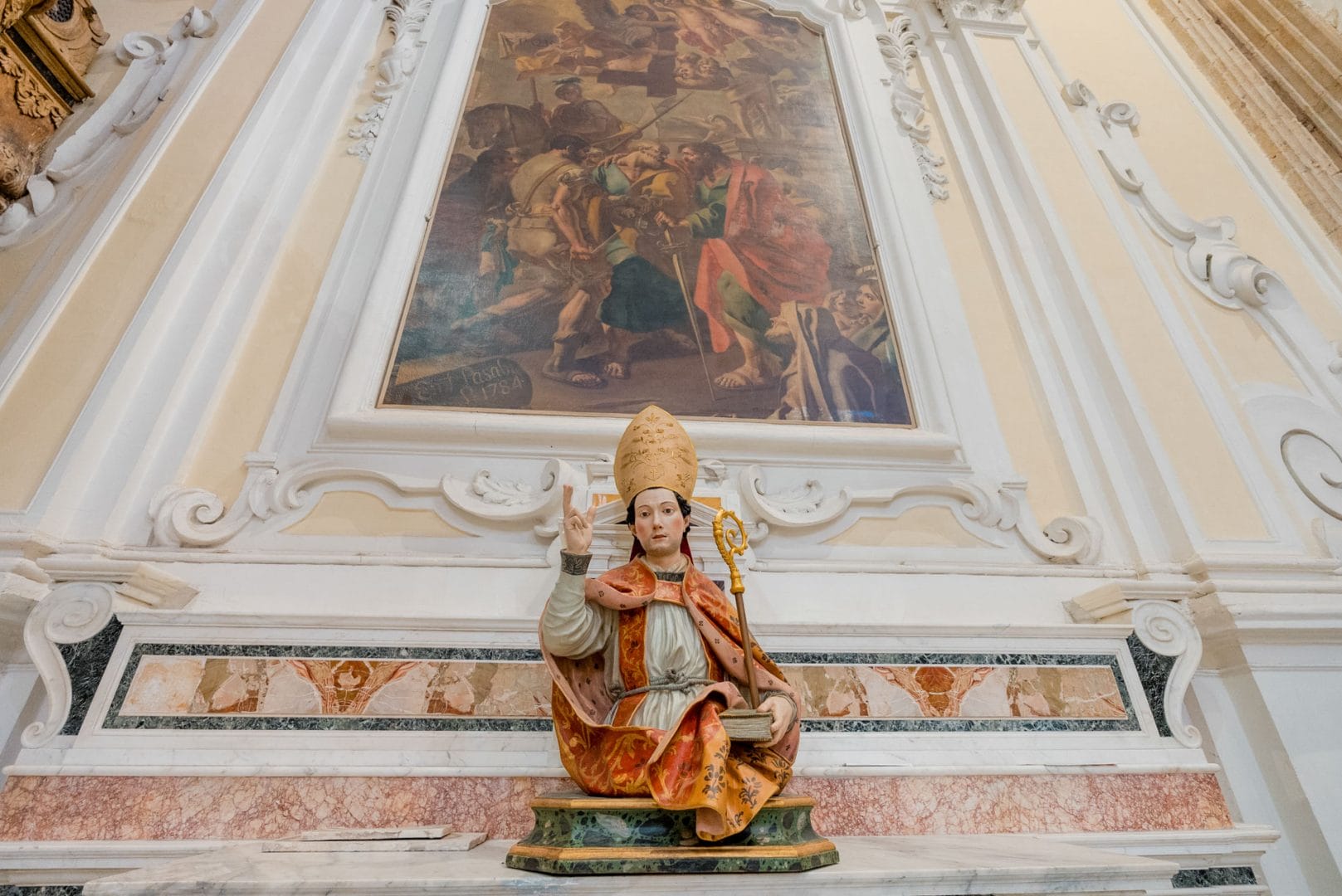
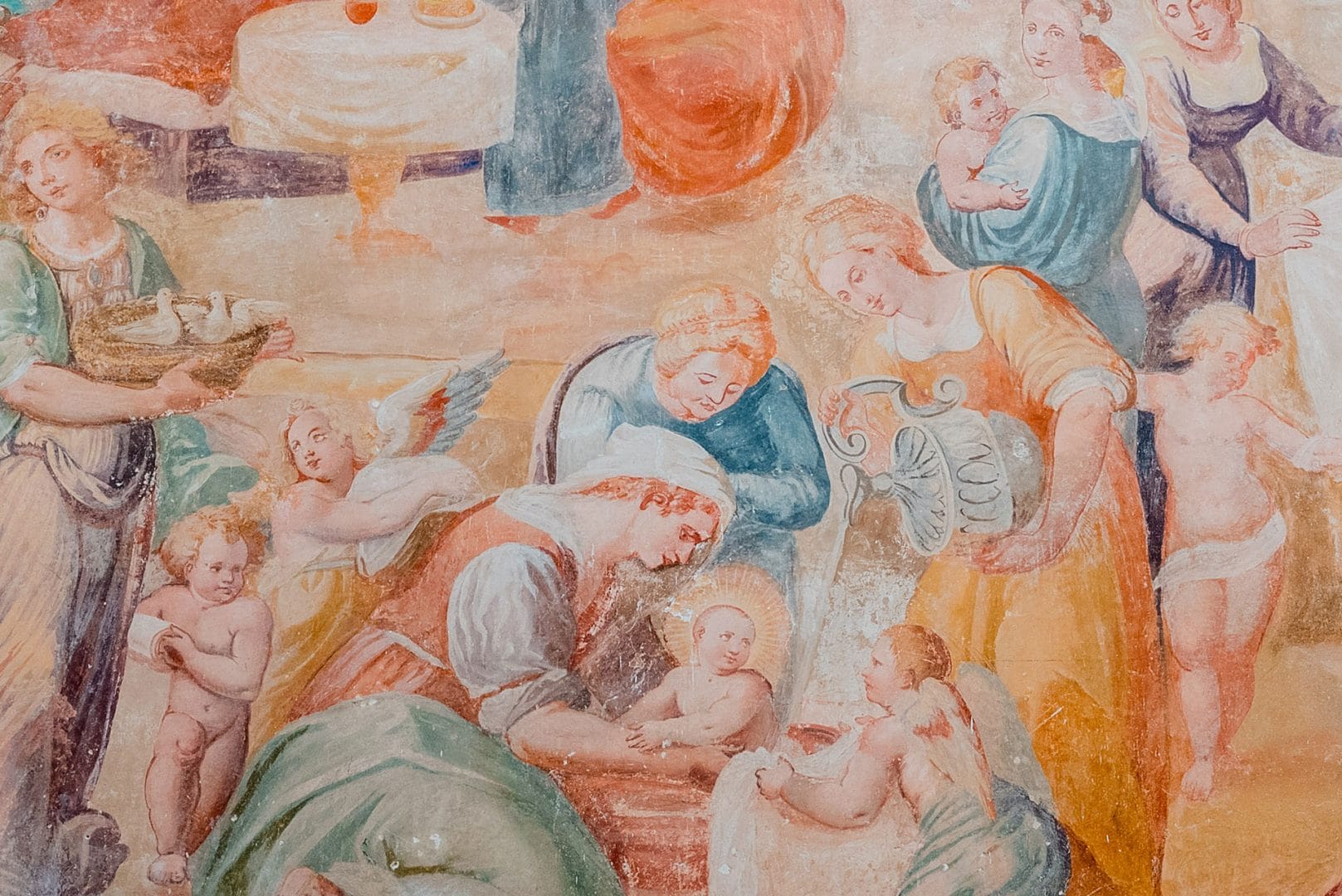
Among the most valuable works are the painting of Our Lady of Peace, placed on the main altar, and the statues of local saints decorating the side chapels.
L’18th-century organ, recently restored, restores to the building the sound dimension of the celebrations of yesteryear, while the wooden choir and the polished stone floor tell of the work of generations of craftsmen.
The natural light, filtering through the high windows and the dome, accompanies the visitor on a journey that changes with the hours of the day: in the morning golden reflections caress the altar, at dusk rosy hues dress the naves in silence.
It is this ability to change, to breathing with the city and the seasons, which makes the basilica a living place. During major liturgical feasts and jubilee events, its majestic staircase becomes a stage for collective faith, an echo of peace that resounds in the heart of Campagna.