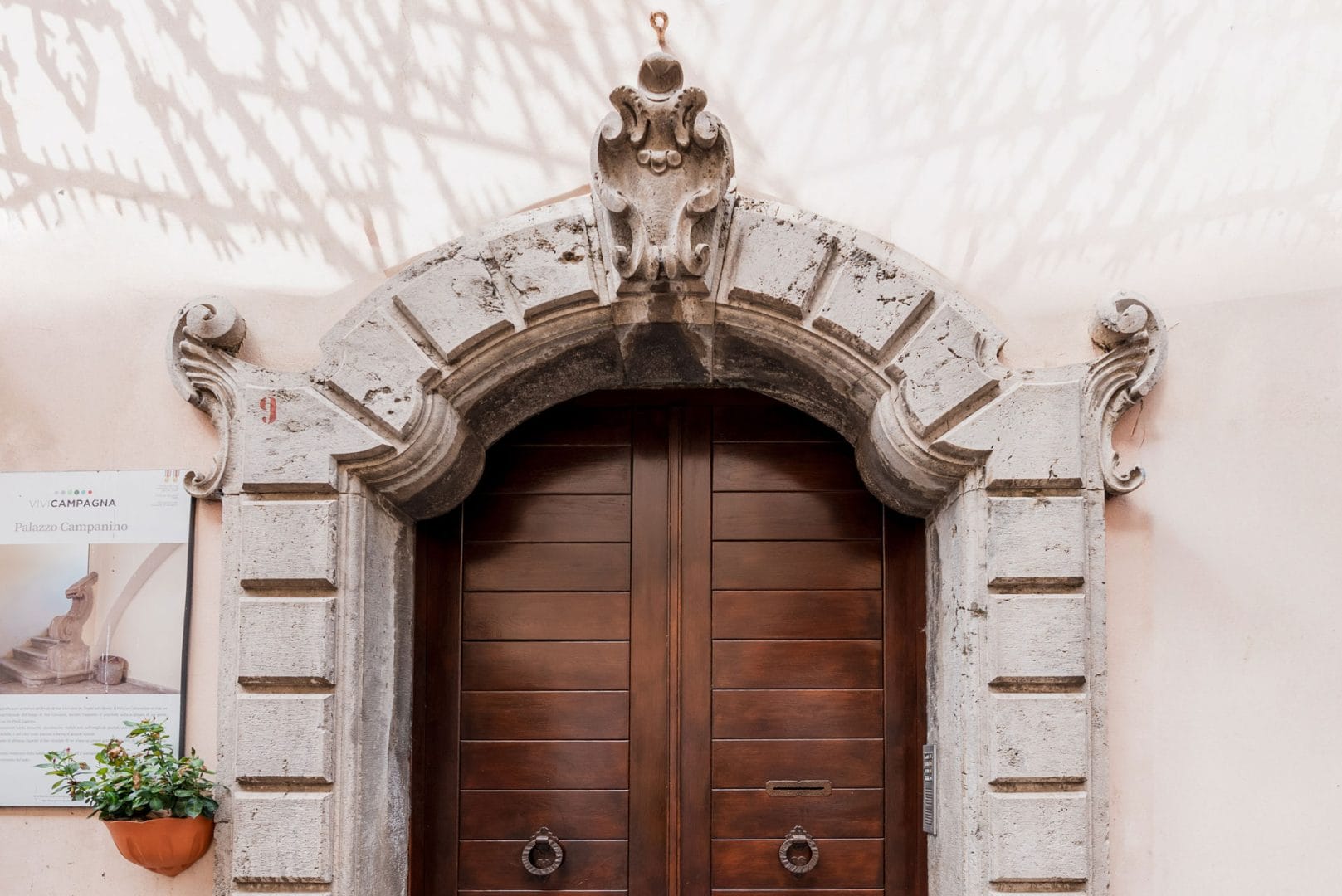

In historic centre of Campagna, along the main axis overlooked by several stately homes, one encounters Campanino Palace, residence named after the noble Cilento family of Campanino, present in the town since at least the 14th century. The building, as recalled by the City of Campagna ETS association, was built in the middle of the 18th century, at a time of renewed urban and architectural vibrancy for the city.
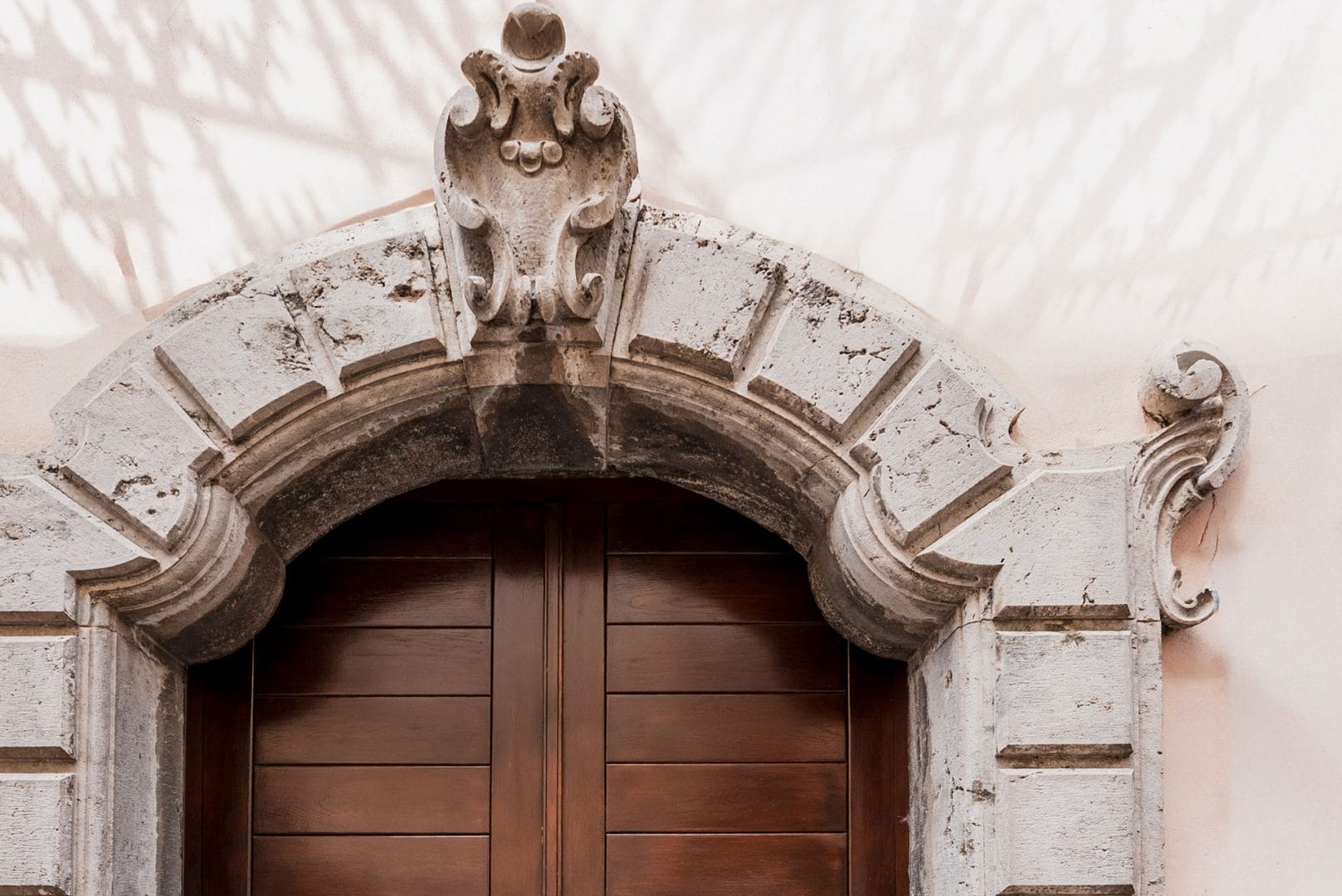
Originally, the building was designed with a’linear and sumptuous architectureA residence that declared, also through its formal language, the rank and role of the owner family. Today, following renovation work that has updated its image, Palazzo Campanino presents itself with an sober and minimalist façade; Signs of its former wealth can be seen above all in the beautiful entrance door, where the late Baroque taste is concentrated in a single, strongly identifiable element.
The entrance, set on a late Baroque portal, refers to the “primordial beauty” of the palace, as the Palazzi Signorili card writes: it is the symbolic threshold between today's Campagna, a city rebuilt after the 1980 earthquake, and the 18th-century one, when noble families enlarged and redefined their living spaces to consolidate their status.
The second large residence in the area for the Campanino family, the palace was in fact born as expression of an established economic and social powerprestigious positions, rural estates and feudal rights in Cilento and the San Giovanni di Zoppi area contributed to making it a lineage between the modern and early contemporary age. Today, Palazzo Campanino is part of the historic centre's development and, on occasions such as “Portoni, Matassa & Suon”, its main door opens once again to host tastings and events, restoring to the spaces a living role in city life.
The story of Campanino Palace is closely intertwined with that of the family that gives it its name. The Campanino lineage, of Cilentan origin, is attested in Campagna as early as the 14th century and, between modern and early contemporary times, is the holder of feuds and jurisdictions in the area of San Giovanni di Zoppi, a small settlement in the territory of Vallo della Lucania.
Historical and genealogical sources mention the Campaninos among the noble families of the Kingdom of Naples, with the predicate of San Giovanni dei Zoppi, inserting them into that complex mosaic of lineages that, between Cilento, Terra di Lavoro and the inland areas of Campania, intertwined property, marriage alliances and public offices.
The presence of the family in the life of the town of Campagna also emerges indirectly: in the atrium of Palazzo Viviani, for example, the frescoed coat of arms is “framed” with that of the Campanino and Pinto barons, patricians from Salerno, testifying to links and alliances between noble families who shared economic interests and social prestige. In this system of relations, Palazzo Campanino represented not only a urban residence, but also a tangible sign of the family's position within the local ruling class.
The fact that the structure is described as “second in the territory” compared to other properties of the lineage indicates a process of consolidation: to the original nucleus of assets was added a representative residence in the historic centre, destined to reinforce the image of the Campanino family in a city that, between the 17th and 18th centuries, saw a strong symbolic competition between palaces, coats of arms and noble courtyards.
The current appearance of Campanino Palace tells a history of transformation. While originally the 18th-century design focused on a linear but sumptuous architecture, today the façade appears deliberately sober, almost essential: the contemporary architectural language, which emerged after renovation work, has toned down the decorative redundancies, leaving few, selected signs of the past.
The real protagonist remains the late Baroque entrance door, with its sculpted frame leading into interiors that have been largely remodelled over time. It is through this element that the palace reveals its noble charactera solid, stone threshold that concentrates in a few details the memory of what was once a richer, more articulated architectural organism.
In the urban fabric of the historic centre, Palazzo Campanino dialogues ideally with other stately palaces, contributing to the construction of a sequence of façades, portals and doorways that define the monumental identity of the city.
In recent years, valorisation initiatives such as the food and wine route “Gates, Skein & Sound”have brought attention back to these places. For the event, Palazzo Campanino is indicated as a stage dedicated to traditional products, temporarily transforming the ancient spaces into a setting for tastings, art and music. It is a form of reuse that does not distort the historical dimension of the palace, but makes it perceptible once again, making the late baroque doorway a living threshold between past and present.