

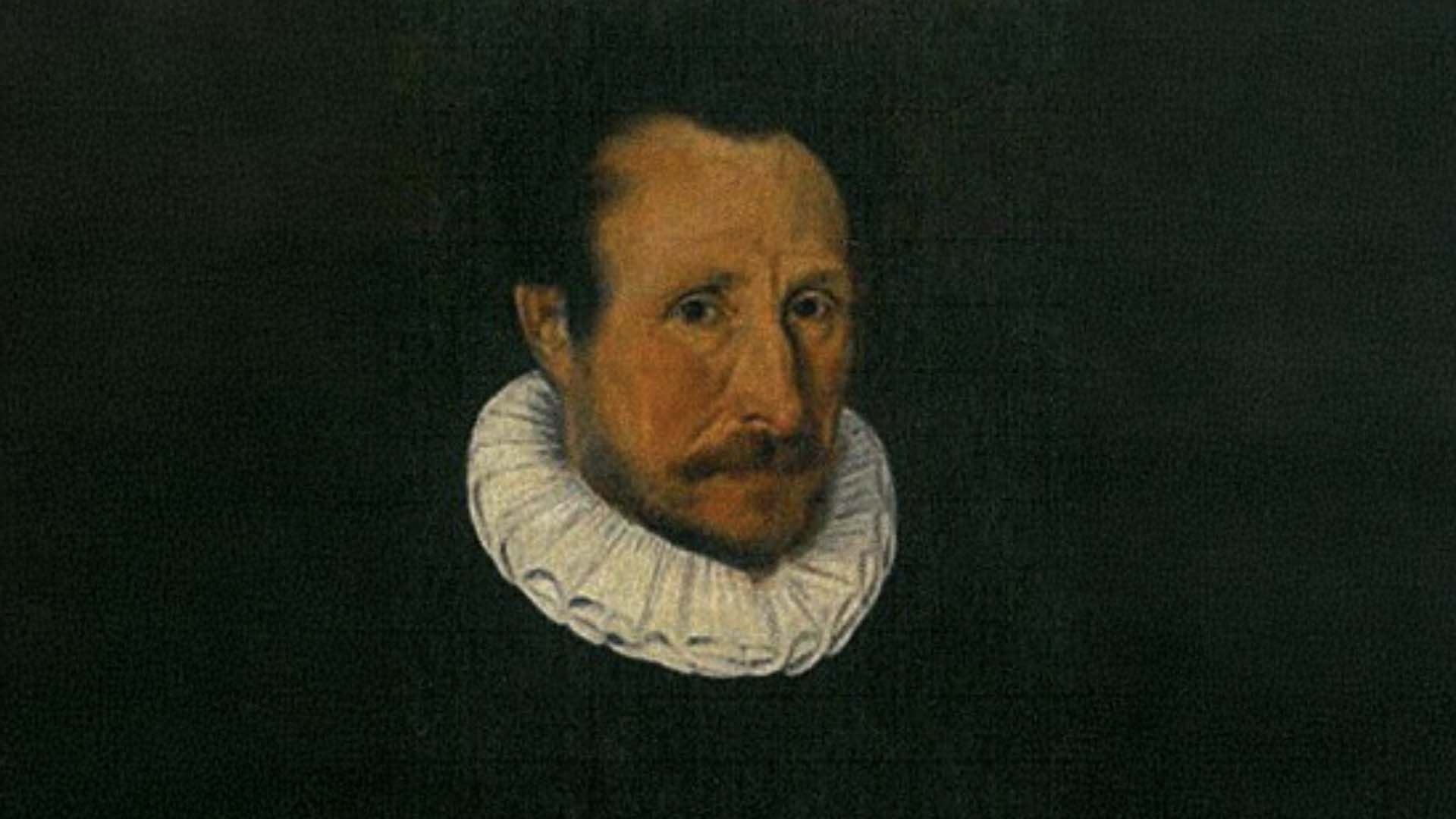
Melchiorre Guerriero was born in Campaign at 1468, by Giovanni Nicola Guerriero - a jurist specialising in law - and Caterina Pagano, a noblewoman from Salerno. After studying law at the University of Naples, he was called to Rome where, thanks to the protection of Duke Ferdinando Orsini, he undertook a brilliant career in the Papal Curia. He was Count Palatine, Abbreviator of the Kingdom of Naples, Custodian of the Apostolic Chancellery and, from 1513, Master of Papal Briefs under Popes Leo X and Clement VII, both of the de’ Medici family.
Tied to his hometown, Guerriero used the prestige he acquired in Rome to favouring the Campaign on a civil and religious level. In 1514 he obtained from Leo X the’elevation of the church of Santa Maria della Giudeca - then Santa Maria della Pace - to a collegiate church and then to a future cathedral. In the following years he worked on the creation of a autonomous diocese in Campagna, which would decisively mark the urban, political and cultural development of the Selettano centre.
Married to the noblewoman Giustina Calandra, Melchiorre Guerriero died in Rome in 1525, at only fifty-seven years of age. He was buried in the Trinità dei Monti church, where an epigraph was placed on his tomb, recalling his titles and role in the Kingdom. In Campagna, his name is today linked to a historical centre square and to the memory of one of its most illustrious fellow citizens.
The figure of Melchiorre Guerriero is closely linked to the birth of the diocese of Campagna and the official recognition of the title of city. In 1525, taking advantage of the now abandoned bishopric of Satriano and the contrasts between the Holy See and the Archbishop of Salerno, Guerriero suggested to Pope Clement VII the creation of a new bishopric in Campagna. To support the request, he presented a petitio in which it was claimed that a diocese with its own cathedral and a number of documented bishops had existed in the past in the locality of Sant'Angelo di Furano. On the basis of this historical reconstruction - today considered the fruit of tradition not confirmed by the sources - Clement VII issued the bull establishing the diocese of Campagna, united with that of Satriano, and elevated the church of Santa Maria della Pace to cathedral status.
Beyond the historiographical debate on the actual existence of the ancient diocese of Sant'Angelo, it is certain that Guerriero's action brought Campagna an enormous advantage: the centre became an episcopal seat, a city of higher rank in the context of the Sele plain and the administrative and religious hub for a vast surrounding territory. The privileges obtained at the Curia contributed to the subsequent transformation of the fief into county, marquisate and finally duchy, reinforcing the role of Campagna in the Principality of Salerno.
In addition to his commitment to the Roman Curia, Melchiorre Guerriero left concrete traces of their devotion and connection to their home community. In will of 1525 allocated a substantial sum - two thousand ducats - to the Foundation of the Convent of the Holy Spirit, a cloistered Benedictine coenoby built in Casalnuovo, next to the parish of the Holy Trinity, which served as the monastery's chapel. This religious institution played a significant role in the spiritual and social life of the city in the following centuries.
In XXI century Warrior's profile was subject of new research and valorisationconferences, publications and initiatives promoted by the association “Città di Campagna ETS”, the municipality and the diocese have brought this protagonist of the Campania Renaissance back into the limelight. On the occasion of the 500th anniversary of his death in 2025, the Guerriero Chapel at the Trinità dei Monti in Rome was also commemorated, symbolically reinforcing the link between his birthplace and the places of his activity in the papal capital.