
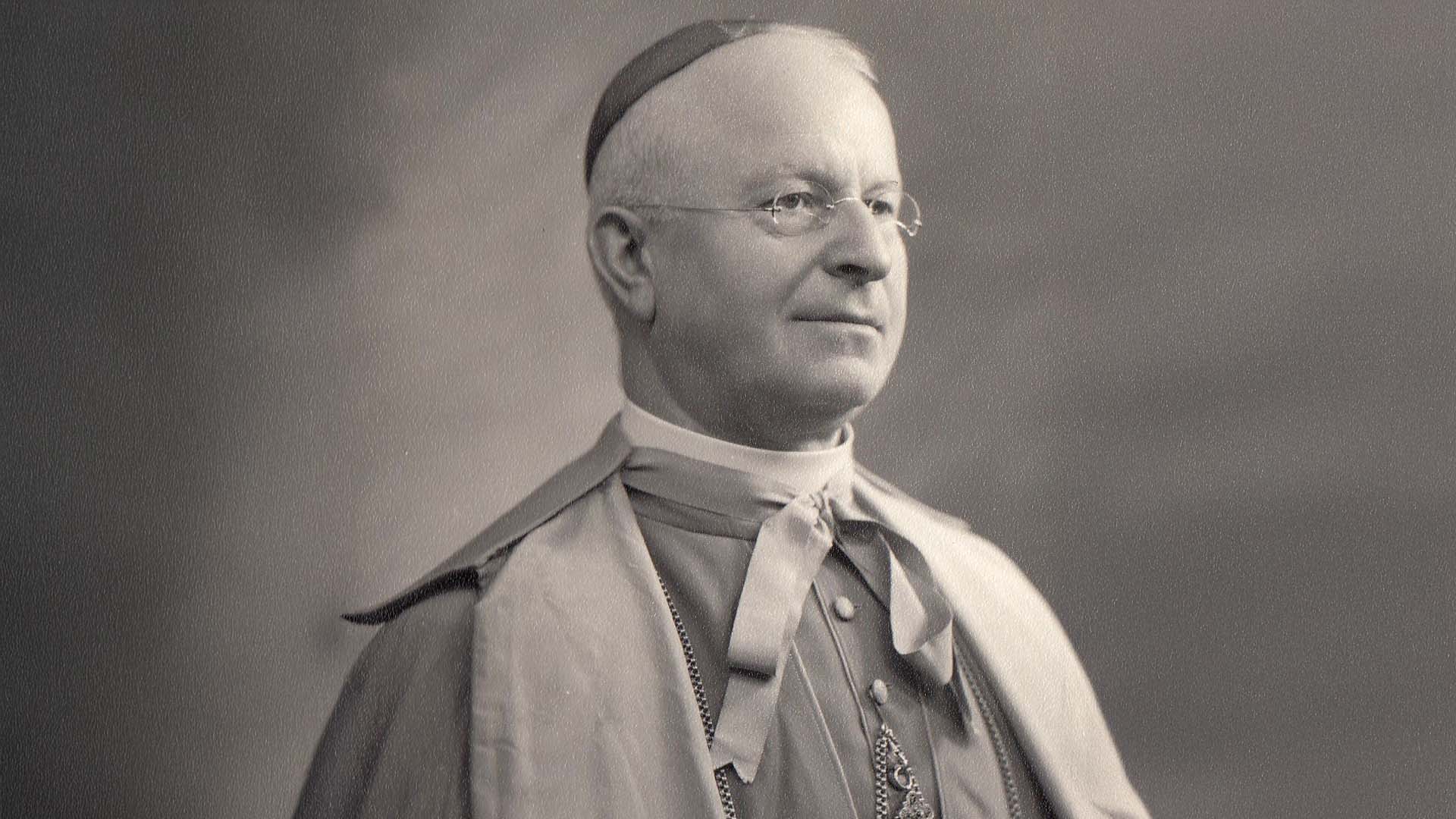
Giuseppe Maria Palatucci was born in Montella (Avellino) on 25 April 1892, third of three brothers, in a deeply religious family. He joined the Friars Minor Conventual in the convent of Santa Maria del Monte, also in Montella, where he completed his gymnasium studies. He continued his education in Rome, obtaining the degree in philosophy from the Pontifical Gregorian University and, in 1920, the degree in theology from St. Bonaventure Pontifical Theological Faculty. It was ordained a priest in 1915 and held teaching and governance positions in various seraphic colleges of the Order, distinguishing himself for his cultural preparation and pastoral sensitivity.
The 20 September 1937 Pope Pius XI appointed him Bishop of Campagna; He received episcopal ordination on 28 November of the same year in the basilica of San Lorenzo Maggiore in Naples and made his solemn entry into the diocese on 16 January 1938. The diocese of Campagna, then among the poorest in southern Italy, comprised 18 municipalities and 34 parishes: Palatucci dedicated himself to it in Franciscan style, restoring the diocesan seminary, relaunching the cult at the shrine of Santa Maria di Avigliano and reorganising Catholic Action throughout the territory. He remained Bishop of Campagna until his death, which took place on 31 March 1961 right in the city, on Good Friday.
During his long episcopate Giovanni Palatucci - future Quaestor Regent of Rijeka and Righteous among the Nations - was one of his closest nephews. Together, uncle bishop and nephew police officer, intertwined a singular cooperation during the Second World War years, when the civil internment camps for foreign Jews and opponents of the regime were established in Campagna. Local memory and historical research recognise Monsignor Palatucci's decisive role of moral and material assistance to internees, carried out in harmony with the people and clergy of the diocese.
Between 1940 and 1944, in the two former convents of San Bartolomeo and Concezione in Campagna, the Italian government established a civil internment camp for Jews and other persons considered “dangerous” by the regime. Monsignor Giuseppe Maria Palatucci, who had been bishop of the diocese for a little over two years, found himself leading a Church called upon to deal daily with the presence of hundreds of internees in the heart of the city centre. From the very beginning he intervened to alleviate their conditions, visiting them, providing spiritual assistance and promoting concrete forms of solidarity - from economic support to the involvement of parishes and religious congregations.
Church and civil sources converge in describing the Campagna camp as a place where, despite the limitations of the repressive system, mass deportations were avoided and relatively less harsh conditions were maintained than in other Italian camps. Within this framework, Bishop Palatucci's presence and cooperation with his nephew Giovanni, serving at the Rijeka Police Headquarters, were decisiveSeveral testimonies recall how some Jews were sent to Campagna precisely to find a more humane environment, protected, as far as possible, by the network of relations built around the bishop.
After the war, his commitment to the internees was recognised by Resistance associations, civil institutions and numerous historical studies. For this, in 2006, the Italian Republic awarded him the Gold Medal of Civil Merit in Memory, as a testimony to his courage in defending the dignity of persecuted people during the Second World War.
Beyond the internment camp experience, the episcopate of Msgr. Palatucci left a deep mark on the religious and social life of Campagna. Attentive to the “new demands of the modern world”as recalled by the testimonies collected by the Palatucci Study Centre, he worked to tackle the social problems of the diocese - unemployment, emigration, widespread poverty - by promoting welfare initiatives, cooperatives and charitable works. His authoritative yet simple words also supported the actions of municipal administrations, helping to resolve sensitive political-administrative issues in favour of local communities.
In his episcopal ministry he always remained a conventual friarHe was sober in his lifestyle, willing to listen, close to priests and families. When he died in Campagna in 1961, he was mourned not only by the faithful, but also by many political opponents, who recognised his honesty and generosity. At his wish, his body was returned to the church of San Francesco in Folloni, near Montella, the convent of his youth, symbolically sealing the bond between Irpinia and the diocese of Campagna. Today his name is linked to the Giovanni Palatucci“ Museum of Memory and Peace” and the city routes dedicated to the internment, the Shoah and human rights, where the figure of the uncle bishop is remembered alongside that of his nephew quaestor.