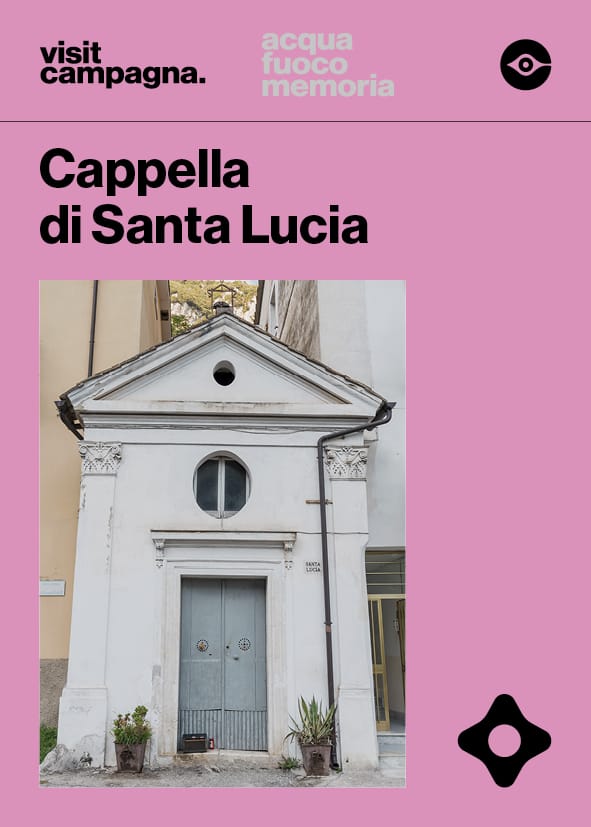

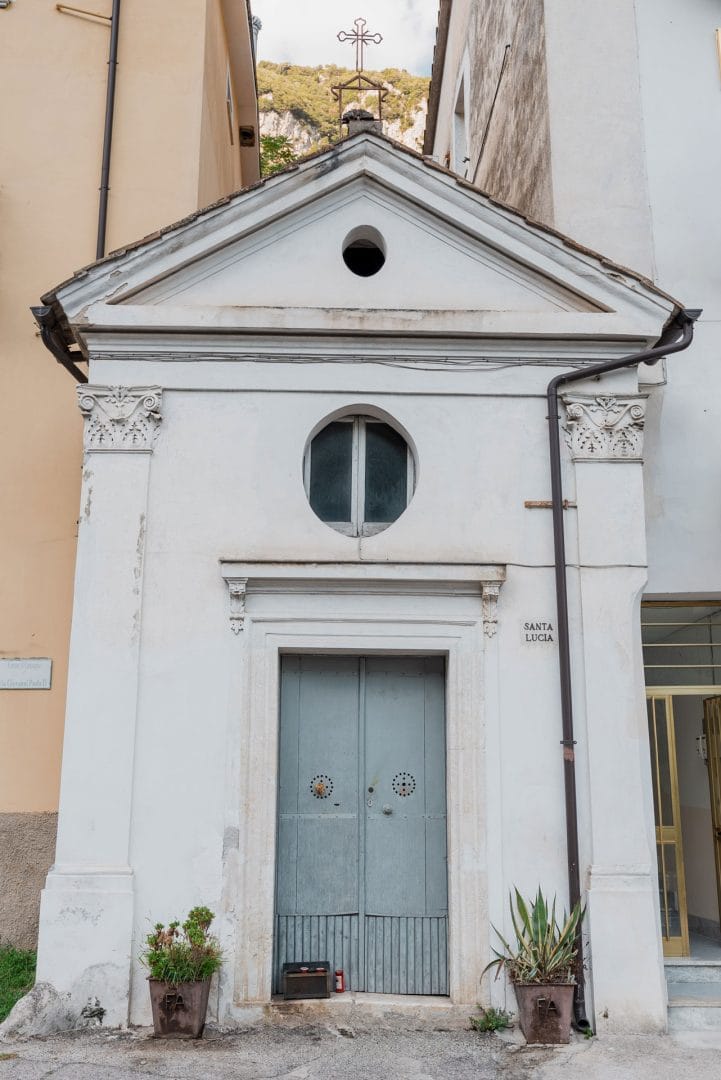
La Chapel of St Lucia is located in the municipality of Campagna (SA), along the street of the same name, at Oppidi-Varano, as indicated by the official files dedicated to the municipality and its places of worship. It is a subsidiary chapel included in the territory of the parish of St Mary of Good Counsel, based in Serradarce, belonging to the Archdiocese of Salerno-Campagna-Acerno.
L’Catholic Yearbook and parish records describe the Chapel of Saint Lucy as thecomplementary place of worship than the parish church, intended in particular for the population living in the hilly area between Oppidi, Varano and other neighbouring districts. Although not a building of great antiquity, the chapel keeps alive a devotion traditionally felt in the Mezzogiorno, that towards Saint Lucia, Syracusan martyr invoked especially for her eyesight.
The information available today through institutional sources is essential and does not currently allow for a detailed reconstruction of the construction phases or any architectural transformations of the chapel. Precisely for this reason, this document limits itself to recording certain data on the location, parish affiliation and pastoral role of the Chapel of Saint Lucy, referring to future archival and bibliographical studies for a more detailed historical-artistic description.
The official sources of the Archdiocese of Salerno-Campagna-Acerno and the Catholic Yearbook place the Chapel of Santa Lucia among the «entities in the parish territory»of the parish of St Mary of the Good Council, located in contrada Serradarce. The list also includes, next to the parish church, the Chapel of St Mary of Constantinople and the Chapel of St Lucy itself, both listed as subsidiary chapels for the locations of Oppidi e Varano.
This classification makes it possible to place the chapel in the context of the area's pastoral work: not an autonomous parish, but a place of worship that integrates and brings the Church's presence closer to the families living in the districts furthest from the main town. Normally, in structures of this kind, there is room for weekday celebrations, moments of community prayer and initiatives linked in particular to the liturgical memory of the titular saint, in this case Saint Lucy.
The reference to Oppidi-Varano and the street bearing the saint's name indicates the existence of a devotional micro-landscape in which toponymy, daily routes and the small sacred building combine to define a local identity. The chapel, although small in size, thus represents a symbolic and spiritual orientation point for those living in the hilly area north-east of the capital city.
A further useful element for understanding the cult of Saint Lucy in the Oppidi-Varano area is offered by the official file of the Municipality of Campagna dedicated to the Church of St Mary of Constantinople. In it, it is recalled that, after the restoration following the 1980 earthquake, a statue of Saint Lucy was also placed in the high altar of the small church, before a «new church dedicated to her was built in Varano».
This passage, while not going into chronological or design detail, clearly indicates that the cult of Saint Lucy found a new specific location in Varano over time, suggesting that the current Chapel of Saint Lucy is to be related to this «new church» mentioned in municipal sources. A sort of continuity is thus delineated between the presence of the statue in the small church of Saint Mary of Constantinople and the current place of worship dedicated to the Syracusan martyr.
In the absence, at the moment, of any further documented data, this sheet limits itself to recording the connection indicated by the sources, avoiding speculation on the exact date of construction or the original architectural features of the Chapel of Saint Lucy. Future studies, based on parish archives or civil archive research, may supplement this information more precisely.