

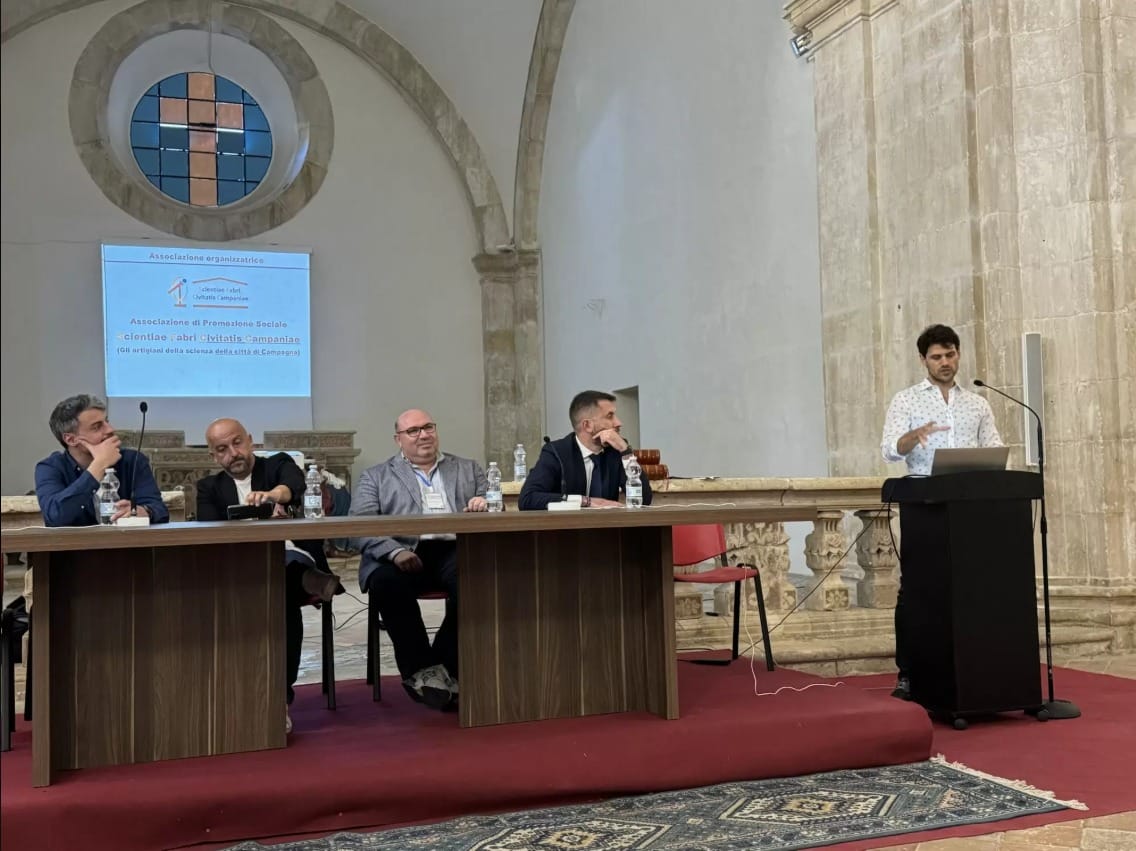
Scientiae Fabri Civitatis Campaniae (SFCC) is a social promotion association that aims to disseminate science, spread knowledge and promote cultural debates through the organisation of seminars, workshops, conferences and conventions. SFCC also presents itself as a "place" where every person of the people can meet to discuss and exchange critical thoughts freely and with respect for others, so as to aim both at the progress both scientific and social. Its birth and name are inspired by the deep scientific history of the town of Campagna, which in the past hosted scientists and philosophers such as Giordano Bruno e Juan Caramuel. The Founding Members strongly hope that the values on which the Association is based will stimulate both young people and adults to appreciate the history and culture of the area of Campagna and neighbouring municipalities without any geographical boundaries, to take a greater interest in science and to develop their own critical thinking on various aspects of nature and the world we live in.
Sources: www.sfcc-sa.it/
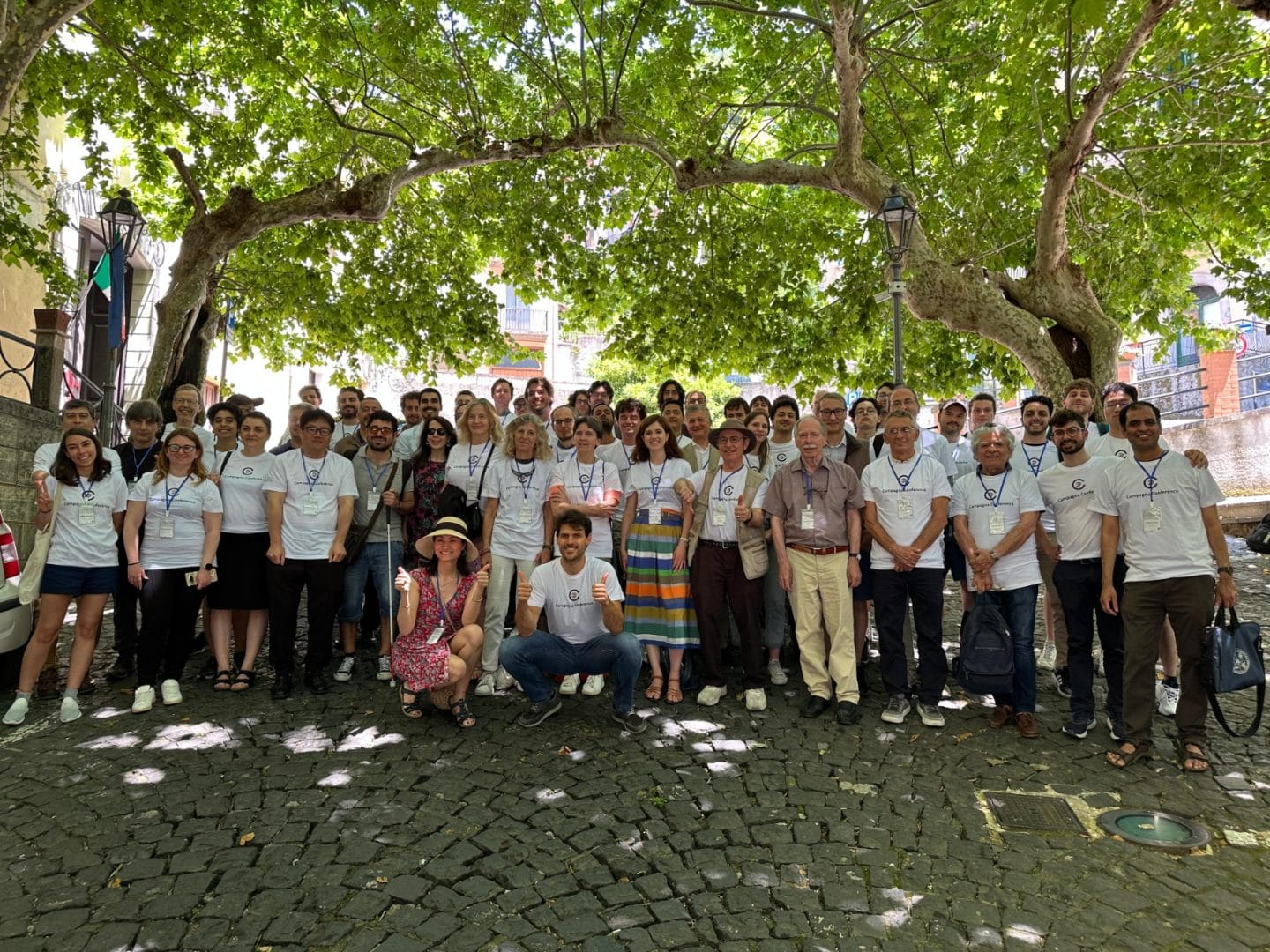
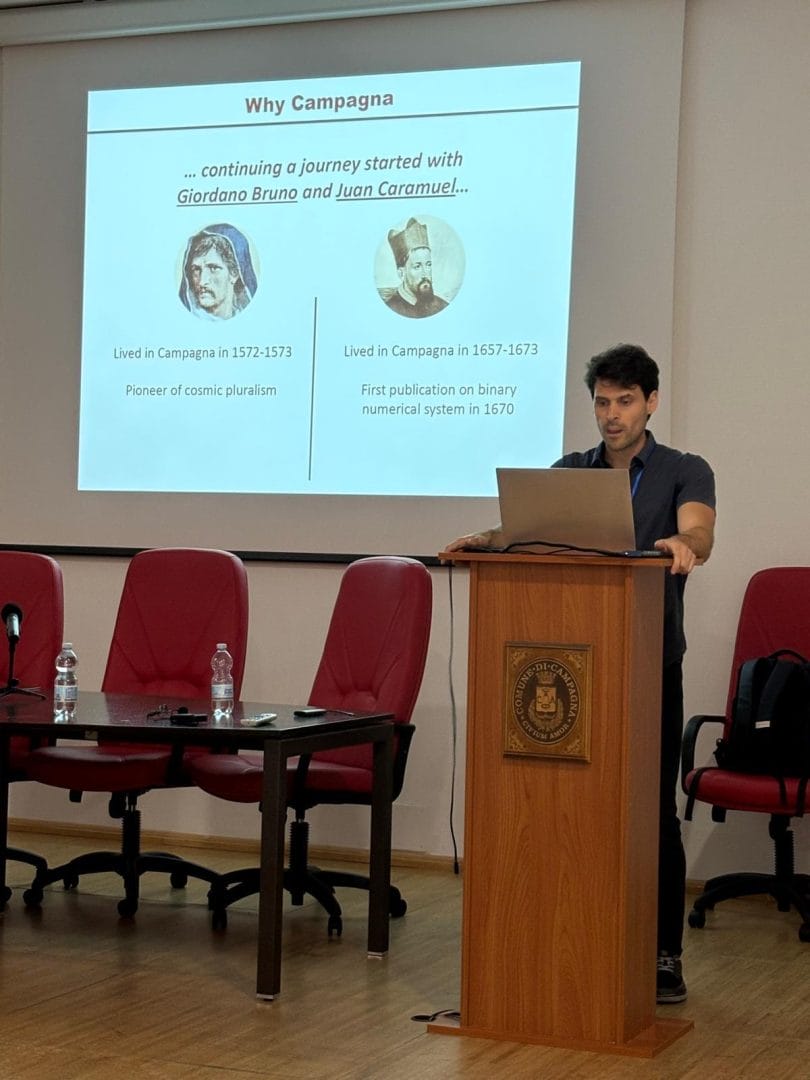
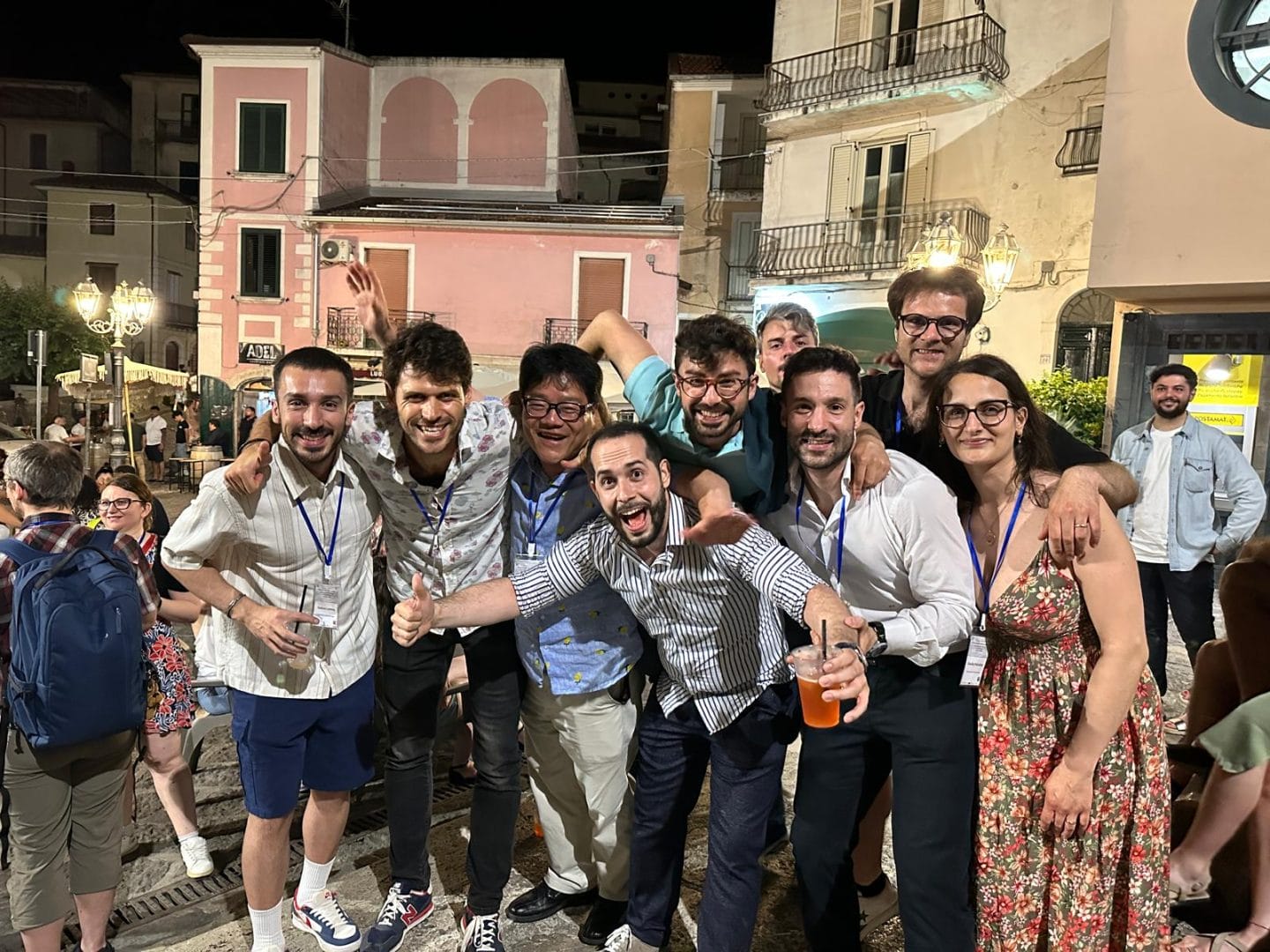
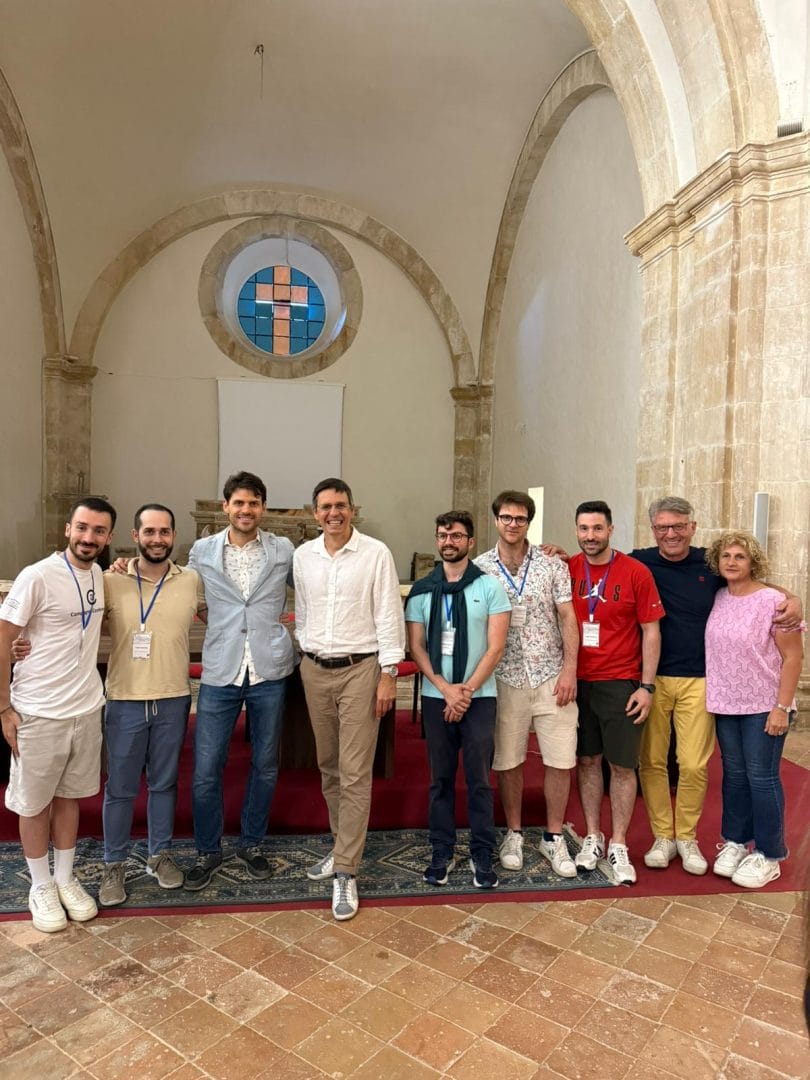
L' A.P.S. Scientiae Fabri Civitatis Campaniae, in collaboration with the Municipality of Campagna, organised the "Campagnese Science Week: Continuing a journey that began with Giordano Bruno and Juan Caramuel"in the town of Campagna (SA), from 23 to 27 June 2025.
The entire initiative included the specialised fundamental physics lecture "From Puzzles to New Insights in Fundamental Physics", two science outreach activities, a musical concert, and various sightseeing tours to introduce the various participants to the history and culture of our region.
Approximately 60 scientists from various parts of the world, including five Nobel Prize winners in physics: Duncan Haldane (Princeton), Gerard 't Hooft (Utrecht), Didier Queloz (Zurich and Cambridge), Adam Riess (John Hopkings), Frank Wilczek (MIT).
The participation of world-renowned scientists and a large number of Nobel Prize winners made the event unique.
The aim of the initiative was threefold: to discuss topics and open questions in fundamental physics; to strengthen the dialogue between science and society through science outreach activities; and to promote the history and culture of our region through seminars, guided tours and a musical concert.
Giordano Bruno e Juan Caramuel, who both lived part of their lives in Campagna, were celebrated through activities open to the public. The first character is considered one of the pioneers of the idea of cosmic pluralism, and was celebrated with a public lecture by the Nobel Prize winner Didier Queloz, who discovered the first extrasolar planet orbiting a solar-type star. The second person is considered to be the inventor of the binary number system thanks to his mathematical work "Mathesis Biceps. Vetus et Nova", published in Campagna in 1670, and was celebrated through popular seminars on mathematics, physics and computer science by the university researchers/professors Ferdinando Insalata (Imperial College London), Pierpaolo Mastrolia (University of Padua) and Rocco Zaccagnino (University of Salerno).
The initiative was also a unique opportunity to celebrate the 100 Years of Quantum Mechanics in the presence of Nobel laureates Gerard 't Hooft, Duncan Haldane e Frank Wilczek, who have contributed important work to the development of quantum mechanics.
The combination of the various events has contributed to making Campagna a major international scientific centre.
Sources: www.sfcc-sa.it/