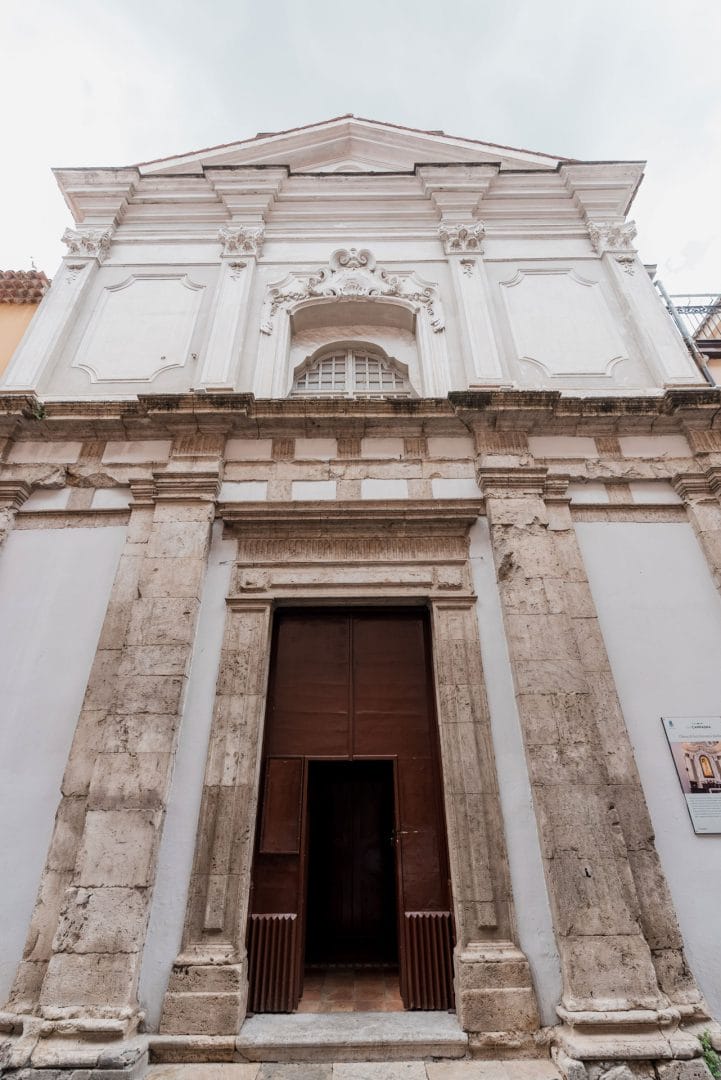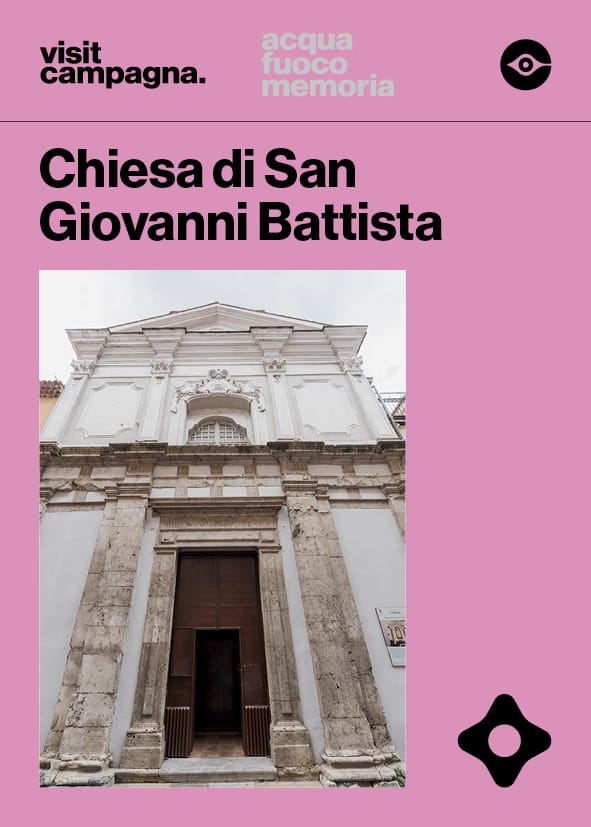

La Church of St John the Baptist overlooks Corso Umberto I, the main artery of the historic centre of Campagna. It is one of the oldest and most characteristic religious buildings in the town, bearing witness to a history that intertwines art, spirituality and civic life.
It was built in 1550, at a time of great building and religious ferment, at the initiative of the Cathedral Chapter, who wanted to equip the eastern part of the village with a new place of worship dedicated to the’Immaculate Conception.
The construction responded to the need to extend the urban fabric beyond the ancient walls and to offer the population a spiritual reference point in a then expanding part of the city.
In 1626, with the arrival in Campagna of the Jesuit Fathers, the building assumed its current title of St John the Baptist, following the establishment of a lay confraternity dedicated to the precursor saint.
This transformation was not only nominal but also spiritual: the church became a active preaching and outreach centre, in line with the Jesuit mission of moral renewal.
Although not reaching the monumental dimensions of the Co-cathedral, the church is distinguished by architectural balance and for the bell Renaissance sensibility that characterises its forms.
Today it represents a landmark in the religious and historical path of the city, a small treasure chest of memory which recounts the devotion of generations of Campagnesi.
The church, oriented along the axis of the course, presents a two-tier façade, simple and harmonious, framed by pilasters and crowned by a triangular gable.
The light-coloured plaster and profiles in local stone give the building an essential but elegant appearance.
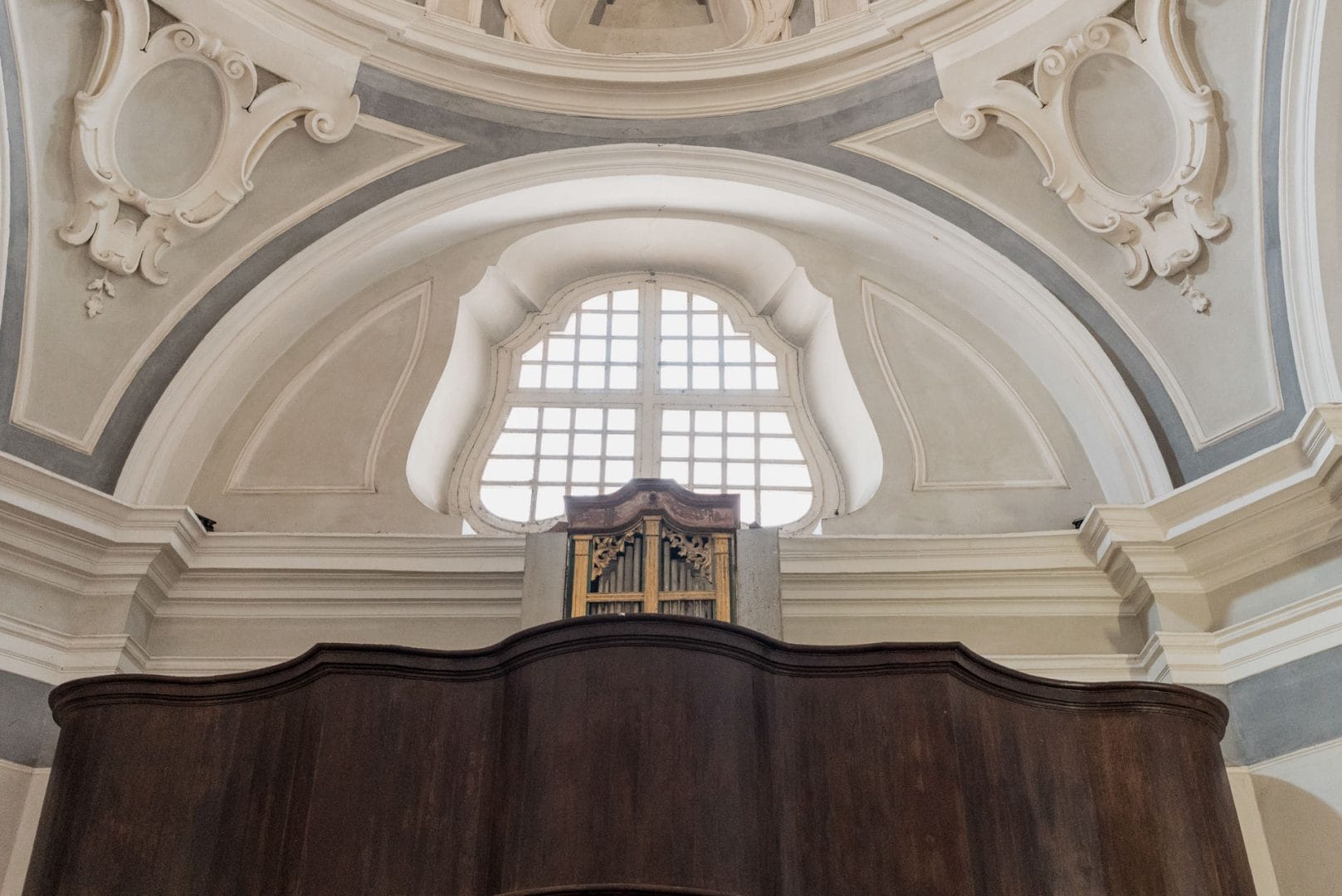
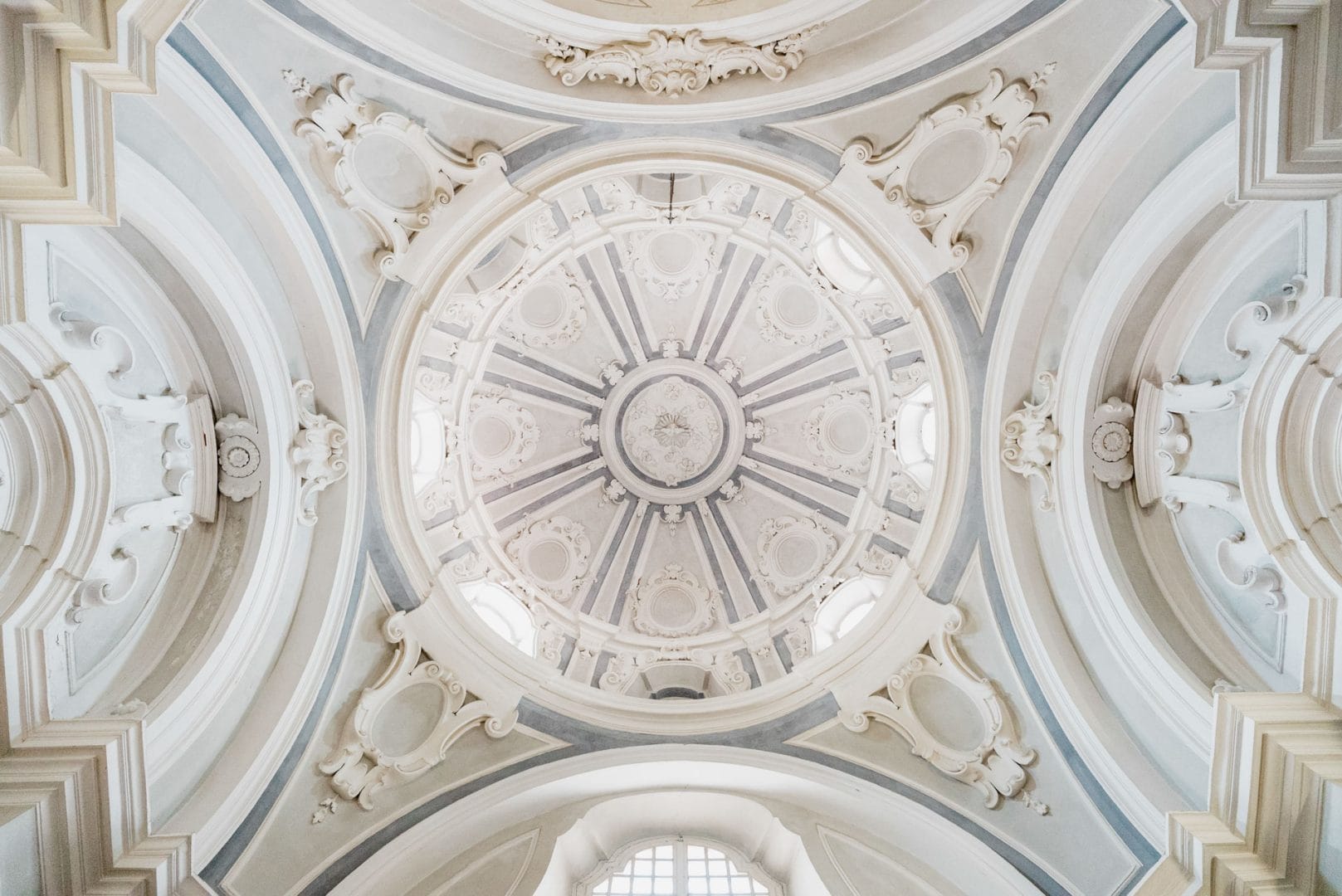
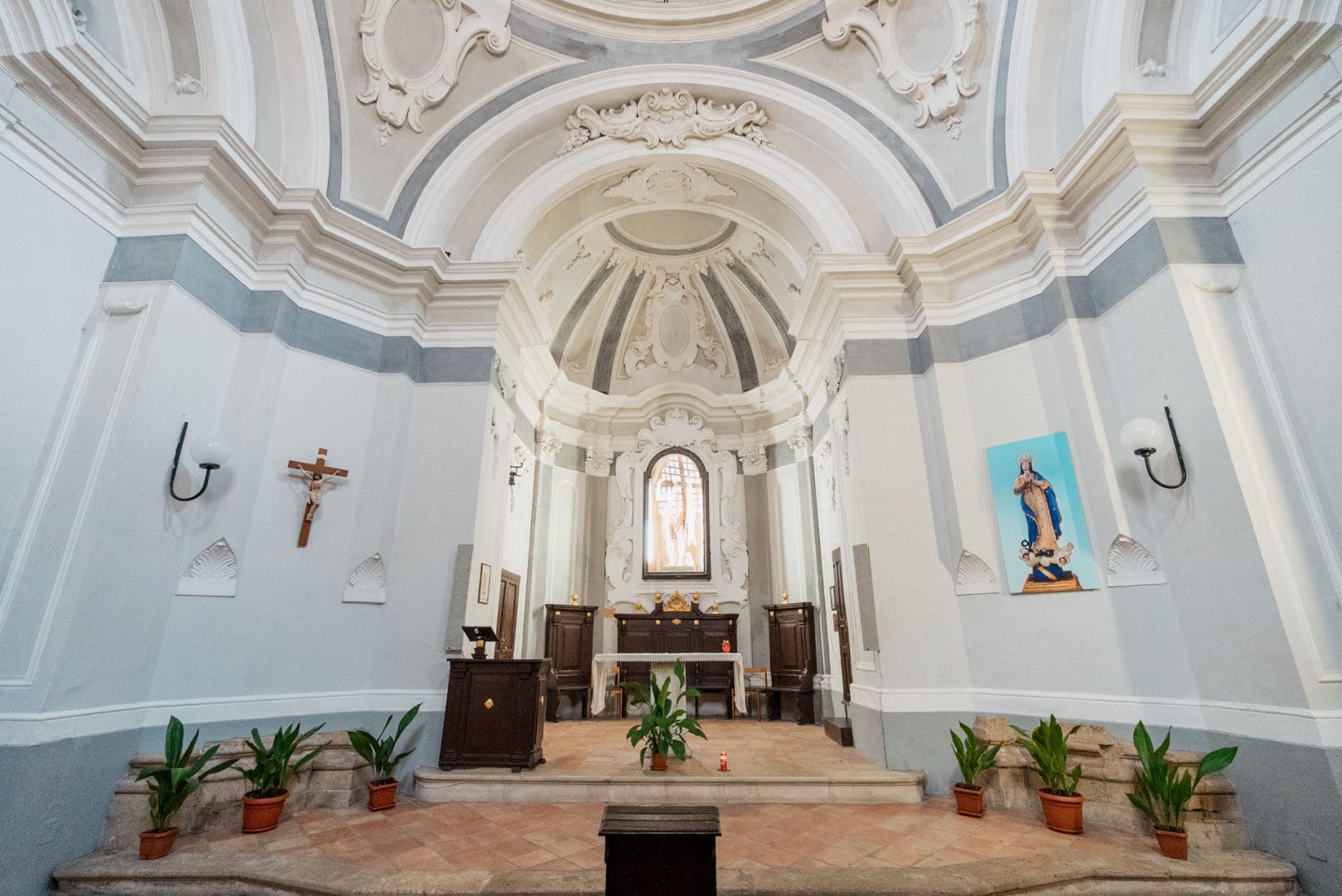
Inside, the’single classroom is marked by paraste e lowered arches that create a cosy and bright environment, ideal for preaching and community prayer.
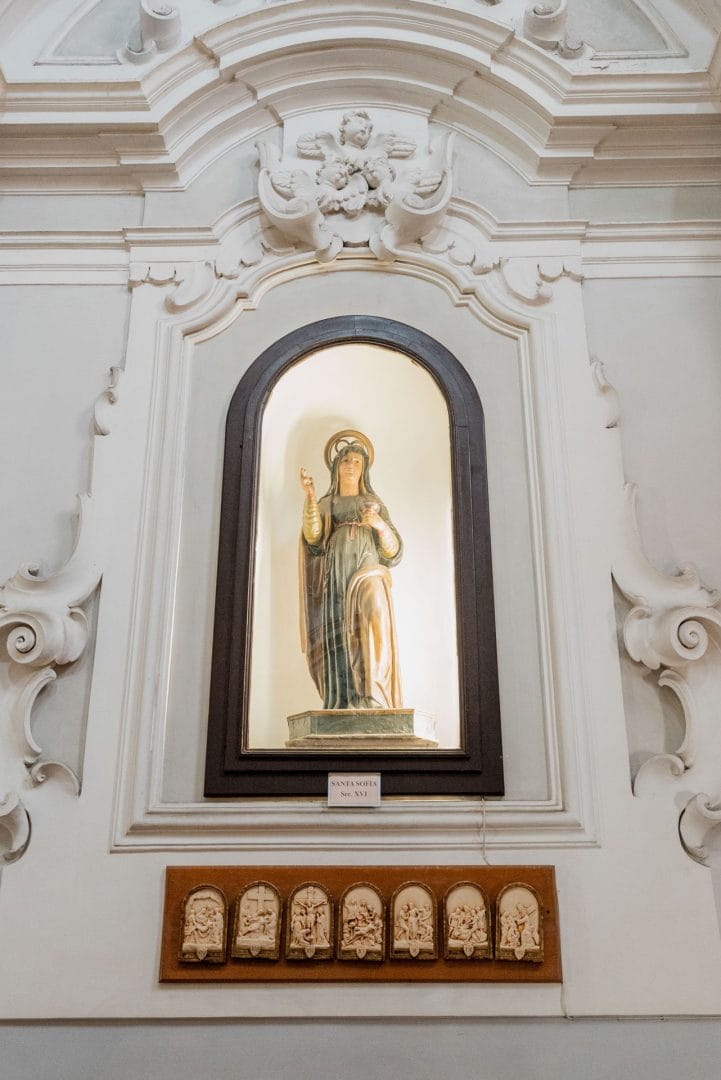
The side chapels contain altars dedicated to the most venerated saints in Campagna, including St Joseph and the’Immaculate, while on the high altar there is a 18th-century canvas depicting the Baptism of Christ, inspired by Neapolitan models.
The sober but neat interior decoration is influenced by the lines late Mannerist widespread in the Salerno area in the second half of the 16th century.
The terracotta flooring and the marble frames of the altars testify to renovations that took place between the 18th and 19th centuries, when the church underwent renovations promoted by the local confraternity.
Today the interior, while lacking in Baroque splendour, retains an atmosphere of deep devotion, where silence and natural light enhance the simple spirituality of the place.
From its origins, the church was entrusted to a confraternity of laymen who looked after its worship and maintenance.
In 1626, i Jesuit Fathers, present in Campagna to promote popular missions and works of moral renewal, founded here the Brotherhood of St John the Baptist, which would mark the religious life of the city for centuries.
The confraternities, in the southern context of the time, represented a real parallel social fabric to the institutional Church: communities of citizens who united prayer, assistance to the poor and care for the commons.
In Campagna, St John the Baptist's became a point of reference during major religious festivals and at times of crisis, such as famine or pestilence.
Over the centuries, the church has been the scene of processions, preaching and penitential rites, maintaining a strong connection with civil life.
Its current location along the main artery of the city testifies to how the once peripheral site is now an integral part of the urban fabric.
Despite the modifications, the building retains its original value of space for meeting, prayer and solidarity.
Masses and moments of devotion are still celebrated there today, and the local community continues to take care of it with the same dedication as the brethren of yesteryear.
Walking along Corso Umberto I, the sober façade of the church presents itself as a discreet but eloquent sign of the More authentic countrysidethe one that keeps faith in stone, in silence and in the continuity of memory.